Read here

Plato and the Other Companions of Sokrates, 3rd ed. Volume 3

George Grote · Public domain text

206,360 words · about 14 h 27 min to read

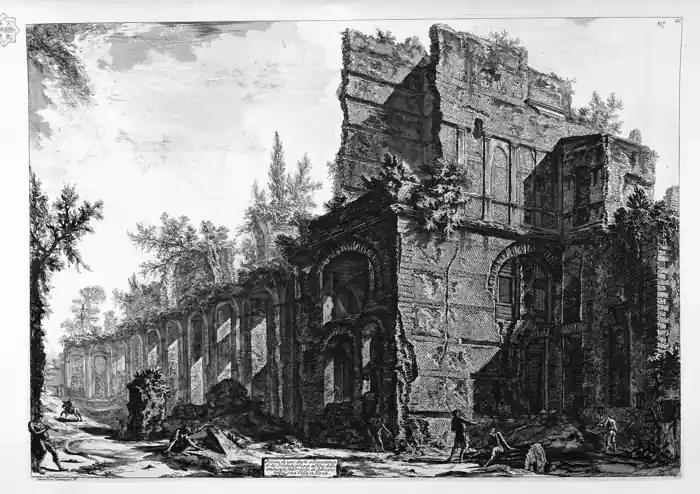
Period artwork: Ruins of Hadrian’s Villa, 1748
About this edition

The text of Plato and the Other Companions of Sokrates, 3rd ed. Volume 3 comes from Project Gutenberg e-text #40437. It is in English and public domain in the United States. Project Gutenberg’s header and license text are removed, and RedLectern sets the text out for reading on screen; no words of the book are rewritten or summarized. More formats (EPUB, Kindle) · How RedLectern is built

This book is long enough to be split into 7 parts, so each one loads quickly on its own.

About this book

Author
George Grote (1794–1871)
Language
English
Subjects
Plato, Socrates, 470 BC-399 BC, Philosophy, Ancient
Length
206,360 words · about 14 h 27 min
Sections
19 reader sections · Table of contents
Contents (19)
  1. Opening under 1 min
  2. XXVI. PHÆDRUS--SYMPOSION about 5 min
  3. XXVII. PARMENIDES about 5 min
  4. XXVIII. THEÆTETUS about 6 min
  5. XXIX. SOPHISTES--POLITIKUS about 7 min
  6. XXX. POLITIKUS about 3 min
  7. XXXI. KRATYLUS about 3 min
  8. XXXII. PHILEBUS about 6 min
  9. XXXIII. MENEXENUS about 1 min
  10. XXXIV. KLEITOPHON about 2 min
  11. XXVI. PHÆDRUS--SYMPOSION about 1 h 41 min
  12. XXVII. PARMENIDES about 1 h 44 min
  13. XXVIII. THEÆTETUS about 2 h 36 min
  14. XXIX. SOPHISTES--POLITIKUS about 2 h 23 min
  15. XXX. POLITIKUS about 46 min
  16. XXXI. KRATYLUS about 1 h 42 min
  17. XXXII. PHILEBUS about 2 h 12 min
  18. XXXIII. MENEXENUS about 20 min
  19. XXXIV. KLEITOPHON about 25 min

The opening of XXVI. PHÆDRUS--SYMPOSION

[Side-note: These two are the two erotic dialogues of Plato. Phædrus is the originator of both.]

I put together these two dialogues, as distinguished by a marked peculiarity. They are the two erotic dialogues of Plato. They have one great and interesting subject common to both: though in the Phædrus, this subject is blended with, and made contributory to, another. They agree also in the circumstance, that Phædrus is, in both, the person who originates the conversation. But they differ materially in the manner of handling, in the comparisons and illustrations, and in the apparent purpose.

[Side-note: Eros as conceived by Plato. Different sentiment prevalent in Hellenic antiquity and in modern times. Position of women in Greece.]

The subject common to both is, Love or Eros in its largest sense, and with its manifold varieties. Under the totally different vein of sentiment which prevails in modern times, and which recognises passionate love as prevailing only between persons of different sex--it is difficult for us to enter into Plato's eloquent exposition of the feeling as he conceives it.

Read on in Part 1 →