Read here

Plato and the Other Companions of Sokrates, 3rd ed. Volume 1

George Grote · Public domain text

219,480 words · about 15 h 22 min to read

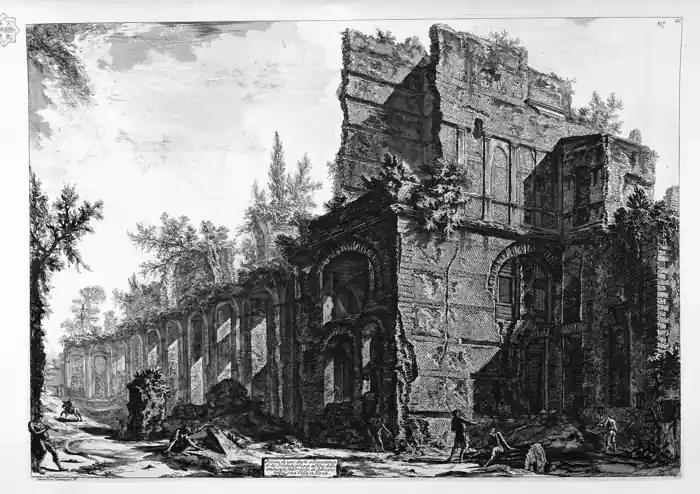
Period artwork: Ruins of Hadrian’s Villa, 1748
About this edition

The text of Plato and the Other Companions of Sokrates, 3rd ed. Volume 1 comes from Project Gutenberg e-text #40435. It is in English and public domain in the United States. Project Gutenberg’s header and license text are removed, and RedLectern sets the text out for reading on screen; no words of the book are rewritten or summarized. More formats (EPUB, Kindle) · How RedLectern is built

This book is long enough to be split into 8 parts, so each one loads quickly on its own.

About this book

Author
George Grote (1794–1871)
Language
English
Subjects
Plato, Socrates, 470 BC-399 BC, Philosophy, Ancient
Length
219,480 words · about 15 h 22 min
Sections
26 reader sections · Table of contents
Contents (26)
  1. Opening about 1 min
  2. Preface about 17 min
  3. Chapter I about 5 min
  4. Chapter II about 1 min
  5. III. Other Companions of Sokrates about 4 min
  6. IV. Xenophon about 2 min
  7. V. Life of Plato about 1 min
  8. VI. Platonic Canon, as Recognised by Thrasyllus about 2 min
  9. Chapter VII about 3 min
  10. VIII. Platonic Compositions Generally about 5 min
  11. IX. Apology of Sokrates about 1 min
  12. X. Kriton about 1 min
  13. XI. Euthyphron about 2 min
  14. I. PLATO under 1 min
  15. Chapter I about 2 h 41 min
  16. Chapter II about 41 min
  17. Appendix about 5 min
  18. III. * about 3 h 9 min
  19. IV. XENOPHON about 1 h 10 min
  20. V. LIFE OF PLATO about 37 min
  21. VI. PLATONIC CANON, AS RECOGNISED BY THRASYLLUS about 1 h 10 min
  22. Chapter VII about 1 h 14 min
  23. VIII. PLATONIC COMPOSITIONS GENERALLY about 2 h 20 min
  24. IX. APOLOGY OF SOKRATES about 28 min
  25. X. KRITON about 22 min
  26. XI. EUTHYPHRON about 40 min

The opening of Preface

The present work is intended as a sequel and supplement to my History of Greece. It describes a portion of Hellenic philosophy: it dwells upon eminent individuals, enquiring, theorising, reasoning, confuting, &c., as contrasted with those collective political and social manifestations which form the matter of history, and which the modern writer gathers from Herodotus, Thucydides, and Xenophon.

Both Sokrates and Plato, indeed, are interesting characters in history as well as in philosophy. Under the former aspect, they were described by me in my former work as copiously as its general purpose would allow. But it is impossible to do justice to either of them--above all, to Plato, with his extreme variety and abundance--except in a book of which philosophy is the principal subject, and history only the accessory.

Read on in Part 1 →