XXIV. 42
[108] To come from earth to heaven.
[109] “Say what it is,” and “whence it cometh to thee.”
[110] “_Est spes certa expectatio futuræ beatitudinis, veniens ex Dei gratia et meritis præcedentibus._” Petrus Lombardus, _Magister Sententiarum_.
[111] The Psalmist David.
[112] The Book of Psalms or songs of God:—
“And they that know thy name will put their trust in thee.” Psalm ix. 10.
[113] Your rain: that is, of David and yourself.
[114] “The mark of the high calling and election sure.”
[115] The twofold garments are the glorified spirit and the glorified body.
[116] St. John in the Apocalypse, vii. 9: “A great multitude, which no man could number ... clothed with white robes.”
[117] Dances and songs commingled; the circling choirs, the celestial choristers.
[118] St. John the Evangelist.
[119] In winter the constellation Cancer rises at sunset; and if it had one star as bright as this, it would turn night into day.
[120] Such as vanity, ostentation, or the like.
[121] St. Peter and St. James are joined by St. John.
[122] Christ.
[123] Then saith he to that disciple, “Behold thy mother! and from that hour that disciple took her unto his own house.”—St. John xix. 27.
[124] St. John.
[125] “If I will that he tarry till I come, what is that to thee?”
[126] Till the predestined number of the elect is complete.
[127] The two garments: the glorified spirit, and the glorified body.
[128] The two lights: Christ and the Virgin Mary.
[129] Carry back these tidings.
[130] The sacred trio of St. Peter, St. James, and St. John.
THE OLD BRIDGE AT FLORENCE.
Taddeo Gaddi built me. I am old; Five centuries old. I plant my foot of stone Upon the Arno, as St. Michael’s own Was planted on the dragon. Fold by fold Beneath me, as it struggles, I behold Its glistening scales. Twice hath it overthrown My kindred and companions. Me alone It moveth not, but is by me controlled. I can remember when the Medici Were driven from Florence; longer still ago The final wars of Ghibelline and Guelf. Florence adorns me with her jewelry; And when I think that Michael Angelo Hath leaned on me, I glory in myself.
THE NATURE OF LOVE.
FROM THE ITALIAN.
To noble heart Love doth for shelter fly, As seeks the bird the forest’s leafy shade; Love was not felt till noble heart beat high, Nor before love the noble heart was made. Soon as the sun’s broad flame Was formed, so soon the clear light filled the air; Yet was not till he came: So love springs up in noble breasts, and there Has its appointed space, As heat in the bright flame finds its allotted place.
Kindles in noble heart the fire of love, As hidden virtue in the precious stone: This virtue comes not from the stars above, Till round it the ennobling sun has shone; But when his powerful blaze Has drawn forth what was vile, the stars impar Strange virtue in their rays: And thus when Nature doth create the heart Noble and pure and high, Like virtue from the star, love comes from woman’s eye.
TO ITALY.
FROM FILICAJA.
Italy! Italy! thou who’rt doomed to wear The fatal gift of beauty, and possess The dower funest[131] of infinite wretchedness, Written upon thy forehead by despair; Ah! would that thou wert stronger, or less fair, That they might fear thee more, or love thee less, Who in the splendour of thy loveliness Seem wasting, yet to mortal combat dare! Then from the Alps I should not see descending Such torrents of armed men, nor Gallic horde Drinking the wave of Po, distained with gore, For should I see thee girded with a sword Not thine, and with the stranger’s arm contending, Victor or vanquished, slave for evermore.
[131] Fatal.
TRANSLATIONS FROM THE FRENCH.
SPRING.
FROM CHARLES, DUKE OF ORLEANS.
XV. CENTURY.
Gentle Spring!—in sunshine clad, Well dost thou thy power display! For Winter maketh the light heart sad, And thou,—thou makest the sad heart gay. He sees thee, and calls to his gloomy train, The sleet, and the snow, and the wind, and the rain, And they shrink away, and they flee in fear, When thy merry step draws near.
Winter giveth the fields and the trees, so old, Their beards of icicles and snow; And the rain, it raineth so fast and cold, We must cower over the embers low; And, snugly housed from the wind and weather, Mope like birds that are changing feather. But the storm retires, and the sky grows clear, When thy merry step draws near.
Winter maketh the sun in the gloomy sky Wrap him round with a mantle of cloud; But, Heaven be praised, thy step is nigh; Thou tearest away the mournful shroud, And the earth looks bright, and Winter surly, Who has toiled for nought both late and early, Is banished afar by the new-born year, When thy merry step draws near.
THE CHILD ASLEEP.
Sweet babe! true portrait of thy father’s face, Sleep on the bosom, that thy lips have pressed! Sleep, little one; and closely, gently place Thy drowsy eyelid on thy mother’s breast.
Upon that tender eye, my little friend, Soft sleep shall come, that cometh not to me! I watch to see thee, nourish thee, defend;— ’Tis sweet to watch for thee, alone for thee!
His arms fall down; sleep sits upon his brow; His eye is closed; he sleeps, nor dreams of harm. Wore not his cheek the apple’s ruddy glow, Would you not say he slept on Death’s cold arm?
Awake, my boy!—I tremble with affright! Awake, and chase this fatal thought!—Unclose Thine eye but for one moment on the light! Even at the price of thine, give me repose!
Sweet error! he but slept, I breathe again; Come, gentle dreams, the hour of sleep beguile! O when shall he for whom I sigh in vain, Beside me watch to see thy waking smile?
RONDEL.
FROM FROISSARD.
Love, love, what wilt thou with this heart of mine? Nought see I fixed or sure in thee! I do not know thee,—nor what deeds are thine: Love, love, what wilt thou with this heart of mine? Nought see I fixed or sure in thee!
Shall I be mute, or vows with prayers combine? Ye who are blessed in loving, tell it me: Love, love, what wilt thou with this heart of mine Nought see I permanent or sure in thee!
RONDEL.
FROM THE DUKE OF ORLEANS.
Hence away, begone, begone, Carking care and melancholy! Think ye thus to govern me All my life long, as ye have done? That shall ye not, I promise ye: Reason shall have the mastery. So hence away, begone, begone, Carking care and melancholy! If ever ye return this way, With your mournful company, A curse be on ye, and the day That brings ye moping back to me! Hence away, begone, I say, Carking care and melancholy!
RENOUVEAU.
Now Time throws off his cloak again Of ermined frost, and cold and rain, And clothes him in the embroidery Of glittering sun and clear blue sky.
With beast and bird the forest rings, Each in his jargon cries or sings; And Time throws off his cloak again Of ermined frost, and cold and rain.
River, and fount, and tinkling brook Wear in their dainty livery Drops of silver jewelry; In new-made suit they merry look; And Time throws off his cloak again Of ermined frost, and cold and rain.
FRIAR LUBIN.
To gallop off to town post-haste So oft, the times I cannot tell; To do vile deed, nor feel disgraced,— Friar Lubin will do it well. But a sober life to lead, To honour virtue, and pursue it, That’s a pious, Christian deed,— Friar Lubin cannot do it.
To mingle with a knowing smile, The goods of others with his own, And leave you without cross or pile, Friar Lubin stands alone. To say ’tis yours is all in vain, If once he lays his finger to it; For as to giving back again, Friar Lubin cannot do it.
With flattering words and gentle tone, To woo and win some guileless maid, Cunning pander need you none,— Friar Lubin knows the trade. Loud preacheth he sobriety, But as for water, doth eschew it; Your dog may drink it,—but not he; Friar Lubin cannot do it.
ENVOI.
When an evil deed’s to do, Friar Lubin’s stout and true; Glimmers a ray of goodness through it, Friar Lubin cannot do it.
DEATH OF ARCHBISHOP TURPIN.
The archbishop, whom God loved in high degree, Beheld his wounds all bleeding fresh and free; And then his cheek more ghastly grew and wan, And a faint shudder through his members ran. Upon the battle-field his knee was bent; Brave Roland saw, and to his succour went, Straightway his helmet from his brow unlaced, And tore the shining hauberk from his breast; Then raising in his arms the man of God, Gently he laid him on the verdant sod. “Rest, Sire,” he cried,—“for rest thy suffering needs.” The priest replied, “Think but of warlike deeds! The field is ours; well may we boast with strife! But death steals on,—there is no hope of life; In Paradise, where the almoners live again, There are our couches spread,—there shall we rest from pain.” Sore Roland grieved; nor marvel I, alas! That thrice he swooned upon the thick, green grass. When he revived, with a loud voice cried he, “O Heavenly Father! Holy Saint Marie! Why lingers death to lay me in my grave? Beloved France! how have the good and brave Been torn from thee and left thee weak and poor!” Then thoughts of Aude, his lady-love, came o’er His spirit, and he whispered soft and slow, “My gentle friend!—what parting full of woe! Never so true a liegeman shalt thou see;— Whate’er my fate, Christ’s benison on thee; Christ, who did save from realms of woe beneath The Hebrew prophets from the second death.”
Then to the paladins, whom well he knew, He went, and one by one unaided drew To Turpin’s side, well skilled in ghostly lore;— No heart had he to smile,—but, weeping sore, He blessed them in God’s name, with faith that he Would soon vouchsafe to them a glad eternity.
The archbishop, then,—on whom God’s benison rest!— Exhausted, bowed his head upon his breast;— His mouth was full of dust and clotted gore, And many a wound his swollen visage bore. Slow beats his heart,—his panting bosom heaves,— Death comes apace, no hope of cure relieves. Towards heaven he raised his dying hands and prayed That God, who for our sins was mortal made,— Born of the Virgin,—scorned and crucified,— In paradise would place him by his side.
Then Turpin died in service of Charlon, In battle great and eke great orison; ’Gainst Pagan host alway strong champion;— God grant to him his holy benison!
TO CARDINAL RICHELIEU.
FROM MALHERBE.
Thou mighty Prince of Church and State, Richelieu! until the hour of death, Whatever road man chooses, Fate Still holds him subject to her breath. Spun of all silks, our days and nights Have sorrows woven with delights; And of this intermingled shade Our various destiny appears, Even as one sees the course of years Of summers and of winters made.
Sometimes the soft, deceitful hours Let us enjoy the halcyon wave; Something impending peril lowers Beyond the seaman’s skill to save. The Wisdom, infinitely wise, That gives to human destinies Their foreordained necessity, Has made no law more fixed below, Than the alternate ebb and flow Of Fortune and Adversity.
CONSOLATION.
TO M. DU PERRIER, GENTLEMAN, OF AIX IN PROVENCE, ON THE DEATH OF HIS DAUGHTER.
FROM THE FRENCH OF FRANÇOIS DE MALHERBE.
Will then, Du Perrier, thy sorrow be eternal? And shall the sad discourse Whispered within thy heart, by tenderness paternal, Only augment its force?
Thy daughter’s mournful fate, into the tomb descending By death’s frequented ways, Has it become to thee a labyrinth never ending, Where thy lost reason strays?
I know the charms that made her youth a benediction: Nor should I be content, As a censorious friend, to solace thine affliction, By her disparagement.
But she was of the world, which fairest things exposes To fates the most forlorn; A rose, she too hath lived as long as live the roses, The space of one brief morn.
* * * * *
Death hath his rigorous laws, unparalleled, unfeeling; All prayers to him are vain; Cruel, he stops his ears, and, deaf to our appealing, He leaves us to complain.
The poor man in his hut, with only thatch for cover, Unto these laws must bend; The sentinel that guards the barriers of the Louvre Cannot our Kings defend.
To murmur against death, in petulant defiance, Is never for the best; To will what God doth will, that is the only science That gives us any rest.
THE ANGEL AND THE CHILD.
FROM THE FRENCH OF JEAN REBOUL.[132]
An angel with a radiant face Above a cradle bent to look, Seemed his own image there to trace As in the waters of a brook.
“Dear child! who me resemblest so,” It whispered, “come, O come with me! Happy together let us go, The earth unworthy is of thee!
“Here none to perfect bliss attain; The soul in pleasure suffering lies; Joy hath an undertone of pain, And even the happiest hours their sighs.
“Fear doth at every portal knock; Never a day serene and pure From the o’ershadowing tempest’s shock Has made the morrow’s dawn secure.
“What, then, shall sorrows and shall fears Come to disturb so pure a brow? And with the bitterness of tears Those eyes of azure troubled grow?
“Ah no! into the fields of space, Away shalt thou escape with me; And Providence will grant thee grace Of all the days that were to be.
“Let no one in thy dwelling cower In sombre vestments draped and veiled; But let them welcome thy last hour, As thy first moments once they hailed.
“Without a cloud be there each brow; There let the grave no shadow cast; When one is pure as thou art now, The fairest day is still the last.”
And waving wide his wings of white, The angel, at these words, had sped Towards the eternal realms of light!— Poor mother! see, thy son is dead.
[132] The Baker of Nismes.
A CHRISTMAS CAROL.
FROM THE NOEL BOURGUIGNON DE GUI BARÔZAI.
I hear along our street Pass the minstrel throngs; Hark! they play so sweet, On their hautboys, Christmas songs! Let us by the fire Ever higher Sing them till the night expire!
In December ring Every day the chimes; Loud the gleemen sing In the streets their merry rhymes. Let us by the fire Ever higher Sing them till the night expire!
Shepherds at the grange, Where the Babe was born Sang, with many a change, Christmas carols until morn. Let us by the fire Ever higher Sing them till the night expire.
These good people sang Songs devout and sweet While the rafters rang, There they stood with freezing feet. Let us by the fire Ever higher Sing them till the night expire!
Nuns in frigid cells At this holy tide, For want of something else, Christmas songs at times have tried. Let us by the fire Ever higher Sing them till the night expire!
Washerwomen old, To the sound they beat, Sing by rivers cold, With uncovered heads and feet. Let us by the fire Ever higher Sing them till the night expire!
Who by the fireside stands Stamps his feet and sings; But he who blows his hands Not so gay a carol brings. Let us by the fire Ever higher Sing them till the night expire!
THE BLIND GIRL OF CASTÈL-CUILLÈ.
FROM THE GASCON OF JASMIN.
Only the Lowland tongue of Scotland might Rehearse this little tragedy aright: Let me attempt it with an English quill: And take, O reader, for the deed the will.
JASMIN, the author of this beautiful poem, is to the South of France what Burns is to the South of Scotland,—the representative of the heart of the people,—one of those happy bards who are born with their mouths full of birds (la bouco pleno d’aouzelous). He has written his own biography in a poetic form, and the simple narrative of his poverty, his struggles and his triumphs, is very touching. His home was at Agen on the Garonne.
Those who may feel interested in knowing something about “Jasmin, Coiffeur”—for such is his calling—will find a description of his person and mode of life in the graphic pages of Béarn and the Pyrenees (Vol. i. p. 369, et seq.), by Louisa Stuart Costello, whose charming pen has done so much to illustrate the French provinces and their literature.
I.
At the foot of the mountain height Where is perched Castèl-Cuillè, When the apple, the plum, and the almond tree In the plain below were growing white, This is the song one might perceive On a Wednesday morn of Saint Joseph’s Eve:
“The roads should blossom, the roads should bloom, So fair a bride shall leave her home! Should blossom and bloom with garlands gay, So fair a bride shall pass to-day!”
This old Te Deum, rustic rites attending, Seemed from the clouds descending; When lo! a merry company Of rosy village girls, clean as the eye, Each one with her attendant swain, Came to the cliff, all singing the same strain: Resembling there, so near unto the sky, Rejoicing angels, that kind Heaven has sent For their delight and our encouragement. Together blending, And soon descending The narrow sweep Of the hill-side steep, They wind aslant Toward Saint Amant Through leafy alleys Of verdurous valleys, With merry sallies, Singing their chant: “The roads should blossom, the roads should bloom, So fair a bride shall leave her home! Should blossom and bloom with garlands gay, So fair a bride shall pass to-day!”
It is Baptiste, and his affianced maiden, With garlands for the bridal laden!
The sky was blue; without one cloud of gloom, The sun of March was shining brightly, And to the air the freshening wind gave lightly Its breathings of perfume.
When one beholds the dusky hedges blossom, A rustic bridal, ah! how sweet it is! To sounds of joyous melodies, That touch with tenderness the trembling bosom, A band of maidens Gaily frolicking, A band of youngsters Wildly rollicking! Kissing, Caressing, With fingers pressing, Till in the veriest Madness of mirth, as they dance, They retreat and advance, Trying whose laugh shall be loudest and merriest; While the bride, with roguish eyes, Sporting with them, now escapes and cries: “Those who catch me Married verily This year shall be!”
And all pursue with eager haste, And all attain what they pursue, And touch her pretty apron fresh and new, And the linen kirtle round her waist.
“Meanwhile, whence comes it that among These youthful maidens fresh and fair, So joyous, with such laughing air, Baptiste stands sighing, with silent tongue? And yet the bride is fair and young! Is it Saint Joseph would say to us all, That love, o’er-hasty, precedeth a fall? O, no! for a maiden frail, I trow, Never bore so lofty a brow! What lovers! they give not a single caress! To see them so careless and cold to-day, These are grand people, one would say. What ails Baptiste? what grief doth him oppress? It is, that, half way up the hill In yon cottage, by whose walls Stand the cart-house and the stalls, Dwelleth the blind orphan still, Daughter of a veteran old; And you must know, one year ago, That Margaret, the young and tender, Was the village pride and splendour, And Baptiste her lover bold. Love, the deceiver, them ensnared; For them the altar was prepared;
But alas! the summer’s blight, The dread disease that none can stay, The pestilence that walks by night, Took the young bride’s sight away.
All at the father’s stern command was changed; Their peace was gone, but not their love estranged; Wearied at home, ere long the lover fled; Returned but three short days ago, The golden chain they round him throw, He is enticed, and onward led To marry Angela, and yet Is thinking ever of Margaret.
Then suddenly a maiden cried, “Anna, Theresa, Mary, Kate! Here comes the cripple Jane!” And by a fountain’s side A woman, bent and grey with years, Under the mulberry-trees appears, And all towards her run, as fleet As had they wings upon their feet.
It is that Jane, the cripple Jane, Is a soothsayer, wary and kind. She telleth fortunes, and none complain. She promises one a village swain, Another a happy wedding-day, And the bride a lovely boy straightway. All comes to pass as she avers; She never deceives, she never errs.
But for this once the village seer Wears a countenance severe, And from beneath her eyebrows thin and white Her two eyes flash like cannons bright Aimed at the bridegroom in waistcoat blue, Who, like a statue, stands in view; Changing colour, as well he might, When the beldame, wrinkled and grey, Takes the young bride by the hand, And, with the tip of her reedy wand, Making the sign of the cross, doth say:— “Thoughtless Angela, beware! Lest, when thou weddest this false bridegroom, Thou diggest for thyself a tomb!”
And she was silent; and the maidens fair Saw from each eye escape a swollen tear; But on a little streamlet silver-clear, What are two drops of turbid rain? Saddened a moment, the bridal train Resumed the dance and song again; The bridegroom only was pale with fear; And down green alleys Of verdurous valleys, With merry sallies, They sang the refrain:—
“The roads should blossom, the roads should bloom, So fair a bride shall leave her home! Should blossom and bloom with garlands gay, So fair a bride shall pass to-day!”
II.
And by suffering worn and weary, But beautiful as some fair angel yet, Thus lamented Margaret, In her cottage lone and dreary:—
“He has arrived! arrived at last! Yet Jane has named him not these three days past; Arrived! yet keeps aloof so far! And knows that of my night he is the star! Knows that long months I wait alone, benighted, And count the moments since he went away! Come! keep the promise of that happier day, That I may keep the faith to thee I plighted! What joy have I without thee? what delight? Grief wastes my life, and makes it misery; Day for the others ever, but for me For ever night! for ever night! When he is gone ’tis dark! my soul is sad! I suffer! O my God! come, make me glad. When he is near, no thoughts of day intrude; Day has blue heavens, but Baptiste has blue eyes Within them shines for me a heaven of love, A heaven all happiness, like that above, No more of grief! no more of lassitude! Earth I forget,—and heaven, and all distresses, When seated by my side my hand he presses; But when alone, remember all! Where is Baptiste? he hears not when I call! A branch of ivy, dying on the ground, I need some bough to twine around! In pity come! be to my suffering kind! True love, they say, in grief doth more abound! What then, when one is blind? “Who knows? perhaps I am forsaken! Ah! woe is me! then bear me to my grave! O God! what thoughts within me waken! Away! he will return! I do but rave! He will return! I need not fear! He swore it by our Saviour dear; He could not come at his own will; Is weary, or perhaps is ill! Perhaps his heart, in this disguise, Prepares for me some sweet surprise. But some one comes! Though blind, my heart can see! And that deceives me not! ’tis he! ’tis he!” And the door ajar is set, And poor, confiding Margaret Rises, with outstretched arms, but sightless eyes; ’Tis only Paul, her brother, who thus cries:— “Angela the bride has passed! I saw the wedding guests go by; Tell me, my sister, why were we not asked? For all are there but you and I!”
“Angela married! and not send To tell her secret unto me! O, speak! who may the bridegroom be?” “My sister, ’tis Baptiste, thy friend!”
A cry the blind girl gave, but nothing said; A milky whiteness spreads upon her cheeks; An icy hand, as heavy as lead, Descending, as her brother speaks, Upon her heart, that has ceased to beat, Suspends awhile its life and heat. She stands beside the boy, now sore distressed, A wax Madonna as a peasant dressed.
At length the bridal song again Brings her back to her sorrow and pain.
“Hark! the joyous airs are ringing! Sister, dost thou hear them singing? How merrily they laugh and jest! Would we were bidden with the rest! I would don my hose of homespun grey, And my doublet of linen striped and gay; Perhaps they will come; for they do not wed Till to-morrow at seven o’clock, it is said!” “I know it!” answered Margaret; Whom the vision, with aspect black as jet, Mastered again; and its hand of ice Held her heart crushed, as in a vice!
“Paul, be not sad! ’Tis a holiday; To-morrow put on thy doublet gay! But leave me now for a while alone.” Away, with a hop and a jump, went Paul, And, as he whistled along the hall, Entered Jane, the crippled crone.
“Holy Virgin! what dreadful heat! I am faint, and weary, and out of breath! But thou art cold,—art chill as death! My little friend! what ails thee, sweet?” “Nothing! I heard them singing home the bride; And, as I listened to the song, I thought my turn would come ere long, Thou knowest it is at Whitsuntide. Thy cards forsooth can never lie, To me such joy they prophesy, Thy skill shall be vaunted far and wide When they behold him at my side. And poor Baptiste, what sayest thou? It must seem long to him;—methinks I see him now!” Jane, shuddering, her hand doth press: “Thy love I cannot all approve; We must not trust too much to happiness; Go, pray to God, that thou mayst love him less!” “The more I pray, the more I love! It is no sin, for God is on my side!” It was enough; and Jane no more replied.
Now to all hope her heart is barred and cold; But to deceive the beldame old She takes a sweet, contented air; Speaks of foul weather or of fair, At every word the maiden smiles. Thus the beguiler she beguiles; So that, departing at the evening’s close, She says, “She may be saved! she nothing knows!”
Poor Jane, the cunning sorceress! Now that thou wouldst, thou art no prophetess! This morning, in the fulness of thy heart, Thou wast so, far beyond thine art!
III.
Now rings the bell, nine times reverberating, And the white daybreak, stealing up the sky, Sees in two cottages two maidens waiting, How differently! Queen of a day, by flatterers caressed, The one puts on her cross and crown, Decks with a huge bouquet her breast, And flaunting, fluttering up and down, Looks at herself, and cannot rest.
The other, blind, within her little room, Has neither crown nor flower’s perfume; But in their stead for something gropes apart That in a drawer’s recess doth lie, And, ’neath her bodice of bright scarlet dye, Convulsive clasps it to her heart.
The one, fantastic, light as air, ’Mid kisses ringing, And joyous singing, Forgets to say her morning prayer!
The other, with cold drops upon her brow, Joins her two hands, and kneels upon the floor, And whispers, as her brother opes the door, “O God! forgive me now!”
And then the orphan, young and blind, Conducted by her brother’s hand, Towards the church, through paths unscanned, With tranquil air, her way doth wind. Odours of laurel, making her faint and pale, Round her at times exhale, And in the sky as yet no sunny ray, But brumal vapours grey.
Near that castle, fair to see, Crowded with sculptures old, in every part, Marvels of nature and of art, And proud of its name of high degree, A little chapel, almost bare, At the base of the rock is builded there; All glorious that it lifts aloof, Above each jealous cottage roof, Its sacred summit, swept by autumn gales, And its blackened steeple high in air, Round which the osprey screams and sails.
“Paul, lay thy noisy rattle by!” Thus Margaret said. “Where are we? we ascend!” “Yes; seest thou not our journey’s end? Hearest not the osprey from the belfry cry? The hideous bird, that brings ill luck, we know! Dost thou remember when our father said, The night we watched beside his bed, ’O daughter, I am weak and low; Take care of Paul; I feel that I am dying!’ And thou, and he, and I, all fell to crying? Then on the roof the osprey screamed aloud; And here they brought our father in his shroud. There is his grave; there stands the cross we set; Why dost thou clasp me so, dear Margaret? Come in! The bride will be here soon: Thou tremblest! O my God! thou art going to swoon!” She could no more,—the blind girl, weak and weary! A voice seemed crying from that grave so dreary, “What wouldst thou do, my daughter?”—and she started; And quick recoiled, aghast, faint-hearted; But Paul, impatient, urges ever more Her steps towards the open door; And when, beneath her feet, the unhappy maid Crushes the laurel near the house immortal, And with her head, as Paul talks on again, Touches the crown of filigrane Suspended from the low-arched portal, No more restrained, no more afraid, She walks, as for a feast arrayed, And in the ancient chapel’s sombre night They both are lost to sight.
At length the bell, With booming sound, Sends forth, resounding round, Its hymeneal peal o’er rock and down the dell. It is broad day, with sunshine and with rain; And yet the guests delay not long, For soon arrives the bridal train, And with it brings the village throng.
In sooth, deceit maketh no mortal gay, For lo! Baptiste on this triumphant day, Mute as an idiot, sad as yester-morning, Thinks only of the beldame’s words of warning.
And Angela thinks of her cross, I wis; To be a bride is all! The pretty lisper Feels her heart swell to hear all round her whisper, “How beautiful! how beautiful she is!”
But she must calm that giddy head, For already the Mass is said; At the holy table stands the priest; The wedding ring is blessed; Baptiste receives it; Ere on the finger of the bride he leaves it, He must pronounce one word at least! ’Tis spoken; and sudden at the groomsman’s side “’Tis he!” a well-known voice has cried.
And while the wedding-guests all hold their breath, Opes the confessional, and the blind girl, see! “Baptiste,” she said, “since thou hast wished my death, As holy water be my blood for thee!” And calmly in the air a knife suspended! Doubtless her guardian angel near attended, For anguish did its work so well, That, ere the fatal stroke descended, Lifeless she fell!
At eve, instead of bridal verse, The De Profundis filled the air; Decked with flowers a single hearse To the churchyard forth they bear; Village girls in robes of snow Follow, weeping as they go; Nowhere was a smile that day, No, ah no! for each one seemed to say:—
“The roads shall mourn and be veiled in gloom, So fair a corpse shall leave its home! Should mourn and should weep, ah, well-away, So fair a corpse shall pass to-day!”
MY SECRET.
FROM THE FRENCH OF FÉLIX ARVERS.
My soul its secret hath, my life too hath its mystery, A love eternal in a moment’s space conceived; Hopeless the evil is, I have not told its history, And she who was the cause nor knew it nor believed. Alas! I shall have passed close by her unperceived, For ever at her side and yet for ever lonely, I shall unto the end have made life’s journey, only Daring to ask for nought, and having nought received.
For her, though God hath made her gentle and endearing, She will go on her way distraught and without hearing These murmurings of love that round her steps ascend, Piously faithful still unto her austere duty, Will say, when she shall read these lines full of her beauty, “Who can this woman be?” and will not comprehend.
BARRÉGES.
FROM THE FRENCH OF JEAN-JACQUES LEFRANC DE POMPIGNAN.
I leave you, ye cold mountain chains, Dwelling of warriors stark and frore! You, may these eyes behold no more, Save on the horizon of our plains.
Vanish, ye frightful, gloomy views! Ye rocks that mount up to the clouds! Of skies, enwrapped in misty shrouds, Impracticable avenues!
Ye torrents, that with might and main Break pathways through the rocky walls, With your terrific waterfalls Fatigue no more my weary brain!
Arise, ye landscapes full of charms, Arise, ye pictures of delight! Ye brooks, that water in your flight The flowers and harvests of our farms!
You I perceive, ye meadows green, Where the Garonne the lowland fills, Not far from that long chain of hills, With intermingled vales between.
Yon wreath of smoke, that mounts so high, Methinks from my own hearth must come; With speed to that belovèd home, Fly, ye too lazy coursers, fly!
And bear me thither, where the soul In quiet may itself possess, Where all things soothe the mind’s distress, Where all things teach me and console.
ON THE TERRACE OF THE AIGALADES.
FROM THE FRENCH OF J. MÉRY.
From this high portal, where upsprings The rose to touch our hands in play, We at a glance behold three things,— The Sea, the Town, and the Highway.
And the Sea says: My shipwrecks fear; I drown my best friends in the deep; And those who braved my tempests, here Among my sea-weeds lie asleep!
The Town says: I am filled and fraught With tumult and with smoke and care; My days with toil are overwrought, And in my nights I gasp for air.
The Highway says: My wheel-tracks guide To the pale climates of the North; Where my last milestone stands abide The people to their death gone forth.
Here, in the shade, this life of ours, Full of delicious air, glides by Amid a multitude of flowers As countless as the stars on high;
These red-tiled roofs, this fruitful soil, Bathed with an azure all divine, Where springs the tree that gives us oil, The grape that giveth us the wine;
Beneath these mountains stripped of trees, Whose tops with flowers are covered o’er, Where springtime of the Hesperides Begins, but endeth nevermore;
Under these leafy vaults and walls, That unto gentle sleep persuade This rainbow of the waterfalls, Of mingled mist and sunshine made;
Upon these shores, where all invites, We live our languid life apart; This air is that of life’s delights, The festival of sense and heart;
This limpid space of time prolong, Forget to-morrow in to-day, And leave unto the passing throng The Sea, the Town, and the Highway.
TRANSLATIONS FROM THE ANGLO-SAXON.
THE GRAVE.
For thee was a house built Ere thou wast born, For thee was a mould meant Ere thou of mother camest. But it is not made ready, Nor its depth measured, Nor is it seen How long it shall be. Now I bring thee Where thou shalt be; Now I shall measure thee, And the mould afterwards.
Thy house is not Highly timbered, It is unhigh and low; When thou art therein, The heel-ways are low, The sideways unhigh. The roof is built Thy breast full nigh, So thou shalt in mould Dwell full cold, Dimly and dark.
Doorless is that house, And dark it is within; There thou art fast detained, And death hath the key. Loathsome is that earth-house, And grim within to dwell. There thou shalt dwell, And worms shall divide thee.
Thus thou art laid, And leavest thy friends; Thou hast no friend Who will come to thee, Who will ever see How that house pleaseth thee; Who will ever open The door for thee, And descend after thee, For soon thou art loathsome And hateful to see.
BEOWULF’S EXPEDITION TO HEORT.
Thus then, much care-worn, The son of Healfden Sorrowed evermore, Nor might the prudent hero His woes avert. The war was too hard, Too loath and longsome, That on the people came, Dire wrath and grim, Of night-woes the worst. This from home heard Higelac’s Thane, Good among the Goths, Grendel’s deeds. He was of mankind In might the strongest, At that day Of this life, Noble and stalwart. He bade him a sea-ship, A goodly one, prepare. Quoth he, the war-king, Over the swan’s road, Seek he would The mighty monarch, Since he wanted men. For him that journey His prudent fellows Straight made ready, Those that loved him. They excited their souls, The omen they beheld. Had the good-man Of the Gothic people Champions chosen, Of those that keenest He might find, Some fifteen men. The sea-wood sought he, The warrior showed, Sea-crafty man! The landmarks, And first went forth. The ship was on the waves, Boat under the cliffs. The barons ready To the prow mounted. The streams they whirled The sea against the sands. The chieftains bore On the naked breast Bright ornaments, War-gear, Goth-like. The men shoved off, Men on their willing way, The bounden wood. Then went over the sea-waves, Hurried by the wind, The ship with foamy neck Most like a sea-fowl, Till about one hour Of the second day The curved prow Had passed onward, So that the sailors The land saw, The shore-cliffs shining, Mountains steep, And broad sea-noses. Then was the sea-sailing Of the earl at an end. Then up speedily The Weather people On the land went, The sea-bark moored, Their mail-sarks shook, Their war-weeds. God thanked they, That to them the sea journey Easy had been. Then from the wall beheld The warden of the Scyldings, He who the sea-cliffs Had in his keeping, Bear o’er the balks The bright shields, The war-weapons speedily. Him the doubt disturbed In his mind’s thought, What these men might be. Went then to the shore, On his steed riding, The Thane of Hrothgar. Before the host he shook His warden’s staff in hand, In measured words demanded: “What men are ye War-gear wearing, Host in harness, Who thus the brown keel Over the water-street Leading come Hither over the sea? I these boundaries As shore-warden hold; That in the Land of the Danes Nothing loathsome With a ship-crew Scathe us might.... Ne’er saw I mightier Earl upon earth Than is your own, Hero in harness. Not seldom this warrior Is in weapons distinguished; Never his beauty belies him, His peerless countenance! Now would I fain Your origin know, Ere ye forth As false spies Into the Land of the Danes Farther fare. Now, ye dwellers afar off! Ye sailors of the sea! Listen to my One-fold thought. Quickest is best To make known Whence your coming may be.”
THE SOUL’S COMPLAINT AGAINST THE BODY.
Much it behoveth Each one of mortals, That he his soul’s journey In himself ponder, How deep it may be. When death cometh, The bonds he breaketh By which united Were body and soul.
Long it is henceforth Ere the soul taketh From God himself Its woe or its weal; As in the world erst, Even in its earth-vessel, It wrought before.
The soul shall come Wailing with loud voice, After a sennight, The soul, to find The body That it erst dwelt in;— Three hundred winters, Unless ere that worketh The eternal Lord, The Almighty God, The end of the world.
Crieth then, so care-worn, With cold utterance, And speaketh grimly, The ghost to the dust: “Dry dust! thou dreary one! How little didst thou labour for me! In the foulness of earth Thou all wearest away Like to the loam! Little didst thou think How thy soul’s journey Would be thereafter, When from the body It should be led forth.”
TRANSLATIONS FROM THE SWEDISH.
FRITHIOF’S HOMESTEAD.
Three miles extended around the fields of the homestead; on three sides Valleys, and mountains, and hills, but on the fourth side was the ocean. Birch-woods crowned the summits, but over the down-sloping hillsides Flourished the golden corn, and man-high was waving the rye-field. Lakes, full many in number, their mirror held up for the mountains, Held for the forests up, in whose depths the high-antlered reindeer Had their kingly walk, and drank of a hundred brooklets. But in the valleys, full widely around, there fed on the greensward Herds with sleek, shining sides, and udders that longed for the milk-pail; ’Mid these were scattered, now here and now there, a vast countless number Of white-wooled sheep, as thou seest the white-looking stray clouds, Flock-wise, spread o’er the heavenly vault, when it bloweth in springtime.
Twice twelve swift-footed coursers, mettlesome, fast-fettered storm-winds, Stamping stood in the line of stalls, all champing their fodder, Knotted with red their manes, and their hoofs all whitened with steel shoes. The banquet-hall, a house by itself, was timbered of hard fir. Not five hundred men (at ten times twelve to the hundred) Filled up the roomy hall, when assembled for drinking at Yule-tide. Thorough the hall, as long as it was, went a table of holm-oak, Polished and white, as of steel; the columns twain of the high-seat Stood at the end thereof, two gods carved out of an elm-tree; Odin with lordly look, and Frey with the sun on his frontlet. Lately between the two, on a bear-skin (the skin it was coal-black, Scarlet-red was the throat, but the paws were shodden with silver), Thorsten sat with his friends, Hospitality sitting with Gladness. Oft, when the moon among the night-clouds flew, related the old man Wonders from far-distant lands he had seen, and cruises of Vikings Far on the Baltic and Sea of the West, and the North Sea. Hush sat the listening bench, and their glances hung on the gray-beard’s Lips, as a bee on the rose; but the Skald was thinking of Bragé, Where, with silver beard, and runes on his tongue, he is seated Under the leafy beech, and tells a tradition by Mimer’s Ever-murmuring wave, himself a living tradition. Midway the floor (with thatch was it strewn), burned for ever the fire-flame Glad on its stone-built hearth; and through the wide-mouthed smoke-flue Looked the stars, those heavenly friends, down into the great hall, But round the walls, upon nails of steel, were hanging in order Breastplate and helm with each other, and here and there in among them Downward lightened a sword, as in winter evening a star shoots. More than helmets and swords, the shields in the banquet-hall glisten, White as the orb of the sun, or white as the moon’s disc of silver. Ever and anon went a maid round the board and filled up the drink-horns; Ever she cast down her eyes and blushed; in the shield her reflection Blushed too, even as she;—this gladdened the hard-drinking champions.
FRITHIOF’S TEMPTATION.
Spring is coming, birds are twittering, forests leaf, and smiles the sun, And the loosened torrents downward singing to the ocean run; Glowing like the cheek of Freya, peeping rosebuds ’gin to ope, And in human hearts awaken love of life, and joy, and hope.
Now will hunt the ancient monarch, and the queen shall join the sport; Swarming in its gorgeous splendour is assembled all the court; Bows ring loud, and quivers rattle, stallions paw the ground alway, And, with hoods upon their eyelids, falcons scream aloud for prey.
See, the queen of the chase advances! Frithiof, gaze not on the sight! Like a star upon a spring-cloud sits she on her palfrey white, Half of Freya, half of Rota, yet more beauteous than these two, And from her light hat of purple wave aloft the feathers blue.
Now the huntsman’s band is ready. Hurrah! over hill and dale! Morns ring, and the hawks right upward to the hall of Odin sail. All the dwellers in the forest seek in fear their cavern homes, But with spear outstretched before her, after them Valkyria comes.
* * * * *
Then threw Frithiof down his mantle, and upon the greensward spread, And the ancient king so trustful laid on Frithiof’s knees his head; Slept, as calmly as the hero sleepeth after war’s alarms On his shield, calm as an infant sleepeth in its mother’s arms. As he slumbers, hark! there sings a coal-black bird upon a bough: “Hasten, Frithiof, slay the old man, close your quarrel at a blow; Take his queen, for she is thine, and once the bridal kiss she gave; Now no human eye beholds thee; deep and silent is the grave.” Frithiof listens; hark! there sings a snow-white bird upon the bough: “Though no human eye beholds thee, Odin’s eye beholds thee now. Coward, wilt thou murder slumber? a defenceless old man slay? Whatsoe’er thou winn’st, thou canst not win a hero’s fame this way.”
Thus the two wood-birds did warble; Frithiof took his war-sword good, With a shudder hurled it from him, far into the gloomy wood. Coal-black bird flies down to Nastrand; but on light unfolded wings, Like the tone of harps, the other, sounding towards the sun upsprings.
Straight the ancient king awakens. “Sweet has been my sleep,” he said; “Pleasantly sleeps one in the shadow, guarded by a brave man’s blade. But where is thy sword, O stranger? Lightning’s brother, where is he? Who thus parts you, who should never from each other parted be?”
“It avails not,” Frithiof answered; “in the North are other swords; Sharp, O monarch, is the sword’s tongue, and it speaks not peaceful words; Murky spirits dwell in steel blades, spirits from the Niffelhem, Slumber is not safe before them, silver locks but anger them.”
THE CHILDREN OF THE LORD’S SUPPER.
PREFATORY REMARKS.
This poem, from the Swedish of Bishop Tegnér, enjoys no inconsiderable reputation in the North of Europe. It is an Idyl descriptive of rural life in Sweden, round which something primeval and picturesque still lingers.
You pass out from the gate of a city, and, as if by magic, the scene changes to a wild, woodland landscape. Around you are forests of fir, with their long, fan-like branches; while underfoot is spread a carpet of yellow leaves. On a wooden bridge you cross a little silver stream: and anon come forth into a pleasant land of farms. Wooden fences divide the adjoining fields. The gates are opened by troops of children, and the peasants take off their hats as you pass. The houses in the village and smaller towns are built of hewn timber, and are generally painted red. The floors of the taverns are strewn with the fragrant tips of fir boughs. In many villages there are no taverns, and the peasants take turns in receiving travellers. The thrifty housewife shows you into the best chamber, the walls of which are hung round with rude pictures from the Bible; and she brings you curdled milk from the pan, with oaten cakes baked some months before. Meanwhile, the sturdy husband has brought his horses from the plough, and harnessed them to your carriage. Solitary travellers come and go in uncouth one-horse chaises. Most of them are smoking pipes, and have hanging around their necks in front a leather wallet, in which they carry tobacco, and the great bank-notes of the country. You meet, also, groups of barefooted Dalekarlian peasant women, travelling in pursuit of work, carrying in their hands their shoes, which have high heels under the hollow of the foot, and soles of birch bark.
Frequent, too, are the village churches, standing by the road-side. In the churchyard are a few flowers, and much green grass. The grave-stones are flat, large, low, and perhaps sunken, like the roofs of old houses; the tenants all sleeping with their heads to the westward. Each held a lighted taper in his hand when he died; and in his coffin were placed his little heart-treasures, and a piece of money for his last journey. Babes that came lifeless into the world were carried in the arms of grey-haired old men to the only cradle they ever slept in; and in the shroud of the dead mother were laid the little garments of the child, that lived and died in her bosom. Near the churchyard gate stands a poor-box, with a sloping roof over it, fastened to a post by iron bands, and secured by a padlock. If it be Sunday, the peasants sit on the church steps and con their psalm-books. Others are coming down the road, listening to their beloved pastor. He is their patriarch, and, like Melchizedek, both priest and king, though he has no other throne than the church pulpit. The women carry psalm-books in their hands, wrapped in silk handkerchiefs, and listen devoutly to the good man’s words. But the young men, like Gallio, care for none of these things. They are busy counting the plaits in the kirtles of the peasant girls, their number being an indication of the wearer’s wealth.
I must not forget to speak of the suddenly changing seasons of the Northern clime. There is no long spring, gradually unfolding leaf and blossom;—no lingering autumn, pompous with many-coloured leaves. But winter and summer are wonderful, and pass into each other. The quail has hardly ceased piping in the corn, when winter from the folds of trailing clouds sows broad-cast over the land snow, icicles, and rattling hail. The days wane apace. Ere long the sun hardly rises above the horizon, or does not rise at all. The moon and the stars shine through the day; only, at noon, they are pale and wan, and in the southern sky a red, fiery glow, as of sunset, burns along the horizon, and then goes out. And pleasantly under the silver moon, and twinkling stars, ring the steel shoes of the skaters on the frozen sea, and voices, and the sound of bells.
And now the Northern Lights begin to burn, faintly at first, like sunbeams playing in the waters of the blue sea. Then a soft crimson glow tinges the heavens. There is a blush on the cheek of night. The colours come and go; and change from crimson to gold, from gold to crimson. The snow is stained with rosy light. Twofold from the zenith, east and west, flames a fiery sword; and a broad band passes athwart the heavens, like a summer sunset. Soft purple clouds come sailing over the sky, and through their vapoury folds the winking stars shine white as silver. With such pomp as this is Merry Christmas ushered in, though only a single star heralded the first Christmas. And in memory of that day the Swedish peasants dance on straw; and the peasant girls throw straws at the timbered roof of the hall, and for every one that sticks in a crack shall a groomsman come to their wedding. Merry indeed is Christmas-time for Swedish peasants; brandy and nut-brown ale in wooden bowls; and the great Yulecake crowned with a cheese, and garlanded with apples, and upholding a three-armed candlestick over the Christmas feast.
And now leafy mid-summer, full of blossoms and the song of nightingales, is come. In every village there is a May-pole fifty feet high, with wreaths and roses and ribands streaming in the wind, and a noisy weathercock on top. The sun does not set till ten o’clock at night; and the children are at play in the streets an hour later. The windows and doors are all open, and you may sit and read till midnight without a candle. O how beautiful is the summer night, which is not night, but a sunless yet unclouded day, descending upon earth with dews, and shadows, and refreshing coolness! How beautiful the long, mild twilight, which unites to-day with yesterday! How beautiful the silent hour, when Morning and Evening thus sit together, hand in hand, beneath the starless sky of midnight! From the church tower in the public square the bell tolls the hour, with a soft musical chime; and the watchman, whose watch-tower is the belfry, blows a blast on his horn, for each stroke of the hammer, and four times, for the four corners of the heavens, in a sonorous voice he chants,—
“Ho! watchman, ho! Twelve is the clock! God keep our town From fire and brand, And hostile hand! Twelve is the clock!”
From his swallow’s nest in the belfry he can see the sun all night long; and farther north the priest stands at his door in the warm midnight, and lights his pipe with a common burning-glass.
I trust that these remarks will not be deemed irrelevant to the poem, but will lead to a clearer understanding of it. The translation is literal perhaps to a fault. In no instance have I done the author a wrong, by introducing into his work any supposed improvements or embellishments of my own. I have preserved even the measure; in which, it must be confessed, the motions of the English Muse are not unlike those of a prisoner dancing to the music of his chains; and perhaps, as Dr. Johnson said of the dancing dog, “the wonder is not that she should do it so well, but that she should do it at all.”
Esaias Tegnér, the author of this poem, was born in the parish of By, in Wärmland, in the year 1782. In 1799 he entered the University of Lund, as a student; and in 1812 was appointed Professor of Greek in that institution. In 1824 he became Bishop of Wexiö. He is the glory and boast of Sweden, and stands first among all her poets living or dead. His principal work is Frithiof’s Saga; one of the most remarkable poems of the age. Bishop Tegnér is a prophet honoured in his own country, adding one more to the list of great names that adorn her history.
Pentecost, day of rejoicing, had come. The church of the village Gleaming stood in the morning’s sheen. On the spire of the belfry, Decked with a brazen cock, the friendly flames of the Spring-sun Glanced like the tongues of fire, beheld by Apostles aforetime. Clear was the heaven and blue, and May, with her cap crowned by roses, Stood in her holiday dress in the fields, and the wind and the brooklet Murmured gladness and peace, God’s-peace! with lips rosy-tinted Whispered the race of the flowers, and merry on balancing branches Birds were singing their carol, a jubilant hymn to the Highest. Swept and clean was the churchyard. Adorned like a leaf-woven arbour Stood its old-fashioned gate; and within upon each cross of iron Hung was a fragrant garland, new twined by the hands of affection. Even the dial, that stood on a mound among the departed (There full a hundred years had it stood), was embellished with blossoms, Like to the patriarch hoary, the sage of his kith and the hamlet, Who on his birthday is crowned by children and children’s children, So stood the ancient prophet, and mute with his pencil of iron Marked on the tablet of stone, and measured the time and its changes,
While all around at his feet an eternity slumbered in quiet. Also the church within was adorned, for this was the season When the young, their parents’ hope, and the loved ones of heaven, Should at the foot of the altar renew the vows of their baptism. Therefore each nook and corner was swept and cleaned, and the dust was Blown from the walls and ceiling, and from the oil-painted benches. There stood the church like a garden; the Feast of the Leafy Pavilions[133] Saw we in living presentment. From noble arms on the church wall Grew forth a cluster of leaves, and the preacher’s pulpit of oak-wood Budded once more anew, as aforetime the rod before Aaron. Wreathed thereon was the Bible with leaves, and the dove, washed with silver, Under its canopy fastened, had on it a necklace of wind-flowers. But in front of the choir, round the altar-piece painted by Hörberg,[134] Crept a garland gigantic; and bright-curling tresses of angels Peeped, like the sun from a cloud, from out of the shadowy leaf-work. Likewise the lustre of brass, new polished, blinked from the ceiling, And for lights there were lilies of Pentecost set in the sockets.
Loud rang the bells already; the thronging crowd was assembled Far from valleys and hills, to list to the holy preaching. Hark! then roll forth at once the mighty tones from the organ, Hover like voices from God, aloft like invisible spirits. Like as Elias in heaven, when he cast from off him his mantle, So cast off the soul its garments of earth; and with one voice Chimed in the congregation, and sang an anthem immortal Of the sublime Wallín,[135] of David’s harp in the Northland Tuned to the choral of Luther; the song on its mighty pinions Took every living soul, and lifted it gently to heaven, And each face did shine like the Holy One’s face upon Tabor. Lo! there entered then into the church the Reverend Teacher. Father he hight and he was in the parish; a christianly plainness Clothed from his head to his feet the old man of seventy winters. Friendly was he to behold, and glad as the heralding angel Walked he among the crowds, but still a contemplative grandeur Lay on his forehead as clear, as on moss-covered grave-stone a sunbeam. As in his inspiration (an evening twilight that faintly Gleams in the human soul, even now, from the day of creation) Th’ Artist, the friend of heaven, imagines Saint John when in Patmos, Grey, with his eyes uplifted to heaven, so seemed then the old man; Such was the glance of his eye, and such were his tresses of silver. All the congregation arose in the pews that were numbered, But with a cordial look to the right and the left hand, the old man Nodding all hail and peace, disappeared in the innermost chancel.
Simply and solemnly now proceeded the Christian service, Singing and prayer, and at last an ardent discourse from the old man. Many a moving word and warning, that out of the heart came, Fell like the dew of the morning, like manna on those in the desert. Then, when all was finished, the Teacher re-entered the chancel, Followed therein by the young. The boys on the right had their places, Delicate figures, with close-curling hair, and cheeks rosy-blooming. But on the left of these, there stood the tremulous lilies, Tinged with the blushing light of the dawn, the diffident maidens,— Folding their hands in prayer, and their eyes cast down on the pavement. Now came, with question and answer, the Catechism. In the beginning, Answered the children with troubled and faltering voice, but the old man’s Glances of kindness encouraged them soon, and the doctrines eternal Flowed, like the waters of fountains, so clear from lips unpolluted. Each time the answer was closed, and as oft as they named the Redeemer, Lowly louted the boys, and lowly the maidens all courtesied. Friendly the Teacher stood, like an angel of light there among them, And to the children explained the holy, the highest in few words, Thorough, yet simple and clear, for sublimity always is simple, Both in sermon and song, a child can seize on its meaning. E’en as the green-growing bud is unfolded when Spring-tide approaches, Leaf by leaf puts forth, and, warmed by the radiant sunshine, Blushes with purple and gold, till at last the perfected blossom Opens its odorous chalice, and rocks with its crown in the breezes, So was unfolded here the Christian lore of salvation, Line by line from the soul of childhood. The fathers and mothers Stood behind them in tears, and were glad at the well-worded answer.
Now went the old man up to the altar;—and straightway transfigured (So did it seem unto me) was then the affectionate Teacher. Like the Lord’s Prophet sublime, and awful as Death and as Judgment Stood he, the God-commissioned, the soul-searcher, earthward descending Glances, sharp as a sword, into hearts, that to him were transparent Shot he; his voice was deep, was low like the thunder afar off. So on a sudden transfigured he stood there, he spake and he questioned.
“This is the faith of the Fathers, the Faith the Apostles delivered, This is moreover the faith whereunto I baptized you, while still ye Lay on your mothers’ breasts, and nearer the portals of heaven. Slumbering received you then the Holy Church in its bosom; Wakened from sleep are ye now, and the light in its radiant splendour Downward rains from the heaven,—to-day on the threshold of childhood Kindly she frees you again, to examine and make your election, For she knows nought of compulsion, and only conviction desireth. This is the hour of your trial, the turning-point of existence, Seed for the coming days; without revocation departeth Now from your lips the confession; Bethink ye, before ye make answer! Think not, O think not with guile to deceive the questioning Teacher. Sharp is his eye to-day, and a curse ever rests upon falsehood. Enter not with a lie on Life’s journey; the multitude hears you, Brothers and sisters and parents, what dear upon earth is and holy Standeth before your sight as a witness; the Judge everlasting Looks from the sun down upon you, and angels in waiting beside him Grave your confession in letters of fire, upon tablets eternal. Thus, then,—Believe ye in God, in the Father who this world created? Him who redeemed it, the Son, and the Spirit where both are united? Will ye promise me here (a holy promise!), to cherish God more than all things earthly, and every man as a brother? Will ye promise me here to confirm your faith by your living, Th’ heavenly faith of affection! to hope, to forgive, and to suffer, Be what it may your condition, and walk before God in uprightness? Will ye promise me this before God and man?”—With a clear voice Answered the young men Yes! and Yes! with lips softly breathing Answered the maidens eke. Then dissolved from the brow of the Teacher Clouds with the thunders therein, and he spake in accents more gentle, Soft as the evening’s breath, as harps by Babylon’s rivers.
“Hail, then, hail to you all! To the heirdom of heaven be ye welcome; Children no more from this day, but by covenant brothers and sisters! Yet,—for what reason not children? Of such is the kingdom of heaven. Here upon earth an assemblage of children, in heaven one Father, Ruling them all as his household,—forgiving in turn and chastising, That is of human life a picture, as Scripture has taught us. Blest are the pure before God! Upon purity and upon virtue Resteth the Christian Faith; she herself from on high is descended. Strong as a man and pure as a child, is the sum of the doctrine, Which the Divine One taught, and suffered and died on the cross for. O! as ye wander this day from childhood’s sacred asylum Downward and ever downward, and deeper in Age’s chill valley, Oh! how soon will ye come,—too soon!—and long to turn backward Up to its hill-tops again, to the sun-illumined, where Judgment Stood like a father before you, and Pardon, clad like a mother, Gave you her hand to kiss, and the loving heart was forgiven. Life was a play, and your hands grasped after the roses of heaven! Seventy years have I lived already; the Father eternal Gave me gladness and care; but the loveliest hours of existence, When I have steadfastly gazed in their eyes, I have instantly known them, Known them all again;—they were my childhood’s acquaintance. Therefore take from henceforth, as guides in the paths of existence, Prayer, with her eyes raised to heaven, and Innocence, bride of man’s childhood. Innocence, child beloved, is a guest from the world of the blessed, Beautiful, and in her hand a lily; on life’s roaring billows Swings she in safety, she heedeth them not, in the ship she is sleeping. Calmly she gazes around in the turmoil of men; in the desert Angels descend and minister unto her; she herself knoweth Nought of her glorious attendance; but follows faithful and humble, Follows so long as she may her friend; O do not reject her, For she cometh from God and she holdeth the keys of the heavens. Prayer is Innocence’ friend; and willingly flieth incessant ’Twixt the earth and the sky, the carrier-pigeon of heaven. Son of Eternity, fettered in Time, and an exile, the Spirit Tugs at his chains evermore, and struggles like flames ever upward. Still he recalls with emotion his Father’s manifold mansions, Thinks of the land of his fathers, where blossomed more freshly the flowerets, Shone a more beautiful sun, and he played with the wingèd angels. Then grows the earth too narrow, too close; and homesick for heaven Longs the wanderer again; and the Spirit’s longings are worship; Worship is called his most beautiful hour, and its tongue is entreaty. Ah! when the infinite burden of life descendeth upon us, Crushes to earth our hope, and, under the earth, in the graveyard,— Then it is good to pray unto God; for His sorrowing children Turns he ne’er from his door, but he heals and helps and consoles them. Yet it is better to pray when all things are prosperous with us, Pray in fortunate days, for Life’s most beautiful Fortune Kneels before the Eternal’s throne; and, with hands interfolded, Praises thankful and moved the only Giver of blessings. Or do ye know, ye children, one blessing that comes not from Heaven? What has mankind forsooth, the poor! that it has not received? Therefore, fall in the dust and pray! The seraphs adoring Cover with pinions six their face in the glory of him who Hung his masonry pendant on nought, when the world he created. Earth declareth his might, and the firmament uttereth his glory. Races blossom and die, and stars fall downward from heaven, Downward like withered leaves; at the last stroke of midnight, millenniums Lay themselves down at his feet, and he sees them, but counts them as nothing. Who shall stand in His presence? The wrath of the Judge is terrific, Casting the insolent down at a glance. When he speaks in his anger Hillocks skip like the kid, and mountains leap like the roebuck. Yet,—why are ye afraid, ye children? This awful avenger, Ah! is a merciful God! God’s voice was not in the earthquake, Not in the fire, nor the storm, but it was in the whispering breezes. Love is the root of creation; God’s essence; worlds without number Lie in his bosom like children; he made them for this purpose only: Only to love and be loved again, he breathed forth his spirit Into the slumbering dust, and upright standing, it laid its Hand on its heart, and felt it was warm with a flame out of heaven. Quench, O quench not that flame! It is the breath of your being. Love is life, but hatred is death. Not father nor mother Loved you, as God has loved you; for ’twas that you may be happy Gave he his only Son. When he bowed down his head in the death-hour, Solemnized Love its triumph; the sacrifice then was completed. Lo! then was rent on a sudden the veil of the temple, dividing Earth and heaven apart, and the dead from their sepulchres rising, Whispered with pallid lips and low in the ears of each other Th’ answer, but dreamed of before, to creation’s enigma,—Atonement! Depths of Love are Atonement’s depths, for Love is Atonement. Therefore, child of mortality, love thou the merciful Father; Wish what the Holy One wishes, and not from fear, but affection; Fear is the virtue of slaves; but the heart that loveth is willing; Perfect was before God, and perfect is Love, and Love only. Lovest thou God as thou oughtest, then lovest thou likewise thy brethren; One is the sun in heaven, and one, only one, is Love also. Bears not each human figure the godlike stamp on his forehead? Readest thou not in his face thine origin? Is he not sailing Lost like thyself on an ocean unknown, and is he not guided By the same stars that guide thee? Why shouldst thou hate then thy brother? Hateth he thee, forgive! For ’tis sweet to stammer one letter Of the Eternal’s language;—on earth it is callèd Forgiveness! Knowest thou him, who forgave, with the crown of thorns on his temples? Earnestly prayed for his foes, for his murderers? Say, dost thou know him? Ah! thou confesseth his name, so follow likewise his example, Think of thy brother no ill, but throw a veil over his failings, Guide the erring aright; for the good, the heavenly Shepherd Took the lost lamb in his arms, and bore it back to its mother. This is the fruit of Love, and it is by its fruits that we know it. Love is the creature’s welfare, with God; but love among mortals Is but an endless sigh! He longs, and endures, and stands waiting, Suffers, and yet rejoices, and smiles with tears on his eyelids. Hope,—so is called upon earth, his recompense,—Hope, the befriending, Does what she can, for she points evermore up to heaven, and faithful Plunges her anchor’s peak in the depths of the grave, and beneath it Paints a more beautiful world, a dim, but a sweet play of shadows! Races, better than we, have leaned on her wavering promise, Having nought else but Hope. Then praise we our Father in heaven, Him, who has given us more! for to us has Hope been transfigured, Groping no longer in night; she is Faith, she is living assurance. Faith is enlightened Hope; she is light, is the eye of affection, Dreams of the longing interprets, and carves their visions in marble. Faith is the sun of life; and her countenance shines like the Hebrew’s, For she has looked upon God; the heaven on its stable foundation Draws she with chains down to earth, and the New Jerusalem sinketh Splendid with portals twelve in golden vapours descending. There enraptured she wanders, and looks at the figures majestic, Fears not the wingèd crowd, in the midst of them all is her homestead. Therefore love and believe; for works will follow spontaneous, Even as day does the sun; the Right from the Good is an offspring, Love in a bodily shape; and Christian works are no more than Animate Love and Faith, as flowers are the animate spring-tide. Works do follow us all unto God; there stand and bear witness Not what they seemed,—but what they were only. Blessed is he who Hears their confession secure; they are mute upon earth until Death’s hand Opens the mouth of the silent. Ye children, does Death e’er alarm you? Death is the brother of Love, twin-brother is he, and is only More austere to behold. With a kiss upon lips that are fading Takes he the soul and departs, and rocked in the arm of affection, Places the ransomed child, new born, ’fore the face of its Father. Sounds of his coming already I hear,—see dimly his pinions, Swart as the night, but with stars strewn upon them! I fear not before him. Death is only release, and in mercy is mute. On his bosom Freer breathes, in its coolness, my breast; and face to face standing, Look I on God as He is, a sun unpolluted by vapours; Look on the light of the ages I loved, the spirits majestic, Nobler, better than I; they stand by the throne all transfigured, Vested in white, and with harps of gold, and are singing an anthem, Writ in the climate of heaven, in the language spoken by angels. You, in like manner, ye children beloved, he one day shall gather, Never forgets he the weary;—then welcome, ye loved ones, hereafter! Meanwhile forget not the keeping of vows, forget not the promise, Wander from holiness onward to holiness; earth shall ye heed not; Earth is but dust and heaven is light; I have pledged you to heaven. God of the Universe, hear me; thou fountain of Love everlasting, Hark to the voice of thy servant! I send up my prayer to thy heaven! Let me hereafter not miss at thy throne one spirit of all these, Whom thou hast given me here! I have loved them all like a father. May they bear witness for me, that I taught them the way of salvation, Faithful, so far as I knew, of thy word; again may they know me, Fall on their Teacher’s breast, and before thy face may I place them, Pure as they now are, but only more tried, and exclaiming with gladness Father, lo! I am here, and the children, whom thou hast given me!”
Weeping he spake in these words; and now at the beck of the old man, Knee against knee they knitted a wreath round the altar’s enclosure. Kneeling he read then the prayers of the consecration, and softly With him the children read; at the close, with tremulous accents, Asked he the peace of heaven, a benediction upon them. Now should have ended his task for the day; the following Sunday Was for the young appointed to eat of the Lord’s holy Supper. Sudden, as struck from the clouds, stood the Teacher silent, and laid his Hand on his forehead, and cast his looks upward; while thoughts high and holy Flew through the midst of his soul, and his eyes glanced with wonderful brightness. “On the next Sunday, who knows! perhaps I shall rest in the graveyard! Some one perhaps of yourselves, a lily broken untimely, Bow down his head to the earth; why delay I? the hour is accomplished. Warm is the heart;—I will! for to-day grows the harvest of heaven. What I began accomplish I now; for what failing therein is, I, the old man, will answer to God and the reverend father. Say to me only, ye children, ye denizens new-come in heaven, Are ye ready this day to eat of the bread of Atonement? What it denoteth, that know ye full well, I have told it you often. Of the new covenant a symbol it is, of Atonement a token, ’Stablished between earth and heaven. Man by his sins and transgressions Far has wandered from God, from his essence. ’Twas in the beginning Fast by the Tree of Knowledge he fell, and it hangs its crown o’er the Fall to this day; in the Thought is the Fall; in the Heart the Atonement. Infinite is the Fall, the Atonement infinite likewise. See! behind me, as far as the old man remembers, and forward, Far as Hope in her flight can reach with her wearied pinions, Sin and Atonement incessant go through the lifetime of mortals. Sin is brought forth full-grown; but Atonement sleeps in our bosoms Still as the cradled babe; and dreams of heaven and of angels, Cannot awake to sensation; is like the tones in the harp’s strings, Spirits imprisoned, that wait evermore the deliverer’s finger. Therefore, ye children beloved, descended the Prince of Atonement, Woke the slumberer from sleep, and she stands now with eyes all resplendent, Bright as the vault of the sky, and battles with Sin and o’ercomes her. Downward to earth He came and transfigured, thence reascended, Not from the heart in like wise, for there he still lives in the Spirit, Loves and atones evermore. So long as Time is, is Atonement. Therefore with reverence take this day her visible token. Tokens are dead if the things live not. The light everlasting Unto the blind is not, but is born of the eye that has vision. Neither in bread nor in wine, but in the heart that is hallowed Lieth forgiveness enshrined; the intention alone of amendment Fruits of the earth ennobles to heavenly things, and removes all Sin and the guerdon of sin. Only Love with his arm wide extended, Penitence weeping and praying; the Will that is tried, and whose gold flows Purified forth from the flames; in a word, mankind by Atonement Breaketh Atonement’s bread, and drinketh Atonement’s wine-cup. But he who cometh up hither, unworthy, with hate in his bosom, Scoffing at men and at God, is guilty of Christ’s blessed body, And the Redeemer’s blood! To himself he eateth and drinketh Death and doom! And from this, preserve us, thou heavenly Father! Are ye ready, ye children, to eat of the bread of Atonement?” Thus with emotion he asked, and together answered the children “Yes!” with deep sobs interrupted. Then read he the due supplications, Read the Form of Communion, and in chimed the organ and anthem; “O! Holy Lamb of God, who takest away our transgressions, Hear us! give us thy peace! have mercy, have mercy upon us!” Th’ old man, with trembling hand, and heavenly pearls on his eyelids, Filled now the chalice and paten, and dealt round the mystical symbols, O! then seemed it to me, as if God, with the broad eye of mid-day, Clearer looked in at the windows, and all the trees in the churchyard Bowed down their summits of green, and the grass on the graves ’gan to shiver. But in the children (I noted it well; I knew it) there ran a Tremor of holy rapture along through their icy-cold members. Decked like an altar before them, there stood the green earth, and above it Heaven opened itself, as of old before Stephen; they saw there Radiant in glory the Father, and on his right hand the Redeemer. Under them hear they the clang of harp-strings, and angels from gold clouds Beckon to them like brothers, and fan with their pinions of purple.
Closed was the Teacher’s task, and with heaven in their hearts and their faces, Up rose the children all, and each bowed him, weeping full sorely, Downward to kiss that reverend hand, but all of them pressed he Moved to his bosom, and laid, with a prayer, his hands full of blessings, Now on the holy breast, and now on the innocent tresses.
[133] The Feast of the Tabernacles; in Swedish, Löfhyddohögtiden, the Leaf-huts’-high-tide.
[134] The Peasant-painter of Sweden. He is known chiefly by his altar-pieces in the village churches.
[135] A distinguished pulpit-orator and poet. He is particularly remarkable for the beauty and sublimity of his psalms.
TRANSLATIONS FROM THE GERMAN.
THE STATUE OVER THE CATHEDRAL DOOR.
FROM JULIUS MOSEN.
Forms of saints and kings are standing The cathedral door above; Yet I saw but one among them Who hath soothed my soul with love.
In his mantle,—wound about him, As their robes the sowers wind,— Bore he swallows and their fledglings, Flowers and weeds of every kind.
And so stands he calm and childlike! High in wind and tempest wild; O, were I like him exalted, I would be like him, a child!
And my songs,—green leaves and blossoms,— To the doors of heaven would bear, Calling, even in storm and tempest, Round me still these birds of air.
THE HEMLOCK-TREE.
O hemlock-tree! O hemlock-tree! how faithful are thy branches! Green not alone in summer time, But in the winter’s frost and rime! O hemlock-tree! O hemlock-tree! how faithful are thy branches!
O maiden fair! O maiden fair! how faithless is thy bosom! To love me in prosperity, And leave me in adversity! O maiden fair! O maiden fair! how faithless is thy bosom!
The nightingale, the nightingale, thou tak’st for thine example! So long as summer laughs she sings, But in the autumn spreads her wings! The nightingale, the nightingale, thou tak’st for thine example!
The meadow brook, the meadow brook, is mirror of thy falsehood! It flows so long as falls the rain, In drought its springs soon dry again. The meadow brook, the meadow brook, is mirror of thy falsehood!
ANNIE OF THARAW.
FROM THE LOW GERMAN OF SIMON DACH.
Annie of Tharaw, my true love of old, She is my life, and my goods, and my gold.
Annie of Tharaw, her heart once again To me has surrendered in joy and in pain.
Annie of Tharaw, my riches, my good, Thou, O my soul, my flesh and my blood!
Then come the wild weather, come sleet, or come snow, We will stand by each other, however it blow.
Oppression, and sickness, and sorrow, and pain, Shall be to our true love as links to the chain.
As the palm-tree standeth so straight and so tall, The more the hail beats, and the more the rains fall,—
So love in our hearts shall grow mighty and strong, Through crosses, through sorrows, through manifold wrong.
Shouldst thou be torn from me to wander alone In a desolate land where the sun is scarce known,—
Through forests I’ll follow, and where the sea flows, Through ice and through iron, through armies of foes.
Annie of Tharaw, my light and my sun, The threads of our two lives are woven in one.
Whate’er I have bidden thee thou hast obeyed, Whatever forbidden thou hast not gainsaid.
How in the turmoil of life can love stand, Where there is not one heart, and one mouth, and one hand?
Some seek for dissension, and trouble, and strife; Like a dog and a cat live such man and wife.
Annie of Tharaw, such is not our love; Thou art my lambkin, my chick, and my dove.
Whate’er my desire is, in thine may be seen; I am king of the household, and thou art its queen.
It is this, O my Annie, my heart’s sweetest rest, That makes of us twain but one soul in one breast.
This turns to a heaven the hut where we dwell; While wrangling soon changes a home to a hell.
THE LEGEND OF THE CROSSBILL.
FROM JULIUS MOSEN.
On the cross the dying Saviour Heavenward lifts his eyelids calm, Feels, but scarcely feels, a trembling In his pierced and bleeding palm.
And by all the world forsaken, Sees he how with zealous care At the ruthless nail of iron A little bird is striving there.
Stained with blood and never tiring, With its beak it doth not cease, From the cross ’twould free the Saviour, Its Creator’s Son release.
And the Saviour speaks in mildness; “Blest be thou of all the good! Bear, as token of this moment, Marks of blood and holy rood!”
And that bird is called the Crossbill; Covered all with blood so clear. In the groves of pine it singeth Songs, like legends, strange to hear.
POETIC APHORISMS.
FROM THE SINNGEDICHTE OF FRIEDRICH VON LOGAU.
SEVENTEENTH CENTURY.
MONEY.
Whereunto is money good? Who has it not wants hardihood, Who has it has much trouble and care Who once has had it has despair.
THE BEST MEDICINES.
Joy and Temperance and Repose Slam the door on the doctor’s nose.
SIN.
Manlike is it to fall into sin, Fiend-like is it to dwell therein, Christ-like is it for sin to grieve, God-like is it all sin to leave.
LAW OF LIFE.
Live I, so live I, To my Lord heartily, To my Prince faithfully, To my Neighbour honestly, Die I, so die I.
POVERTY AND BLINDNESS.
A blind man is a poor man, and blind a poor man is; For the former seeth no man, and the latter no man sees.
CREEDS.
Lutheran, Popish, Calvinistic, all these creeds and doctrines three Extant are; but still the doubt is, where Christianity may be.
THE RESTLESS HEART.
A millstone and the human heart, are driven ever round; If they have nothing else to grind, they must themselves be ground.
CHRISTIAN LOVE.
Whilom Love was like a fire, and warmth and comfort it bespoke; But, alas! it is now quenched, and only bites us, like the smoke.
ART AND TACT.
Intelligence and courtesy not always are combined; Often in a wooden house a golden room we find.
RETRIBUTION.
Though the mills of God grind slowly, yet they grind exceeding small; Though with patience he stands waiting, with exactness grinds he all.
TRUTH.
When by night the frogs are croaking, kindle but a torch’s fire, Ha! how soon they all are silent! Thus Truth silences the liar.
RHYMES.
If perhaps these rhymes of mine should sound not well in strangers’ ears, They have only to bethink them that it happens so with theirs; For so long as words, like mortals, call a fatherland their own, They will be most highly valued where they are best and longest known.
THE SEA HATH ITS PEARLS.
FROM HEINRICH HEINE.
The sea hath its pearls, The heaven hath its stars; But my heart, my heart, My heart hath its love.
Great are the sea and the heaven; Yet greater is my heart, And fairer than pearls and stars Flashes and beams my love.
Thou little, youthful maiden, Come unto my great heart; My heart, and the sea, and the heaven, Are melting away with love!
SONG OF THE SILENT LAND.
FROM SALIS.
Into the Silent Land! Ah! who shall lead us thither? Clouds in the evening sky more darkly gather, And shattered wrecks lie thicker on the strand. Who leads us with a gentle hand Thither, O thither, Into the Silent Land?
Into the Silent Land! To you, ye boundless regions Of all perfection! Tender morning-visions Of beauteous souls! The Future’s pledge and band! Who in Life’s battle firm doth stand, Shall bear Hope’s tender blossoms Into the Silent Land!
O Land! O Land! For all the broken-hearted The mildest herald by our faith allotted, Beckons, and with inverted torch doth stand To lead us with a gentle hand Into the land of the great Departed, Into the Silent Land!
BLESSED ARE THE DEAD.
O, how blest are ye whose toils are ended! Who, through death, have unto God ascended! Ye have arisen From the cares which keep us still in prison.
We are still as in a dungeon living, Still oppressed with sorrow and misgiving; Our undertakings Are but toils, and troubles, and heart-breakings.
Ye, meanwhile, are in your chambers sleeping, Quiet, and set free from all our weeping; No cross nor trial Hinders your enjoyments with denial.
Christ has wiped away your tears for ever; Ye have that for which we still endeavour. To you are chanted Songs which yet no mortal ear have haunted.
Ah! who would not, then, depart with gladness, To inherit heaven for earthly sadness? Who here would languish Longer in bewailing and in anguish?
Come, O Christ, and loose the chains that bind us! Lead us forth, and cast this world behind us! With thee, the Anointed, Finds the soul its joy and rest appointed.
THE WAVE.
FROM TIEDGE.
Whither, thou turbid wave? Whither, with so much haste, As if a thief wert thou? “I am the Wave of Life, Stained with my margin’s dust; From the struggle and the strife Of the narrow stream I fly To the Sea’s immensity, To wash from me the slime Of the muddy banks of Time.”
THE BIRD AND THE SHIP.
FROM MÜLLER.
“The rivers rush into the sea, By castle and town they go; The winds behind them merrily Their noisy trumpets blow.
“The clouds are passing far and high, We little birds in them play; And everything, that can sing and fly, Goes with us, and far away.
“I greet thee, bonny boat! Whither, or whence, With thy fluttering golden band?“— “I greet thee, little bird! To the wide sea I haste from the narrow land.
“Full and swollen is every sail; I see no longer a hill, I have trusted all to the sounding gale, And it will not let me stand still.
“And wilt thou, little bird, go with us? Thou mayest stand on the mainmast tall, For full to sinking is my house With merry companions all.”—
“I need not and seek not company, Bonny boat, I can sing all alone; For the mainmast tall too heavy am I, Bonny boat, I have wings of my own.
“High over the sails, high over the mast, Who shall gainsay these joys? When thy merry companions are still, at last Thou shalt hear the sound of my voice.
“Who neither may rest, nor listen may, God bless them every one! I dart away, in the bright blue day, And the golden fields of the sun.
“Thus do I sing my weary song, Wherever the four winds blow; And this same song, my whole life long, Neither Poet nor Printer may know.”
THE HAPPIEST LAND.
FRAGMENT OF A MODERN GERMAN BALLAD.
There sat one day in quiet, By an alehouse on the Rhine, Four hale and hearty fellows, And drank the precious wine.
The landlord’s daughter filled their cups Around the rustic board; Then sat they all so calm and still, And spake not one rude word.
But, when the maid departed, A Swabian raised his hand, And cried, all hot and flushed with wine, “Long live the Swabian land!
“The greatest kingdom upon earth Cannot with that compare; With all the stout and hardy men And the nut-brown maidens there.”
“Ha!” cried a Saxon, laughing,— And dashed his beard with wine; “I had rather live in Lapland, Than that Swabian land of thine!
“The goodliest land on all this earth, It is the Saxon land! There have I as many maidens As fingers on this hand!”
“Hold your tongues! both Swabian and Saxon!” A bold Bohemian cries; “If there’s a heaven upon this earth, In Bohemia it lies.
“There the tailor blows the flute, And the cobbler blows the horn, And the miner blows the bugle, Over mountain gorge and bourn.”
* * * * *
And then the landlord’s daughter Up to heaven raised her hand, And said, “Ye may no more contend,— There lies the happiest land!”
WHITHER?
FROM MÜLLER.
I heard a brooklet gushing From its rocky fountain near, Down into the valley rushing, So fresh and wondrous clear.
I know not what came o’er me, Nor who the counsel gave; But I must hasten downward, All with my pilgrim-stave.
Downward, and ever farther, And ever the brook beside; And ever fresher murmured, And ever clearer, the tide.
Is this the way I was going? Whither, O brooklet, say! Thou hast, with thy soft murmur, Murmured my senses away.
What do I say of a murmur? That can no murmur be; ’Tis the water-nymphs that are singing Their roundelays under me.
Let them sing, my friend, let them murmur, And wander merrily near; The wheels of a mill are going In every brooklet clear.
BEWARE!
I know a maiden fair to see, Take care! She can both false and friendly be, Beware! Beware! Trust her not, She is fooling thee!
She has two eyes, so soft and brown, Take care! She gives a side-glance and looks down, Beware! Beware! Trust her not, She is fooling thee!
And she has hair of a golden hue, Take care! And what she says, it is not true, Beware! Beware! Trust her not, She is fooling thee!
She has a bosom as white as snow, Take care! She knows how much it is best to show, Beware! Beware! Trust her not, She is fooling thee!
She gives thee a garland woven fair, Take care! It is a fool’s-cap for thee to wear, Beware! Beware! Trust her not, She is fooling thee!
SONG OF THE BELL.
Bell! thou soundest merrily, When the bridal party To the church doth hie! Bell! thou soundest solemnly, When, on Sabbath morning, Fields deserted lie!
Bell! thou soundest merrily; Tellest thou at evening, Bed-time draweth nigh! Bell! thou soundest mournfully; Tellest thou the bitter Parting hath gone by!
Say! how canst thou mourn? How canst thou rejoice? Thou art but metal dull! And yet all our sorrowings, And all our rejoicings, Thou dost feel them all!
God hath wonders many, Which we cannot fathom, Placed within thy form! When the heart is sinking, Thou alone canst raise it, Trembling in the storm!
THE DEAD.
FROM STOCKMANN.
How they so softly rest, All, all the holy dead, Unto whose dwelling-place Now doth my soul draw near! How they so softly rest, All in their silent graves, Deep to corruption Slowly down sinking!
And they no longer weep, Here, where complaint is still! And they no longer feel, Here, where all gladness flies! And by the cypresses Softly o’ershadowed, Until the Angel Calls them, they slumber!
THE CASTLE BY THE SEA.
FROM UHLAND.
“Hast thou seen that lordly castle, That Castle by the Sea? Golden and red above it The clouds float gorgeously.
“And fain it would stoop downward To the mirrored wave below; And fain it would soar upward In the evening’s crimson glow.”
“Well have I seen that castle, That Castle by the Sea, And the moon above it standing, And the mist rise solemnly.”
“The winds and the waves of ocean, Had they a merry chime? Didst thou hear, from those lofty chambers, The harp and the minstrel’s rhyme?”
“The winds and the waves of ocean, They rested quietly; But I heard on the gale a sound of wail, And tears came to mine eye.”
“And sawest thou on the turrets The King and his royal bride! And the wave of their crimson mantles? And the golden crown of pride?
“Led they not forth, in rapture, A beauteous maiden there? Resplendent as the morning sun, Beaming with golden hair?”
“Well saw I the ancient parents; Without the crown of pride; They were moving slow, in weeds of woe, No maiden was by their side!”
WANDERER’S NIGHT-SONGS.
FROM GOETHE.
I.
Thou that from the heaven’s art, Every pain and sorrow stillest, And the doubly wretched heart Doubly with refreshment fillest. I am weary with contending! Why this rapture and unrest? Peace descending Come, ah, come into my breast!
II.
O’er all the hill-tops Is quiet now, In all the tree-tops Hearest thou Hardly a breath; The birds are asleep in the trees. Wait; soon like these Thou too shalt rest.
THE BLACK KNIGHT.
FROM THE GERMAN OF UHLAND.
’Twas Pentecost, the Feast of Gladness, When woods and fields put off all sadness, Thus began the King and spake; “So from the halls Of ancient Hofburgh’s walls, A luxuriant spring shall break.”
Drums and trumpets echo loudly, Wave the crimson banners proudly. From balcony the King looked on; In the play of spears, Fell all the cavaliers, Before the monarch’s stalwart son.
To the barrier of the fight Rode at last a sable Knight. “Sir Knight! your name and scutcheon say!” “Should I speak it here, Ye would stand aghast with fear; I am a Prince of mighty sway!”
When he rode into the lists, The arch of heaven grew black with mists, And the castle ’gan to rock. At the first blow, Fell the youth from saddle-bow, Hardly rises from the shock.
Pipe and viol call the dances, Torch-light through the high hall glances; Waves a mighty shadow in; With manner bland Doth ask the maiden’s hand, Doth with her the dance begin;
Danced in sable iron sark, Danced a measure weird and dark, Coldly clasped her limbs around. From breast and hair Down fall from her the fair Flowerets, faded, to the ground.
To the sumptuous banquet came Every Knight and every Dame. ’Twixt son and daughter all distraught, With mournful mind The ancient King reclined, Gazed at them in silent thought.
Pale the children both did look, But the guest a beaker took; “Golden wine will make you whole!” The children drank, Gave many a courteous thank; “Oh, that draught was very cool!”
Each the father’s breast embraces, Son and daughter; and their faces Colourless grow utterly. Whichever way Looks the fear-struck father grey, He beholds his children die.
“Woe! the blessed children both Takest thou in the joy of youth; Take me, too, the joyless father!” Spake the grim Guest, From his hollow, cavernous breast, “Roses in the spring I gather!”
SILENT LOVE.
Who love would seek, Let him love evermore And seldom speak; For in love’s domain Silence must reign; Or it brings the heart Smart And pain.
THE LUCK OF EDENHALL.
FROM UHLAND.
[The tradition upon which this ballad is founded, and the “shards of the Luck of Edenhall,” still exist in England. The goblet is in the possession of Sir Christopher Musgrave, Bart., of Eden Hall, Cumberland; and is not so entirely shattered as the ballad leaves it.]
Of Edenhall, the youthful lord Bids sound the festal trumpet’s call; He rises at the banquet board, And cries, ’mid the drunken revellers all, “Now bring me the Luck of Edenhall!”
The butler hears the words with pain, The house’s oldest seneschal Takes slow from its silken cloth again The drinking glass of crystal tall; They call it the Luck of Edenhall.
Then said the lord: “This glass to praise, Fill with red wine from Portugal!” The grey-beard with trembling hand obeys; A purple light shines over all, It beams from the Luck of Edenhall.
Then speaks the lord, and waves it light, “This glass of flashing crystal tall Gave to my sires the Fountain-Sprite; She wrote in it: _If this glass doth fall, Farewell then, O Luck of Edenhall_!
“’Twas right a goblet the Fate should be Of the joyous race of Edenhall! Deep draughts drink we right willingly; And willingly ring, with merry call, Kling! klang! to the Luck of Edenhall!”
First rings it deep, and full, and mild, Like to the sound of a nightingale; Then like the roar of a torrent wild; Then mutters at last like the thunder’s fall, The glorious Luck of Edenhall.
“For its keeper takes a race of might, The fragile goblet of crystal tall; It has lasted longer than is right; Kling! klang! with a harder blow than all Will I try the Luck of Edenhall!”
As the goblet ringing flies apart, Suddenly cracks the vaulted hall; And through the rift, the wild flames start; The guests in dust are scattered all, With the breaking Luck of Edenhall!
In storms the foe, with fire and sword; He in the night had scaled the wall, Slain by the sword lies the youthful Lord, But holds in his hand the crystal tall, The shattered Luck of Edenhall.
On the morrow the butler gropes alone, The grey-beard in the desert-hall, He seeks his lord’s burnt skeleton, He seeks in the dismal ruin’s fall The shards of the Luck of Edenhall.
“The stone wall,” saith he, “doth fall aside, Down must the stately columns fall; Glass is this earth’s Luck and Pride; In atoms shall fall this earthly ball One day like the Luck of Edenhall!”
THE TWO LOCKS OF HAIR.
FROM PFIZER.
A youth, light-hearted and content, I wander through the world: Here, Arab-like, is pitched my tent, And straight again is furled.
Yet oft I dream, that once a wife Close in my heart was locked, And in the sweet repose of life A blessed child I rocked.
I wake! Away that dream,—away! Too long did it remain! So long, that both by night and day It ever comes again.
The end lies ever in my thought; To a grave so cold and deep The mother beautiful was brought; Then dropt the child asleep.
But now the dream is wholly o’er, I bathe mine eyes and see; And wander through the world once more, A youth so light and free.
Two locks,—and they are wondrous fair,— Left me that vision mild; The brown is from the mother’s hair, The blonde is from the child.
And when I see that lock of gold, Pale grows the evening-red; And when the dark lock I behold, I wish that I were dead.
REMORSE.
FROM GRAF VON PLATEN.
How I started up in the night, in the night, Drawn on without rest or reprieval, The streets, with their watchmen, were lost to my sight As I wandered so light In the night, in the night, Through the gate with the arch mediæval.
The mill-brook rushed through the rocky height, I leaned o’er the bridge in my yearning; Deep under me watched I the waves in their flight, As they glided so light In the night, in the night, Yet backward not one was returning.
O’erhead were revolving, so countless and bright, The stars in melodious existence; And with them the moon, more serenely bedight;— They sparkled so light In the night, in the night, Through the magical measureless distance.
And upward I gazed, in the night, in the night, And again on the waves in their fleeting; Ah woe! thou hast wasted thy days in delight, Now silence thou light In the night, in the night, The Remorse in thy heart that is beating.
TRANSLATIONS FROM THE DANISH.
KING CHRISTIAN.
A NATIONAL SONG OF DENMARK.—FROM JOHANNES EVALD.
King Christian stood by the lofty mast In mist and smoke; His sword was hammering so fast, Through Gothic helm and brain it passed; Then sank each hostile hulk and mast, In mist and smoke. “Fly!” shouted they, “fly, he who can! Who braves of Denmark’s Christian The stroke?”
Nils Juel gave heed to the tempest’s roar; Now is the hour! He hoisted his blood-red flag once more, And smote upon the foe full sore, And shouted loud through the tempest’s roar, “Now is the hour!” “Fly!” shouted they, “for shelter fly! Of Denmark’s Juel who can defy The power?”
North Sea! a glimpse of Wessel rent Thy murky sky! Then champions to thine arms were sent; Terror and Death glared where he went; From the waves was heard a wail, that rent Thy murky sky! From Denmark, thunders Tordenskiol’, Let each to Heaven commend his soul, And fly!
Path of the Dane to fame and might! Dark-rolling wave! Receive thy friend, who, scorning flight, Goes to meet danger with despite, Proudly as thou the tempest’s might, Dark-rolling wave! And amid pleasures and alarms, And war and victory, be thine arms My grave!
THE ELECTED KNIGHT.
[The following strange and somewhat mystical ballad is from Nyerup and Rahbek’s Danske Viser of the Middle Ages. It seems to refer to the first preaching of Christianity in the North, and to the institution of Knight-Errantry. The three maidens I suppose to be Faith, Hope, and Charity. The irregularities of the original have been carefully preserved in the translation.]
Sir Oluf he rideth over the plain, Full seven miles broad and seven miles wide, But never, ah never, can meet with the man A tilt with him dare ride.
He saw under the hill-side A Knight full well equipped; His steed was black, his helm was barred; He was riding at full speed.
He wore upon his spurs Twelve little golden birds; Anon he spurred his steed with a clang, And there sat all the birds and sang.
He wore upon his mail Twelve little golden wheels; Anon in eddies the wild wind blew, And round and round the wheels they flew.
He wore before his breast A lance that was poised in rest; And it was sharper than diamond-stone, It made Sir Oluf’s heart to groan.
He wore upon his helm A wreath of ruddy gold; And that gave him the Maidens Three, The youngest was fair to behold.
Sir Oluf questioned the Knight eftsoon If he were come from heaven down; “Art thou Christ of Heaven?” quoth he, “So will I yield me unto thee.”
“I am not Christ the Great, Thou shalt not yield thee yet; I am an Unknown Knight, Three modest Maidens have me bedight.”
“Art thou a Knight elected, And have three Maidens thee bedight; So shalt thou ride a tilt this day, For all the Maidens’ honour!”
The first tilt they together rode They put their steeds to the test; The second tilt they together rode, They proved their manhood best;
The third tilt they together rode, Neither of them would yield; The fourth tilt they together rode, They both fell on the field.
Now lie the lords upon the plain. And their blood runs unto death; Now sit the Maidens in the high tower. The youngest sorrows till death.
CHILDHOOD.
There was a time when I was very small, When my whole frame was but an ell in height, Sweetly, as I recall it, tears do fall, And therefore I recall it with delight.
I sported in my tender mother’s arms, And rode a-horseback on best father’s knee; Alike were sorrows, passions, and alarms, And gold, and Greek, and love, unknown to me.
Then seemed to me this world far less in size, Likewise it seemed to me less wicked far; Like points in heaven, I saw the stars arise, And longed for wings that I might catch a star.
I saw the moon behind the island fade, And thought, “O, were I on that island there, I could find out of what the moon is made, Find out how large it is, how round, how fair!”
Wondering, I saw God’s sun through western skies, Sink in the ocean’s golden lap at night, And yet upon the morrow early rise, And paint the eastern heaven with crimson light;
And thought of God, the gracious Heavenly Father, Who made me, and that lovely sun on high, And all those pearls of heaven thick-strung together, Dropped, clustering, from his hand o’er all the sky.
With childish reverence, my young lips did say The prayer my pious mother taught to me; “O Gentle God! O, let me strive alway Still to be wise, and good, and follow thee!”
So prayed I for my father and my mother, And for my sister, and for all the town; The king I knew not, and the beggar-brother, Who, bent with age, went, sighing, up and down.
They perished, the blithe days of boyhood perished, And all the gladness, all the peace I knew! Now have I but their memory, fondly cherished;— God! may I never, never, lose that too!
MISCELLANEOUS TRANSLATIONS.
THE FUGITIVE.
TARTAR SONG, FROM THE PROSE VERSION OF CHODZKO.
I.
“He is gone to the desert land! I can see the shining mane Of his horse on the distant plain, As he rides with his Kossak band!
“Come back, rebellious one! Let thy proud heart relent; Come back to my tall, white tent, Come back, my only son!
“Thy hand in freedom shall Cast thy hawks, when morning breaks, On the swans of the Seven Lakes, On the lakes of Karajal.
“I will give thee leave to stray And pasture thy hunting steeds In the long grass and the reeds Of the meadows of Karaday.
“I will give thee my coat of mail, Of softest leather made, With choicest steel inlaid; Will not all this prevail?”
II.
“This hand no longer shall Cast my hawks when morning breaks, On the swans of the Seven Lakes, On the lakes of Karajal.
“I will no longer stray And pasture my hunting steeds In the long grass and the reeds Of the meadows of Karaday.
“Though thou give me thy coat of mail, Of softest leather made, With choicest steel inlaid, All this cannot prevail.
“What right hast thou, O Khan, To me, who am mine own, Who am slave to God alone, And not to any man?
“God will appoint the day When I again shall be By the blue, shallow sea, Where the steel-bright sturgeons play.
“God, who doth care for me, In the barren wilderness, On unknown hills, no less Will my companion be.
“When I wander, lonely and lost, In the wind; when I watch at night Like a hungry wolf, and am white And covered with hoar-frost;
“Yea, wheresoever I be, In the yellow desert sands, In mountains or unknown lands, Allah will care for me!”
III.
Then Sobra, the old, old man,— Three hundred and sixty years Had he lived in this land of tears, Bowed down and said, “O Khan!”
“If you bid me, I will speak. There’s no sap in dry grass, No marrow in dry bones! Alas, The mind of old men is weak!
“I am old, I am very old: I have seen the primeval man, I have seen the great Gengis Khan Arrayed in his robes of gold.
“What I say to you is the truth; And I say to you, O Khan, Pursue not the star-white man, Pursue not the beautiful youth.
“Him the Almighty made, And brought him forth of the light, At the verge and end of the night, When men on the mountain prayed.
“He was born at the break of day, When abroad the angels walk; He hath listened to their talk, And he knoweth what they say.
“Gifted with Allah’s grace, Like the moon of Ramazan When it shines in the skies, O Khan, Is the light of his beautiful face.
“When first on earth he trod, The first words that he said Were these, as he stood and prayed, There is no God but God!
“And he shall be king of men, For Allah hath heard his prayer, And the Archangel in the air, Gabriel, hath said, Amen!”
TO THE STORK.
ARMENIAN POPULAR SONG, FROM THE PROSE VERSION OF ALISHAN.
Welcome, O Stork! that dost wing Thy flight from the far-away! Thou hast brought us the signs of Spring, Thou hast made our sad hearts gay.
Descend, O Stork! descend Upon our roof to rest; In our ash-tree, O my friend, My darling, make thy nest.
To thee, O Stork, I complain, O Stork, to thee I impart The thousand sorrows, the pain And aching of my heart.
When thou away didst go, Away from this tree of ours, The withering winds did blow, And dried up all the flowers.
Dark grew the brilliant sky, Cloudy and dark and drear; They were breaking the snow on high, And winter was drawing near.
From Varaca’s rocky wall, From the rock of Varaca unrolled, The snow came and covered all, And the green meadow was cold.
O Stork, our garden with snow Was hidden away and lost, And the rose-trees that in it grow Were withered by snow and frost.
THE BOY AND THE BROOK.
ARMENIAN POPULAR SONG, FROM THE PROSE VERSION OF ALISHAN.
Down from yon distant mountain height The brooklet flows through the village street; A boy comes forth to wash his hands, Washing, yes washing, there he stands, In the water cool and sweet.
“Brook, from what mountain dost thou come? O my brooklet cool and sweet!” “I come from yon mountain high and cold, Where lieth the new snow on the old, And melts in the summer heat.”
“Brook, to what river dost thou go? O my brooklet cool and sweet!” “I go to the river there below Where in bunches the violets grow, And sun and shadow meet.”
“Brook, to what garden dost thou go? O my brooklet cool and sweet!” “I go to that garden in the vale Where all night long the nightingale Her love-song doth repeat.”
“Brook, to what fountain dost thou go? O my brooklet cool and sweet!” “I go to that fountain, at whose brink The maid that loves thee comes to drink, And, whenever she looks therein, I rise to meet her, and kiss her chin, And my joy is then complete.”
THE SIEGE OF KAZAN.
TARTAR SONG, FROM THE PROSE VERSION OF CHODZKO.
Black are the moors before Kazan, And their stagnant waters smell of blood: I said in my heart, with horse and man, I will swim across this shallow flood.
Under the feet of Argamack, Like new moons were the shoes he bare, Silken trappings hung on his back, In a talisman on his neck, a prayer.
My warriors, thought I, are following me; But when I looked behind, alas! Not one of all the band could I see, All had sunk in the black morass!
Where are our shallow fords? and where The power of Kazan with its fourfold gates? From the prison windows our maidens fair Talk of us still through the iron grates.
We cannot hear them; for horse and man Lie buried deep in the dark abyss! Ah! the black day hath come down on Kazan! Ah! was ever a grief like this?
COLUMBUS.
A TRANSLATION FROM SCHILLER.
The following lines, hitherto unpublished, were written for Charles Sumner, and were read July 4, at Roseland Park, Woodstock, Connecticut:—
I.
Steer, bold mariner, on! albeit witlings deride thee And the steersman drop idly his hand at the helm; Ever, ever to Westward! There must the coast be discovered, If it but lie distinct, luminous lie in thy mind.
II.
Trust to the God that leads thee, and follow the sea that is silent; Did it not yet exist, now would it rise from the flood. Nature with Genius stands united in league everlasting; What is promised to one, surely the other performs.
Notes.
Page 31. All the Foresters of Flanders.
The title of Foresters was given to the early governors of Flanders, appointed by the kings of France. Lyderick du Bucq, in the days of Clotaire the Second, was the first of them; and Beaudoin Bras-de-Fer, who stole away the fair Judith, daughter of Charles the Bald, from the French court, and married her in Bruges, was the last. After him, the title of Forester was changed to that of Count. Philippe d’Alsace, Guy de Dampierre, and Louis de Crécy, coming later in the order of time, were therefore rather Counts than Foresters. Philippe went twice to the Holy Land as a Crusader, and died of the plague at St. Jean-d’Acre, shortly after the capture of the city by the Christians. Guy de Dampierre died in the prison of Compiègne. Louis de Crécy was son and successor of Robert de Béthune, who strangled his wife, Yolande de Burgogne, with the bridle of his horse, for having poisoned, at the age of eleven years, Charles, his son by his first wife, Blanche d’Anjou.
Page 31. Stately dames like queens attended.
When Philippe-le-Bel, king of France, visited Flanders with his queen, she was so astonished at the magnificence of the dames of Bruges, that she exclaimed, “Je croyais être seule reine ici, mais il paraît que ceux de Flandre qui se trouvent dans nos prisons sont tous des princes, car leurs femmes sont habillées comme des princesses et des reines.”
When the burgomasters of Ghent, Bruges, and Ypres went to Paris to pay homage to King John, in 1351, they were received with great pomp and distinction; but, being invited to a festival, they observed that their seats at table were not furnished with cushions; whereupon, to make known their displeasure at this want of regard to their dignity, they folded their richly-embroidered cloaks and seated themselves upon them. On rising from table, they left their cloaks behind them, and, being informed of their apparent forgetfulness, Simon van Eertrycke, burgomaster of Bruges, replied: “We Flemings are not in the habit of carrying away our cushions after dinner.”
Page 31. Knights who bore the Fleece of Gold.
Philippe de Burgogne, surnamed Le Bon, espoused Isabella of Portugal, on the 10th of January 1430; and on the same day instituted the famous order of the Fleece of Gold.
Page 31. I beheld the gentle Mary.
Marie de Valois, Duchess of Burgundy, was left by the death of her father, Charles-le-Téméraire, at the age of twenty, the richest heiress of Europe. She came to Bruges, as Countess of Flanders, in 1477, and in the same year was married by proxy to the Archduke Maximilian. According to the custom of the time, the Duke of Bavaria, Maximilian’s substitute, slept with the princess. They were both in complete dress, separated by a naked sword, and attended by four armed guards. Marie was adored by her subjects for her gentleness and her many other virtues.
Maximilian was the son of the Emperor Frederick the Third, and is the same person mentioned afterwards in the poem of Nuremberg as the Kaiser Maximilian, and the hero of Pfinzing’s poem of Teuerdank. Having been imprisoned by the revolted burghers of Bruges, they refused to release him, till he consented to kneel in the public square, and to swear on the Holy Evangelists and the body of Saint Donatus, that he would not take vengeance upon them for their rebellion.
Page 31. The bloody battle of the Spurs of Gold.
This battle, the most memorable in Flemish history, was fought under the walls of Courtray, on the 11th of July 1302, between the French and the Flemings, the former commanded by Robert, Comte d’Artois, and the latter by Guillaume de Juliers, and Jean, Comte de Namur. The French army was completely routed, with a loss of twenty thousand infantry and seven thousand cavalry, among whom were sixty-three princes, dukes, and counts, seven hundred lords-banneret, and eleven hundred noblemen. The flower of the French nobility perished on that day; to which history has given the name of the Journée des Eperons d’Or, from the great number of golden spurs found on the field of battle. Seven hundred of them were hung up as a trophy in the church of Notre Dame de Courtray; and as the cavaliers of that day wore but a single spur each, these vouched to God for the violent and bloody death of seven hundred of his creatures.
Page 31. Saw the fight at Minnewater.
When the inhabitants of Bruges were digging a canal at Minnewater to bring the waters of the Lys from Deynze to their city, they were attacked and routed by the citizens of Ghent, whose commerce would have been much injured by the canal. They were led by Jean Lyons, captain of a military company at Ghent, called the Chaperons Blancs. He had great sway over the turbulent populace, who, in those prosperous times of the city, gained an easy livelihood by labouring two or three days in the week, and had the remaining four or five to devote to public affairs. The fight at Minnewater was followed by open rebellion against Louis de Maele, the Count of Flanders and Protector of Bruges. His superb château of Wondelghem was pillaged and burnt, and the insurgents forced the gates of Bruges, and entered in triumph, with Lyons mounted at their head. A few days afterwards he died suddenly, perhaps by poison.
Meanwhile the insurgents received a check at the village of Nevèle; and two hundred of them perished in the church, which was burnt by the Count’s orders. One of the chiefs, Jean de Lannoy, took refuge in the belfry. From the summit of the tower he held forth his purse filled with gold, and begged for deliverance. It was in vain. His enemies cried to him from below to save himself as best he might; and, half suffocated with smoke and flame, he threw himself from the tower, and perished at their feet. Peace was soon afterwards established, and the Count retired to faithful Bruges.
Page 35. In the church of sainted Lawrence stands a pix of sculpture rare.
This pix, or tabernacle for the vessels of the sacrament, is by the hand of Adam Kraft. It is an exquisite piece of sculpture, in white stone, and rises to the height of sixty-four feet. It stands in the choir, whose richly-painted windows cover it with varied colours.
Page 56. As Lope says.
“La cólera de un Español sentado no se templa, si no le representan en dos horas hasta el final juicio desde el Génesis.” Lope de Vega.
Page 58. Abernuncio Satanas.
“Digo, Señora, respondió Sancho, lo que tengo dicho, que de los azotes abernuncio. Abrenuncio habeis de decir, Sancho, y no como decis, dijo el Duque.”—Don Quixote, Part ii. c. xxxv.
Page 64. Fray Carillo.
The allusion here is to a Spanish epigram.
“Siempre, Fray Carrillo, estás cansándonos acá fuera; quién en tu celda estuviera para no verte jamás!”
Böhl de Faber. Floresta, No. 611.
Page 64. Padre Francisco.
This is from an Italian popular song.
“‘Padre Francesco, Padre Francesco!’ —Cosa volete del Padre Francesco— ‘V’è una bella ragazzina Che si vuole confessar!‘ Fatte l’entrare, fatte l’entrare! Che la voglio confessare!” Kopisch. _Volksthümliche Poesien aus allen Mundarten Italiens und seiner Inseln_, p. 194.
Page 65. Ave! cujus calcem clare.
From a monkish hymn of the twelfth century, in Sir Alexander Croke’s Essay on the Origin, Progress, and Decline of Rhyming Latin Verse, p. 109.
Page 73. Asks if his money-bags would rise.
“Y volviéndome á un lado, ví á un Avariento, que estaba preguntando á otro (que por haber sido embalsamado, y estar léxos sus tripas, no hablaba porque no habian llegado si habian de resucitar aquel dia todos los enterrados), si resucitarian unos bolsones suyos?”—El Sueño de las Calaveras.
Page 74. The river of his thoughts.
This expression is from Dante:—
“Si che chiaro Per essa scenda della mente il fiume.”
Byron has likewise used the expression; though I do not recollect in which of his poems. [The Dream.—EDITOR.]
Page 75. Mari Franca.
“Porque casó Mari Franca cuatro leguas de Salamanca.”
Page 75. Ay, soft, emerald eyes.
The Spaniards, with good reason, consider this colour of the eye as beautiful, and celebrate it in song; as, for example, in the well-known Villancico:—
“Ay ojuelos verdes, ay los mis ojuelos, ay hagan los cielos que de mí te acuerdes!
* * * * *
Tengo confianza de mis verdes ojos.” Böhl de Faber. Floresta, No. 255.
Dante speaks of Beatrice’s eyes as emeralds. Purgatorio, xxxi. 116. Lami says, in his Annotazioni, “Erano i suoi occhi d’ un turchino verdiccio, simie a quel del mare.”
Page 76. The Avenging Child.
See the ancient ballads of El Infante Vengador, and Calaynos.
Page 76. All are sleeping.
From the Spanish. Böhl’s Floresta, No. 282.
Page 85. Good Night!
From the Spanish; as are likewise the songs immediately following, and that which commences the first scene of Act III.
Page 95. The evil eye.
“In the Gitano language, casting the evil eye is called Querelar Nasula, which simply means making sick, and which, according to the common superstition, is accomplished by casting an evil look at people, especially children, who, from the tenderness of their constitution, are supposed to be more easily blighted than those of a more mature age. After receiving the evil glance, they fall sick, and die in a few hours.
“The Spaniards have very little to say respecting the evil eye, though the belief in it is very prevalent, especially in Andalusia, amongst the lower orders. A stag’s horn is considered a good safeguard, and on that account a small horn, tipped with silver, is frequently attached to the children’s necks by means of a cord braided from the hair of a black mare’s tail. Should the evil glance be cast, it is imagined that the horn receives it, and instantly snaps asunder. Such horns may be purchased in some of the silversmiths’ shops at Seville.”—BORROW’S Zincali, vol. i. c. ix.
Page 96. On the top of a mountain I stand.
This and the following scraps of song are from Borrow’s Zincali; or, An Account of the Gipsies in Spain.
Page 103. If thou art sleeping, maiden.
From the Spanish; as is likewise the song of the Contrabandista below.
Page 158.
_For these bells have been anointed And baptized with holy water_!
The Consecration and Baptism of Bells is one of the most curious ceremonies of the Church in the Middle Ages. The Council of Cologne ordained as follows:—
“Let the bells be blessed, as the trumpets of the Church militant, by which the people are assembled to hear the word of God; the clergy to announce his mercy by day, and his truth in their nocturnal vigils: that by their sound the faithful may be invited to prayers, and that the spirit of devotion in them may be increased. The fathers have also maintained that demons affrighted by the sound of bells calling Christians to prayers, would flee away; and when they fled, the persons of the faithful would be secure: that the destruction of lightnings and whirlwinds would be averted, and the spirits of the storm defeated.”—Edinburgh Encyclopædia, Art. “Bells.” See also Scheible’s Kloster, vi. 776.
Page 178. It is the malediction of Eve!
“Nec esses plus quam femina, quæ nunc etiam viros transcendis, et quæ maledictionem Evæ in benedictionem vertisti Mariæ.”—Epistola Abælardi Heloissæ.
Page 194. To come back to my text.
In giving this sermon of Friar Cuthbert, as a specimen of the Risus Paschales, or street preaching of the monks at Easter, I have exaggerated nothing. This very anecdote, offensive as it is, comes from a discourse of Father Barletta, a Dominican friar of the fifteenth century, whose fame as a popular preacher was so great, that it gave rise to the proverb—
_Nescit predicare Qui nescit Barettare._
“Among the abuses introduced in this century,” says Tiraboschi, “was that of exciting from the pulpit the laughter of the hearers; as if that were the same thing as converting them. We have examples of this not only in Italy, but also in France, where the sermons of Menot and Maillard, and of others, who would make a better appearance on the stage than in the pulpit, are still celebrated for such follies.”
If the reader is curious to see how far the freedom of speech was carried in these popular sermons, he is referred to Scheible’s Kloster, vol. i., where he will find extracts from Abraham à Sancta Clara, Sebastian, Frank, and others; and, in particular, an anonymous discourse called Der Gräuel der Verwüstung—The Abomination of Desolation—preached at Ottakring, a village west of Vienna, November 25, 1782, in which the licence of language is carried to its utmost limit.
See also Prédicatoriana, ou Révélations singulières et amusantes sur les Prédicateurs; par G. P. Philomneste. (Menin.) This work contains extracts from the popular sermons of St. Vincent Ferrier, Barletta, Menot, Maillard, Marini, Raulin, Valladier, De Besse, Camus, Père André, Bening, and the most eloquent of all, Jacques Brydaine.
My authority for the spiritual interpretation of bell-ringing, which follows, is Durandus, Ration. Divin Offic., Lib. i. cap. 4.
Page 197. THE NATIVITY: A Miracle-Play.
The earliest mystery or religious play which has been preserved is the Christos Paschon of Gregory Nazianzen, written in Greek in the fourth century. Next to this come the remarkable Latin plays of Roswitha, the nun of Gandersheim, in the tenth century, which, though crude, and wanting in artistic construction, are marked by a good deal of dramatic power and interest. A handsome edition of these plays, with a French translation, has been lately published, entitled, Théatre de Rotsvitha, Religieuse Allemande du Xᵉ Siècle. Par Charles Magnin. Paris, 1845.
The most important collections of English Mysteries and Miracle-Plays are those known as the Townley, the Chester, and the Coventry plays. The first of these collections has been published by the Surtees Society, and the other two by the Shakespeare Society. In his introduction to the Coventry Mysteries, the editor, Mr. Halliwell, quotes the following passage from Dugdale’s Antiquities of Warwickshire:—
“Before the suppression of the monasteries, this city was very famous for the pageants that were played therein, upon Corpus Christi day; which, occasioning very great confluence of people thither, from far and near, was of no small benefit thereto; which pageants being acted with mighty state and reverence by the friars of this house, had theatres for the several scenes, very large and high, placed upon wheels, and drawn to all the eminent parts of the city, for the better advantage of the spectators; and contained the story of the New Testament, composed into old English Rithme, as appeareth by an ancient MS., intituled Ludus Corporis Christi, or Ludus Conventriæ. I have been told by some old people, who in their younger years were eye-witnesses of these pageants so acted, that the yearly confluence of people to see that show was extraordinary great, and yielded no small advantage to this city.”
The representation of religious plays has not yet been wholly discontinued by the Roman Church. At Ober-Ammergau in the Tyrol, a grand spectacle of this kind is exhibited once in ten years. A very graphic description of that which took place in the year 1850 is given by Miss Anna Mary Howitt, in her Art-Student in Munich, vol. i. chap. iv. She says:—
“We had come expecting to feel our souls revolt at so material a representation of Christ, as any representation of him we naturally imagined must be in a peasant’s Miracle-Play. Yet so far, strange to confess, neither horror, disgust, nor contempt was excited in our minds. Such an earnest solemnity and simplicity breathed throughout the whole of the performance, that to me, at least, anything like anger, or a perception of the ludicrous, would have seemed more irreverent on my part than was this simple, childlike rendering of the sublime Christian tragedy. We felt at times as though the figures of Cimabue’s, Giotto’s, and Perugino’s pictures had become animated, and were moving before us; there was the same simple arrangement and brilliant colour of drapery; the same earnest, quiet dignity about the heads, whilst the entire absence of all theatrical effect wonderfully increased the illusion. There were scenes and groups so extraordinarily like the early Italian pictures, that you could have declared they were the works of Giotto and Perugino, and not living men and women, had not the figures moved and spoken, and the breeze stirred their richly-coloured drapery, and the sun cast long, moving shadows behind them on the stage. These effects of sunshine and shadow, and of drapery fluttered by the wind, were very striking and beautiful; one could imagine how the Greeks must have availed themselves of such striking effects in their theatres open to the sky.”
Mr. Bayard Taylor, in his Eldorado, gives a description of a Mystery he saw performed at San Lionel, in Mexico. See vol. ii. chap. xi.
“Against the wing-wall of the Hacienda del Mayo, which occupied one end of the plaza, was raised a platform, on which stood a table covered with scarlet cloth. A rude bower of cane-leaves, on one end of the platform, represented the manger of Bethlehem; while a cord, stretched from its top across the plaza to a hole in the front of the church, bore a large tinsel star suspended by a hole in its centre. There was quite a crowd in the plaza, and very soon a procession appeared, coming up from the lower part of the village. The three kings took the lead; the Virgin, mounted on an ass that gloried in a gilded saddle and rose-besprinked mane and tail, followed them, led by the angel; and several women, with curious masks of paper, brought up the rear. Two characters of the harlequin sort—one with a dog’s head on his shoulders, and the other a bald-headed friar, with a huge hat hanging on his back—played all sorts of antics for the diversion of the crowd. After making the circuit of the plaza, the Virgin was taken to the platform, and entered the manger. King Herod took his seat at the scarlet table, with an attendant in blue coat and red sash, whom I took to be his Prime Minister. The three kings remained on their horses in front of the church; but between them and the platform, under the string on which the star was to slide, walked two men in long white robes and blue hoods, with parchment folios in their hands. These were the Wise Men of the East, as one might readily know from their solemn air, and the mysterious glances which they cast towards all quarters of the heavens.
“In a little while, a company of women on the platform, concealed behind a curtain, sang an angelic chorus to the tune of ‘O pescator dell’ onda.’ At the proper moment, the Magi turned towards the platform, followed by the star, to which a string was conveniently attached, that it might be slid along the line. The three kings followed the star till it reached the manger, when they dismounted, and inquired for the sovereign whom it had led them to visit. They were invited upon the platform and introduced to Herod, as the only king; this did not seem to satisfy them, and, after some conversation, they retired. By this time the star had receded to the other end of the line, and commenced moving forward again, they following. The angel called them into the manger, where, upon their knees, they were shown a small wooden box, supposed to contain the sacred infant; they then retired, and the star brought them back no more. After this departure, King Herod declared himself greatly confused by what he had witnessed, and was very much afraid this newly-found king would weaken his power. Upon consultation with his Prime Minister, the Massacre of the Innocents was decided upon as the only means of security.
“The angel, on hearing this, gave warning to the Virgin, who quickly got down from the platform, mounted her bespangled donkey, and hurried off. Herod’s Prime Minister directed all the children to be handed up for execution. A boy, in a ragged sarape, was caught and thrust forward; the Minister took him by the heels in spite of his kicking, and held his head on the table. The little brother and sister of the boy, thinking he was really to be decapitated, yelled at the top of their voices in an agony of terror, which threw the crowd into a roar of laughter. King Herod brought down his sword with a whack on the table, and the Prime Minister, dipping his brush into a pot of white paint which stood before him, made a flaring cross on the boy’s face. Several other boys were caught and served likewise; and finally, the two harlequins, whose kicks and struggles nearly shook down the platform. The procession then went off up the hill, followed by the whole population of the village. All the evening there were fandangos in the méson, bonfires and rockets on the plaza, ringing of bells, and high mass in the church, with the accompaniment of two guitars, tinkling to lively polkas.”
In 1852 there was a representation of this kind by Germans in Boston; and I have now before me the copy of a playbill, announcing the performance on June 10, 1852, in Cincinnati, of the “Great Biblico-Historical Drama, the Life of Jesus Christ,” with the characters and the names of the performers.
Page 211. THE SCRIPTORIUM.
A most interesting volume might be written on the Calligraphers and Chrysographers, the transcribers and illuminators of manuscripts in the Middle Ages. These men were for the most part monks, who laboured sometimes for pleasure and sometimes for penance, in multiplying copies of the classics and the Scriptures.
“Of all bodily labours which are proper for us,” says Cassiodorus, the old Calabrian monk, “that of copying books has always been more to my taste than any other. The more so, as in this exercise the mind is instructed by the reading of the Holy Scriptures, and it is a kind of homily to the others, whom these books may reach. It is preaching with the hand, by converting the fingers into tongues: it is publishing to men in silence the words of salvation; in fine, it is fighting against the demon with pen and ink. As many words as a transcriber writes, so many wounds the demon receives. In a word, a recluse, seated in his chair to copy books, travels into different provinces, without moving from the spot, and the labour of his hands is felt even where he is not.”
Nearly every monastery was provided with its Scriptorium. Nicholas de Clairvaux, St. Bernard’s secretary, in one of his letters, describes his cell, which he calls Scriptoriolum, where he copied books. And Mabillon, in his Études Monastiques, says that in his time were still to be seen at Citeaux “many of those little cells where the transcribers and bookbinders worked.”
Silvestre’s Paléographie Universelle contains a vast number of facsimiles of the most beautiful illuminated manuscripts of all ages and all countries; and Montfaucon in his Palæographia Græca gives the names of over three hundred calligraphers. He also gives an account of the books they copied, and the colophons, with which, as with a satisfactory flourish of the pen, they closed their long-continued labours. Many of these are very curious; expressing joy, humility, remorse; entreating the reader’s prayers and pardon for the writer’s sins; and sometimes pronouncing a malediction on any one who should steal the book. A few of these I subjoin:—
“As pilgrims rejoice, beholding their native land, so are transcribers made glad, beholding the end of a book.”
“Sweet is it to write the end of any book.”
“Ye who read, pray for me, who have written this book, the humble and sinful Theodulus.”
“As many, therefore, as shall read this book, pardon me, I beseech you, if aught I have erred in accent acute and grave, in apostrophe, in breathing soft or aspirate; and may God save you all. Amen.”
“If anything is well, praise the transcriber; if ill, pardon his unskilfulness.”
“Ye who read, pray for me, the most sinful of all men, for the Lord’s sake.”
“The hand that has written this book shall decay, alas! and become dust, and go down to the grave, the corrupter of all bodies. But all ye who are of the portion of Christ, pray that I may obtain the pardon of my sins. Again and again I beseech you with tears, brothers and fathers, accept my miserable supplication, O holy choir! I am called John, woe is me! I am called Hiereus, or Sacerdos, in name only, not in unction.”
“Whoever shall carry away this book, without permission of the Pope, may he incur the malediction of the Holy Trinity, of the Holy Mother of God, of Saint John the Baptist, of the one hundred and eighteen holy Nicene Fathers, and of all the Saints; the fate of Sodom and Gomorrah; and the halter of Judas; anathema, amen.”
“Keep safe, O Trinity, Father, Son, and Holy Ghost, my three fingers, with which I have written this book.”
“Mathusalas Machir transcribed this divinest book in toil, infirmity, and dangers many.”
“Bacchius Barbardorius and Michael Sophianus wrote this book in sport and laughter, being the guests of their noble and common friend Vincentius Pinellus, and Petrus Nunnius, a most learned man.”
This last colophon, Montfaucon does not suffer to pass without reproof. “Other calligraphers,” he remarks, “demand only the prayers of their readers, and the pardon of their sins; but these glory in their wantonness.”
Page 217. Drink down to your peg.
One of the canons of Archbishop Anselm, promulgated at the beginning of the twelfth century, ordains “that priests go not to drinking bouts, nor drink to pegs.” In the times of the hard-drinking Danes, King Edgar ordained that “pins or nails should be fastened into the drinking-cups or horns at stated distances, and whosoever shall drink beyond those marks at one draught should be obnoxious to a severe punishment.”
Sharpe, in his History of the Kings of England, says: “Our ancestors were formerly famous for compotation; their liquor was ale, and one method of amusing themselves in this way was with the peg-tankard. I had lately one of them in my hand. It had on the inside a row of eight pins, one above another, from top to bottom. It held two quarts, and was a noble piece of plate, so that there was a gill of ale, half a pint, Winchester measure, between each peg. The law was, that every person that drank was to empty the space between pin and pin, so that the pins were so many measures to make the company all drink alike, and to swallow the same quantity of liquor. This was a pretty sure method of making all the company drunk, especially if it be considered that the rule was, that whosoever drank short of his pin, or beyond it, was obliged to drink again, and even as deep as to the next pin.”
Page 218. The Convent of St. Gildas de Rhuys.
Abelard, in a letter to his friend Philintus, gives a sad picture of this monastery. “I live,” he says, “in a barbarous country, the language of which I do not understand; I have no conversation, but with the rudest people. My walks are on the inaccessible shore of a sea, which is perpetually stormy. My monks are only known by their dissoluteness, and living without any rule or order. Could you see the abbey, Philintus, you would not call it one. The doors and walls are without any ornament, except the heads of wild boars and hinds’ feet, which are nailed up against them, and the hides of frightful animals. The cells are hung with the skins of deer. The monks have not so much as a bell to wake them, the cocks and dogs supply that defect. In short, they pass their whole days in hunting: would to Heaven that were their greatest fault, or that their pleasures terminated there! I endeavour in vain to recall them to their duty; they all combine against me, and I only expose myself to continual vexations and dangers. I imagine I see every moment a naked sword hang over my head. Sometimes they surround me, and load me with infinite abuses; sometimes they abandon me, and I am left alone to my own tormenting thoughts. I make it my endeavour to merit by my sufferings, and to appease an angry God. Sometimes I grieve for the loss of the house of the Paraclete, and wish to see it again. Ah, Philintus, does not the love of Heloise still burn in my heart? I have not yet triumphed over that unhappy passion. In the midst of my retirement I sigh, I weep, I pine, I speak the dear name Heloise, and am pleased to hear the sound.”—Letters of the celebrated Abelard and Heloise. Translated by Mr. John Hughes. Glasgow, 1751.
Page 232. Were it not for my magic garters and staff.
The method of making the Magic Garters and the Magic Staff is thus laid down in Les Secrets Merveilleux du Petit Albert, a French translation of Alberti Parvi Lucii Libellus de Mirabilibus Naturæ Arcanis:—
“Gather some of the herb called motherwort, when the sun is entering the first degree of the sign of Capricorn; let it dry a little in the shade, and make some garters of the skin of a young hare; that is to say, having cut the skin of the hare into strips two inches wide, double them, sew the before-mentioned herb between, and wear them on your legs. No horse can long keep up with a man on foot who is furnished with these garters.”—P. 128.
“Gather, on the morrow of All Saints, a strong branch of willow, of which you will make a staff, fashioned to your liking. Hollow it out, by removing the pith from within, after having furnished the lower end with an iron ferrule. Put into the bottom of the staff the two eyes of a young wolf, the tongue and heart of a dog, three green lizards, and the hearts of three swallows. These must all be dried in the sun, between two papers, having been first sprinkled with finely-pulverised saltpetre. Besides all these, put into the staff seven leaves of vervain, gathered on the eve of St. John the Baptist, with a stone of divers colours, which you will find in the nest of the lapwing, and stop the end of the staff with a pomel of box, or of any other material you please, and be assured that this staff will guarantee you from the perils and mishaps which too often befall travellers, either from robbers, wild beasts, mad dogs, or venomous animals. It will also procure you the good-will of those with whom you lodge.”—P. 130.
Page 237. Saint Elmo’s stars.
So the Italian sailors call the phosphorescent gleams that sometimes play about the masts and rigging of ships.
Page 238. THE SCHOOL OF SALERNO.
For a history of the celebrated schools of Salerno and Monte-Cassino, the reader is referred to Sir Alexander Croke’s introduction to the Regimen Sanitatis Salernitanum; and Kurt Sprengel’s Geschichte der Arzneikunde, i. 463, or Jourdan’s French translation of it, Histoire de la Médecine, ii. 354.
Page 255. THE SONG OF HIAWATHA.
This Indian Edda—if I may so call it—is founded on a tradition prevalent among the North American Indians, of a personage of miraculous birth who was sent among them to clear their rivers, forests, and fishing-grounds, and to teach them the arts of peace. He was known among different tribes by the several names of Michabou, Chiabo, Manabozo, Tarenyawagon, and Hiawatha. Mr. Schoolcraft gives an account of him in his Algic Researches, vol. i. p. 134; and in his History, Condition, and Prospects of the Indian Tribes of the United States, Part iii. p. 314, may be found the Iroquois form of the tradition, derived from the verbal narrations of an Onondaga chief.
Into this old tradition I have woven other curious Indian legends, drawn chiefly from the various and valuable writings of Mr. Schoolcraft, to whom the literary world is greatly indebted for his indefatigable zeal in rescuing from oblivion so much of the legendary lore of the Indians.
The scene of the poem is among the Ojibways on the southern shore of Lake Superior, in the region between the Pictured Rocks and the Grand Sable.
VOCABULARY TO THE SONG OF HIAWATHA.
Adjidau’mo, the red squirrel. Ahdeek’, the reindeer. Ahmeek’, the beaver. Algonquin, Ojibway. Annemee’kee, the thunder. Apuk’wa, a bulrush. Baim-wa’wa, the sound of the thunder. Bemah’gut, the grape-vine. Bena, the pheasant. Big-Sea-Water, Lake Superior. Bukadawin, famine. Cheemaun’, a birch canoe. Chetowaik’, the plover. Chibia’bos, a musician; friend of Hiawatha; ruler in the Land of Spirits. Dahin’da, the bull-frog. Dush-kwo-ne’-she, or Kwo-ne’-she, the dragon-fly. Esa, shame upon you. Ewa-yea’, lullaby. Gitche Gu’mee, the Big-Sea-Water, Lake Superior. Gitche Man’ito, the Great Spirit, the Master of Life. Gushkewau’, the darkness. Hiawa’tha, the Prophet, the Teacher; _son of Mudjekeewis, the West-Wind, and Wenonah, daughter of Nokomis_. Ia’goo, a great boaster and story-teller. Inin’ewug, men, or pawns in the Game of the Bowl. Ishkoodah’, fire, a comet. Jee’bi, a ghost, a spirit. Joss’akeed, a prophet. Kabibonok’ka, the North-Wind. Ka’go, do not. Kagh, the Hedgehog. Kahgahgee’, the raven. Kaw, no. Kaween’, no indeed. Kayoshk’, the sea-gull. Keego, a fish. Keeway’din, the North-west wind, the Home-wind. Kena’beek, a serpent. Keneu’, the great war-eagle. Keno’zha, the pickerel. Ko’ko-ko’ho, the owl. Kuntasoo’, the Game of Plum-stones. Kwa’sind, the Strong Man. Kwo-ne’-she, or Dush-kwo-ne’-she, the dragon-fly. Mahnahbe’zee, the swan. Mahng, the loon. Mahn-go-tay’see, loon-hearted, brave. Mahnomo’nee, wild rice. Ma’ma, the woodpecker. Maskeno’zha, the pike. Me’da, a medicine-man. Meenah’ga, the blueberry. Megissog’won, _the Great Pearl-Feather, a magician, and the Manito of Wealth_. Meshinau’wa, a pipe-bearer. Minjekah’wun, Hiawatha’s mittens. Minneha’ha, Laughing Water; _a waterfall on a stream running into the Mississippi, between Fort Snelling and the Falls of St. Anthony_. Minneha’ha, Laughing Water; wife of Hiawatha. Minne-wa’wa, a pleasant sound, as of the wind in the trees. Mishe-Mo’kwa, the Great Bear. Mishe-Nah’ma, the Great Sturgeon. Miskodeed’, the Spring-Beauty, the Claytonia Virginica. Monda’min, Indian corn. Moon of Bright Nights, April. Moon of Leaves, May. Moon of Strawberries, June. Moon of the Falling Leaves, September. Moon of Snow-shoes, November. Mudjekee’wis, the West-Wind; father of Hiawatha. Mudway-aush’ka, sound of waves on a shore. Mushkoda’sa, the grouse. Nah’ma, the sturgeon. Nah’ma-wusk, the spearmint. Na’gow Wudjoo’, the Sand Dunes of Lake Superior. Nee-ba-naw-baigs, water-spirits. Nenemoo’sha, sweetheart. Nepah’win, sleep. Noko’mis, a grandmother; mother of Wenonah. No’sa, my father. Nush’ka, look! look! Odah’min, the strawberry. Okahah’wis, the fresh-water herring. Ome’me, the pigeon. Ona’gon, a bowl. Onaway’, awake. Opechee’, the robin. Osse’o, Son of the Evening Star. Owais’sa, the blue-bird. Oweenee’, wife of Osseo. Ozawa’beek, _a round piece of brass or copper in the Game of the Bowl_. Pah-puk-kee’-na, the grasshopper. Pau’guk, death. Pau-Puk-Kee’wis, the handsome Yenadizze, the Storm-Fool. Pawwa’ting, Saut Sainte Marie. Pe’boan, Winter. Pem’ican, meat of the deer or buffalo dried and pounded. Pezhekee’, the bison. Pishnekuh’, the brant. Pone’mah, hereafter. Pugasaing, game of the bowl. Puggawau’gun, a war-club. Puk-Wudj’ies, Puk-Wudj-In-in’ees, _little wild men of the woods_; pigmies. Sah-sah-je’-wun, rapids. Sah’wa, the perch. Segwun’, Spring. Sha’da, the pelican. Shahbo’min, the gooseberry. Shah-shah, long ago. Shaugoda’ya, a coward. Shawgashee’, the craw-fish. Shawonda’see, the South-Wind. Shaw-shaw, the swallow. Shesh’ebwug, ducks; pieces in the Game of the Bowl. Shin’gebis, the diver, or greebe. Showain’neme’shin, pity me. Shuh’shuh’gah, the blue heron. Soan-ge-ta’ha, strong-hearted. Subbeka’she, the spider. Sugge’ma, the mosquito. To’tem, family coat of arms. Ugh, yes. Ugudwash’, the sun-fish. Unktahee’, the God of Water. Wabas’so, the rabbit; the North. Wabe’no, a magician, a juggler. Wabe’no-wusk, yarrow. Wa’bun, the East-Wind. Wa’bun An’nung, the Star of the East, the Morning Star. Wahono’min, a cry of lamentation. Wah-way-tay’see, the fire-fly. Wam’pum, beads of shell. Waubewy’on, a white skin wrapper. Wa’wa, the wild-goose. Waw’beek, a rock. Waw-be-wa’wa, the white goose. Wawonais’sa, the whippoorwill. Way-muk-kwa’na, the caterpillar. Weno’nah, the eldest daughter. Hiawatha’s mother; daughter of Nokomis. Yenadiz’ze, an idler and gambler; an Indian dandy.
Page 255. In the Vale of Tawasentha.
This valley, now called Norman’s Kill, is in Albany County, New York.
Page 256. On the mountains of the Prairie.
Mr. Catlin, in his Letters and Notes on the Manners, Customs, and Condition of the North American Indians, vol. ii. p. 160, gives an interesting account of the Côteau des Prairies, and the Red Pipe-stone Quarry. He says:—
“Here (according to their traditions) happened the mysterious birth of the red pipe, which has blown its fumes of peace and war to the remotest corners of the continent; which has visited every warrior, and passed through its reddened stem the irrevocable oath of war and desolation. And here, also, the peace-breathing calamet was born, and fringed with the eagle’s quills, which has shed its thrilling fumes over the land, and soothed the fury of the relentless savage.
“The Great Spirit at an ancient period here called the Indian Nations together, and, standing on the precipice of the red pipe-stone rock, broke from its wall a piece, and made a huge pipe by turning it in his hand, which he smoked over them, and to the North, the South, the East, and the West, and told them that this stone was red—that it was their flesh—that they must use it for their pipes of peace—that it belonged to them all, and that the war-club and scalping-knife must not be raised on its ground. At the last whiff of his pipe his head went into a great cloud, and the whole surface of the rock for several miles was melted and glazed; two great ovens were opened beneath, and two women (guardian spirits of the place) entered them in a blaze of fire; and they are heard there yet (Tso-mec-cos-tee and Tso-me-cos-te-won-dee), answering to the invocations of the high-priests or medicine men, who consult them when they are visitors to this sacred place.”
Page 258. Hark you, Bear! you are a coward.
This anecdote is from Heckewelder. In his account of the Indian Nations, he describes an Indian hunter as addressing a bear in nearly these words. “I was present,” he says, “at the delivery of this curious invective; when the hunter had despatched the bear, I asked him how he thought that poor animal could understand what he said to it! ‘Oh,’ said he in answer, ‘the bear understood me very well; did you not observe how ashamed he looked while I was upbraiding him?’”—Transactions of the American Philosophical Society, vol. i. p. 240.
Page 262. Hush! the Naked Bear will get thee!
Heckewelder, in a letter published in the Transactions of the American Philosophical Society, vol. iv. p. 260, speaks of this tradition as prevalent among the Mohicans and Delawares.
“Their reports,” he says, “run thus: that among all animals that had been formerly in this country, this was the most ferocious; that it was much larger than the largest of the common bears, and remarkably long-bodied; all over (except a spot of hair on its back of a white colour) naked....
“The history of this animal used to be a subject of conversation among the Indians, especially when in the woods a-hunting. I have also heard them say to their children when crying: ‘Hush! the naked bear will hear you, be upon you, and devour you.’”
Page 266. Where the Falls of Minnehaha, etc.
“The scenery about Fort Snelling is rich in beauty. The Falls of St. Anthony are familiar to travellers, and to readers of Indian sketches. Between the fort and these falls are the ‘Little Falls,’ forty feet in height, on a stream that empties into the Mississippi. The Indians call them Mine-hah-hah, or ‘laughing waters.’”—MRS. EASTMAN’S Dacotah, or Legends of the Sioux, Introd. p. ii.
Page 283. Sand Hills of the Nagow Wudjoo.
A description of the Grand Sable, or great sand-dunes of Lake Superior, is given in Foster and Witney’s Report on the Geology of the Lake Superior Land District, Part ii. p. 131.
“The Grand Sable possesses a scenic interest little inferior to that of the Pictured Rocks. The explorer passes abruptly from a coast of consolidated sand to one of loose materials; and although in the one case the cliffs are less precipitous, yet in the other they attain a higher altitude. He sees before him a long reach of coast, resembling a vast sand-bank, more than three hundred and fifty feet in height, without a trace of vegetation. Ascending to the top, rounded hillocks of blown sand are observed, with occasional clumps of trees, standing out like oases in the desert.”
Page 284. Onaway! Awake, beloved!
The original of this song may be found in Littell’s Living Age, vol. XXV. p. 45.
Page 285. Or the Red Swan floating, flying.
The fanciful tradition of the Red Swan may be found in Schoolcraft’s Algic Researches, vol. ii. p. 9. Three brothers were hunting on a wager to see who would bring home the first game.
“They were to shoot no other animal,” so the legend says, “but such as each was in the habit of killing. They set out different ways; Odjibwa, the youngest, had not gone far before he saw a bear, an animal he was not to kill by the agreement. He followed him close, and drove an arrow through him, which brought him to the ground. Although contrary to the bet, he immediately commenced skinning him, when suddenly something red tinged all the air around him. He rubbed his eyes, thinking he was perhaps deceived; but without effect, for the red hue continued. At length he heard a strange noise at a distance. It first appeared like a human voice, but after following the sound for some distance, he reached the shores of a lake, and soon saw the object he was looking for. At a distance out on the lake sat a most beautiful Red Swan, whose plumage glittered in the sun, and who would now and then make the same noise he had heard. He was within long bow-shot, and, pulling the arrow from the bow-string up to his ear, took deliberate aim and shot. The arrow took no effect; and he shot and shot again till his quiver was empty. Still the swan remained, moving round and round, stretching its long neck and dipping its bill into the water, as if heedless of the arrows shot at it. Odjibwa ran home, and got all his own and his brother’s arrows, and shot them all away. He then stood and gazed at the beautiful bird. While standing, he remembered his brother’s saying that in their deceased father’s medicine-sack were three magic arrows. Off he started, his anxiety to kill the swan overcoming all scruples. At any other time he would have deemed it sacrilege to open his father’s medicine-sack; but now he hastily seized the three arrows and ran back, leaving the other contents of the sack scattered over the lodge. The swan was still there. He shot the first arrow with great precision, and came very near it. The second came still closer; as he took the last arrow, he felt his arm firmer, and, drawing it up with vigour, saw it pass through the neck of the swan a little above the breast. Still it did not prevent the bird from flying off, which it did, however, at first slowly, flapping its wings and rising gradually into the air, and then flying off towards the sinking of the sun.”—Pp. 10-12.
Page 288. When I think of my beloved.
The original of this song may be found in Oneóta, p. 15.
Page 289. Sing the mysteries of Mondamin.
The Indians hold the maize, or Indian corn, in great veneration. “They esteem it so important and divine a grain,” says Schoolcraft, “that their story-tellers invented various tales, in which this idea is symbolized under the form of a special gift from the Great Spirit. The Odjibwa-Algonquins, who called it Mondá-min, that is, the Spirit’s grain or berry, have a pretty story of this kind, in which the stalk in full tassel is represented as descending from the sky, under the guise of a handsome youth, in answer to the prayers of a young man at his fast of virility, or coming to manhood.
“It is well known that corn-planting, and corn-gathering, at least among all the still uncolonized tribes, are left entirely to the females and children, and a few superannuated old men. It is not generally known, perhaps, that this labour is not compulsory, and that it is assumed by the females as a just equivalent, in their view, for the onerous and continuous labour of the other sex, in providing meats, and skins for clothing, by the chase, and in defending their villages against their enemies, and keeping intruders off their territories. A good Indian housewife deems this part of her prerogative, and prides herself to have a store of corn to exercise her hospitality, or duly honour her husband’s hospitality in the entertainment of the lodge guests.”—Oneóta, p. 82.
Page 289. Thus the fields shall be more fruitful.
“A singular proof of this belief, in both sexes, of the mysterious influence of the steps of a woman on the vegetable and insect creation, is found in an ancient custom, which was related to me, respecting corn-planting. It was the practice of the hunter’s wife, when the field of corn had been planted, to choose the first dark or over-clouded evening to perform a secret circuit, sans habilement, around the field. For this purpose she slipped out of the lodge in the evening, unobserved, to some obscure nook, where she completely disrobed. Then, taking her matchecota, or principal garment, in one hand, she dragged it around the field. This was thought to ensure a prolific crop, and to prevent the assaults of insects and worms upon the grain. It was supposed they could not creep over the charmed line.”—Oneóta, p. 83.
Page 290. With his prisoner-string he bound him.
“These cords,” says Mr. Tanner, “are made of the bark of the elm-tree, by boiling and then immersing it in cold water.... The leader of a war party commonly carries several fastened about his waist, and if, in the course of the fight, any one of his young men takes a prisoner, it is his duty to bring him immediately to the chief, to be tied, and the latter is responsible for his safe-keeping.”—Narrative of Captivity and Adventures, p. 412.
Page 291. _Wagemin, the thief of corn-fields. Paimosaid, the skulking robber._
“If one of the young female huskers finds a red ear of corn, it is typical of a brave admirer, and is regarded as a fitting present to some young warrior. But if the ear be crooked, and tapering to a point, no matter what colour, the whole circle is set in a roar, and wa-ge-min is the word shouted aloud. It is the symbol of a thief in the corn-field. It is considered as the image of an old man stooping as he enters the lot. Had the chisel of Praxiteles been employed to produce this image, it could not more vividly bring to the minds of the merry group the idea of a pilferer of their favourite mondámin....
“The literal meaning of the term is, a mass, or crooked ear of grain; but the ear of corn so called, is a conventional type of a little old man pilfering ears of corn in a corn-field. It is in this manner that a single word or term, in these curious languages, becomes the fruitful parent of many ideas. And we can thus perceive why it is that the word wa-ge-min is alone competent to excite merriment in the husking circle.
“This term is taken as the basis of the cereal chores, or corn-song, as sung by the Northern Algonquin tribes. It is coupled with the phrase Paimosaid, a permutative form of the Indian substantive, made from the verb pimp-o-sa, to walk. Its literal meaning is, he who walks, or the walker; but the ideas conveyed by it are, he who walks by night to pilfer corn. It offers, therefore, a kind of parallelism in expression to the preceding term.”—Oneóta, p. 254.
Page 296. Pugasaing, with thirteen pieces.
This game of the Bowl is the principal game of hazard among the Northern tribes of Indians. Mr. Schoolcraft gives a particular account of it in Oneóta, p. 85. “This game,” he says, “is very fascinating to some portions of the Indians. They stake at it their ornaments, weapons, clothing, canoes, horses, everything, in fact, they possess; and have been known, it is said, to set up their wives and children, and even to forfeit their own liberty. Of such desperate stakes I have seen no examples, nor do I think the game itself in common use. It is rather confined to certain persons, who hold the relative rank of gamblers in Indian society—men who are not noted as hunters or warriors, or steady providers for their families. Among these are persons who bear the term of Ienadizze-wug, that is, wanderers about the country, braggadocios, or fops. It can hardly be classed with the popular games of amusenent, by which skill and dexterity are acquired. I have generally found the chiefs and graver men of the tribes, who encouraged the young men to play ball, and are sure to be present at the customary sports, to witness, and sanction, and applaud them, speak lightly and disparagingly of this game of hazard. Yet it cannot be denied that some of the chiefs, distinguished in war and the chase, at the West, can be referred to as lending their example to its fascinating power.”
See also his History, Condition, and Prospects of the Indian Tribes, Part ii. p. 72.
Page 302. To the Pictured Rocks of Sandstone.
The reader will find a long description of the Pictured Rocks in Foster and Whitney’s _Report on the Geology of the Lake Superior Land District_, Part ii. p. 124. From this I make the following extract:—
“The Pictured Rocks may be described, in general terms, as a series of sandstone bluffs extending along the shore of Lake Superior for about five miles, and rising in most places vertically from the water, without any beach at the base, to a height varying from fifty to nearly two hundred feet. Were they simply a line of cliffs, they might not, so far as relates to height or extent, be worthy of a rank among great natural curiosities, although such an assemblage of rocky strata, washed by the waves of the great lake, would not, under any circumstances, be destitute of grandeur. To the voyager coasting along their base in his frail canoe, they would at all times be an object of dread; the recoil of the surf, the rock-bound coast, affording for miles no place of refuge—the lowering sky, the rising wind—all these would excite his apprehension, and induce him to ply a vigorous oar until the dreaded wall was passed. But in the Pictured Rocks there are two features which communicate to the scenery a wonderful and almost unique character. These are, first, the curious manner in which the cliffs have been excavated and worn away by the action of the lake, which for centuries has dashed an ocean-like surf against their base; and second, the equally curious manner in which large portions of the surface have been coloured by bands of brilliant hues.
“It is from the latter circumstance that the name by which these cliffs are known to the American traveller is derived; while that applied to them by the French voyageurs (‘Les Portails’) is derived from the former, and by far the most striking peculiarity.
“The term Pictured Rocks has been in use for a great length of time; but when it was first applied, we have been unable to discover. It would seem that the first travellers were more impressed with the novel and striking distribution of colours on the surface than with the astonishing variety of form into which the cliffs themselves have been worn....
“Our voyageurs had many legends to relate of the pranks of the Menni-bojou in these caverns, and, in answer to our inquiries, seemed disposed to fabricate stories without end of the achievements of this Indian deity.”
Page 311. Towards the sun his hands were lifted.
In this manner, and with such salutations, was Father Marquette received by the Illinois. See his Voyages et Découvertes, section v.
Page 434. Like imperial Charlemagne.
During his lifetime he did not disdain, says Montesquieu, “to sell the eggs from the farm-yards of his domains, and the superfluous vegetables of his gardens; while he distributed among his people the wealth of the Lombards and the immense treasures of the Huns.”
Page 529. Coplas de Manrique.
Don Jorge Manrique, the author of this poem, flourished in the last half of the fifteenth century. He followed the profession of arms, and died on the field of battle. Mariana, in his history of Spain, makes honourable mention of him, as being present at the siege of Uclès; and speaks of him as “a youth of estimable qualities, who in this war gave brilliant proofs of his valour. He died young; and was thus cut off from long exercising his great virtues, and exhibiting to the world the light of his genius, which was already known to fame.” He was mortally wounded in a skirmish near Cañavete, in the year 1479.
The name of Rodrigo Manrique, the father of the poet, Conde de Parades and Maestre de Santiago, is well known in Spanish history and song. He died in 1476; according to Mariana, in the town of Uclès; but according to the poem of his son, in Ocaña. It was his death that called forth the poem upon which rests the literary reputation of the younger Manrique. In the language of his historian, “Don Jorge Manrique, in an elegant Ode, full of poetic beauties, rich embellishments of genius, and high moral reflections, mourned the death of his father as with a funeral hymn.” This praise is not exaggerated. The poem is a model in its kind. Its conception is solemn and beautiful; and, in accordance with it, the style moves on—calm, dignified, and majestic.
This poem of Manrique is a great favourite in Spain. No less than four poetic glosses, or running commentaries upon it, have been published, no one of which, however, possesses great poetic merit. That of the Carthusian monk, Rodrigo de Valdepenas, is the best. It is known as the Glosa del Cartujo. There is also a prose Commentary by Luis de Aranda.
* * * * *
The following stanzas of the poem were found in the author’s pocket after his death on the field of battle:—
“O World! so few the years we live, Would that the life which thou dost give Were life indeed! Alas! thy sorrows fall so fast, Our happiest hour is when at last The soul is freed.
“Our days are covered o’er with grief, And sorrows neither few nor brief Veil all in gloom; Left desolate of real good, Within this cheerless solitude No pleasures bloom.
“Thy pilgrimage begins in tears, And ends in bitter doubts and fears, Or dark despair; Midway so many toils appear, That he who lingers longest here Knows most of care.
“Thy goods are bought with many a groan, By the hot sweat of toil alone, And weary hearts; Fleet-footed is the approach of woe, But with a lingering step and slow Its form departs.”
Page 546. A Christmas Carol.
The following description of Christmas in Burgundy is from M. Fertiault’s Coup d’œil sur les Noels en Bourgogne, prefixed to the Paris edition of Les Noels Bourguignons de la Monnoye (Gui Barozai), 1842:—
“Every year, at the approach of Advent, people refresh their memories, clear their throats, and begin preluding, in the long evenings by the fireside, those carols whose invariable and eternal theme is the coming of the Messiah. They take from old closets, pamphlets, little collections begrimed with dust and smoke, to which the press, and sometimes the pen, has consigned these songs; and as soon as the first Sunday of Advent sounds, they gossip, they gad about, they sit together by the fireside, sometimes at one house, sometimes at another, taking turns in paying for the chestnuts and white wine, but singing with one common voice the grotesque praises of the Little Jesus. There are very few villages even, which, during all the evenings of Advent, do not hear some of these curious canticles shouted in their streets, to the nasal drone of bagpipes. In this case the minstrel comes as a reinforcement to the singers at the fireside; he brings and adds his dose of joy (spontaneous or mercenary, it matters little which) to the joy which breathes around the hearthstone; and when the voices vibrate and resound, one voice more is always welcome. There, it is not the purity of the notes which makes the concert, but the quantity—non qualitas sed quantitas; then (to finish at once with the ministrel), when the Saviour has at length been born in the manger, and the beautiful Christmas-eve is passed, the rustic piper makes his round among the houses, where every one compliments and thanks him, and, moreover, gives him in a small coin the price of the shrill notes with which he has enlivened the evening entertainments.
“More or less, until Christmas-eve, all goes on in this way among our devout singers, with the difference of some gallons of wine or some hundreds of chestnuts. But this famous eve once come, the scale is pitched upon a higher key; the closing evening must be a memorable one. The toilet is begun at nightfall; then comes the hour of supper, admonishing divers appetites; and groups, as numerous as possible, are formed, to take together this comfortable evening repast. The supper finished, a circle gathers around the hearth, which is arranged and set in order this evening after a particular fashion, and which at a later hour of the night is to become the object of special interest to the children. On the burning brands an enormous log has been placed. This log assuredly does not change its nature, but it changes its name during this evening; it is called the Suche (the Yule-log). ‘Look you,’ say they to the children, ‘if you are good this evening, Noël’ (for with children one must always personify) ‘will rain down sugar-plums in the night.’ And the children sit demurely, keeping as quiet as their turbulent little natures will permit. The groups of older persons, not always as orderly as the children, seize this good opportunity to surrender themselves with merry hearts and boisterous voices to the chanted worship of the miraculous Noël. For this final solemnity they have kept the most powerful, the most enthusiastic, the most electrifying carols. Noël! Noël! Noël! This magic word resounds on all sides; it seasons every sauce; it is served up with every course. Of the thousands of canticles which are heard on this famous eve, ninety-nine in a hundred begin and end with this word; which is, one may say, their Alpha and Omega, their crown and footstool.”
Page 546. The blind girl of Castèl-Cuillè.
The following description of Jasmin’s person and way of life is taken from the graphic pages of Béarn and the Pyrenees, by Louisa Stuart Costello, whose charming pen has done so much to illustrate the French provinces and their literature:—
“At the entrance of the promenade du Gravier is a row of small houses—some cafés, others shops, the indication of which is a painted cloth, placed across the way, with the owner’s name in bright gold letters, in the manner of the arcades in the streets, and their announcements. One of the most glaring of these was, we observed, a bright blue flag, bordered with gold; on which, in large gold letters, appeared the name of ‘Jasmin, coiffeur.’ We entered, and were welcomed by a smiling, dark-eyed woman, who informed us that her husband was busy at that moment, dressing a customer’s hair, but he was desirous to receive us, and begged we would walk into his parlour at the back of the shop.
* * * * *
“She exhibited to us a laurel crown of gold, of delicate workmanship, sent from the city of Clemence Isaure, Toulouse, to the poet; who will probably one day take his place in the capitoul. Next came a golden cup, with an inscription in his honour, given by the citizens of Auch; a gold watch, chain, and seals, sent by the king, Louis Philippe; an emerald ring, worn and presented by the lamented Duke of Orleans; a pearl pin, by the graceful Duchess, who, on the poet’s visit to Paris, accompanied by his son, received him in the words he puts into the mouth of Henri Quatre:—
‘Brabes Gascous! A moun amou per bous aou dibes creyre; Benès! benès! cy plazé de bous beyre; Aproucha bous!’
A fine service of linen, the offering of the town of Pau, after its citizens had given fêtes in his honour, and loaded him with caresses and praises; and nicknacks and jewels of all descriptions, offered to him by lady-ambassadresses and great lords; English ‘misses’ and ‘miladis;’ and French and foreigners of all nations who did or did not understand Gascon.
“All this, though startling, was not convincing; Jasmin, the barber, might only be a fashion, a furore, a caprice, after all; and it was evident that he knew how to get up a scene well. When we had become nearly tired of looking over these tributes to his genius, the door opened, and the poet himself appeared. His manner was free and unembarrassed, well-bred, and lively; he received our compliments naturally, and like one accustomed to homage; said he was ill, and unfortunately too hoarse to read anything to us, or should have been delighted to do so. He spoke with a broad Gascon accent, and very rapidly and eloquently; ran over the story of his successes; told us that his grandfather had been a beggar, and all his family very poor; that he was now as rich as he wished to be; his son placed in a good position at Nantes; then showed us his son’s picture, and spoke of his disposition, to which his brisk little wife added that, though no fool, he had not his father’s genius, to which truth Jasmin assented as a matter of course. I told him of having seen mention made of him in an English review; which he said had been sent him by Lord Durham, who had paid him a visit: and I then spoke of ‘Mi cal mouri’ as known to me. This was enough to make him forget his hoarseness and every other evil: it would never do for me to imagine that that little song was his best composition; it was merely his first; he must try to read to me a little of ‘L’Abuglo,’ a few verses of ‘Françonnette.’ ‘You will be charmed,’ said he; ‘but if I were well, and you would give me the pleasure of your company for some time, if you were not merely running through Agen, I would kill you with weeping—I would make you die with distress for my poor Margarido—my pretty Françonnette!’
“He caught up two copies of his book from a pile lying on the table, and making us sit close to him, he pointed out the French translation on one side, which he told us to follow, while he read in Gascon. He began in a rich soft voice, and as he advanced, the surprise of Hamlet on hearing the player-king recite the disasters of Hecuba was but a type of ours, to find ourselves carried away by the spell of his enthusiasm. His eyes swam in tears; he became pale and red; he trembled; he recovered himself; his face was now joyous, now exulting, gay, jocose; in fact, he was twenty actors in one; he rang the changes from Rachel to Bouffé; and he finished by delighting us, besides beguiling us of our tears, and overwhelming us with astonishment.
“He would have been a treasure on the stage; for he is still, though his first youth is past, remarkably good-looking and striking; with black, sparkling eyes of intense expression; a fine ruddy complexion; a countenance of wondrous mobility; a good figure, and action full of fire and grace; he has handsome hands, which he uses with infinite effect; and, on the whole, he is the best actor of the kind I ever saw. I could now quite understand what a troubadour or jongleur might be, and I look upon Jasmin as a revived specimen of that extinct race. Such as he is might have been Gaucelm Faidit, of Avignon, the friend of Cœur de Lion, who lamented the death of the hero in such moving strains; such might have been Bernard de Ventadour, who sang the praises of Queen Elinore’s beauty; such Geoffrey Rudel, of Blaye, on his own Garonne; such the wild Vidal; certain it is that none of these troubadours of old could more move, by their singing or reciting, than Jasmin, in whom all their long-smothered fire and traditional magic seem re-illumined.
“We found we had stayed hours instead of minutes with the poet; but he would not hear of any apology—only regretted that his voice was so out of tune, in consequence of a violent cold, under which he was really labouring, and hoped to see us again. He told us our countrywomen of Pau had laden him with kindness and attention, and spoke with such enthusiasm of the beauty of certain ‘misses,’ that I feared his little wife would feel somewhat piqued; but, on the contrary, she stood by, smiling and happy, and enjoying the stories of his triumphs. I remarked that he had restored the poetry of the troubadours; asked him if he knew their songs; and said he was worthy to stand at their head. ‘I am, indeed, a troubadour,’ said he with energy; ‘but I am far beyond them all; they were but beginners; they never composed a poem like my Françonnette! there are no poets in France now—there cannot be; the language does not admit of it; where is the fire, the spirit, the expression, the tenderness, the force of the Gascon? French is but the ladder to reach the first floor of Gascon—how can you get up to a height except by a ladder?’
* * * * *
“I returned by Agen, after an absence in the Pyrenees of some months, and renewed my acquaintance with Jasmin and his dark-eyed wife. I did not expect that I should be recognised; but the moment I entered the little shop I was hailed as an old friend. ‘Ah!’ cried Jasmin, ‘enfin la violà encore!’ I could not but be flattered by this recollection, but soon found it was less on my own account that I was thus welcomed, than because a circumstance had occurred to the poet which he thought I could perhaps explain. He produced several French newspapers, in which he pointed out to me an article headed, ‘Jasmin à Londres;’ being a translation of certain notices of himself, which had appeared in a leading English literary journal. He had, he said, been informed of the honour done him by numerous friends, and assured me his fame had been much spread by this means; and he was so delighted on the occasion, that he had resolved to learn English, in order that he might judge of the translations from his works, which, he had been told, were well done. I enjoyed his surprise, while I informed him I knew who was the reviewer and translator; and explained the reason for the verses giving pleasure in an English dress to be the superior simplicity of the English language over modern French, for which he has a great contempt, as unfitted for lyrical composition. He inquired of me respecting Burns, to whom he had been likened; and begged me to tell him something of Moore. The delight of himself and his wife was amusing, at having discovered a secret which had puzzled them so long.
“He had a thousand things to tell me; in particular, that he had only the day before received a letter from the Duchess of Orleans, informing him that she had ordered a medal of her late husband to be struck, the first of which would be sent to him: she also announced to him the agreeable news of the king having granted him a pension of a thousand francs. He smiled and wept by turns, as he told all this; and declared, much as he was elated at the possession of a sum which made him a rich man for life, the kindness of the duchess gratified him even more.
“He then made us sit down while he read us two new poems; both charming and full of grace and naïveté; and one very affecting, being an address to the king, alluding to the death of his son. As he read, his wife stood by, and, fearing we did not quite comprehend his language, she made a remark to that effect: to which he answered, impatiently, ‘Nonsense—don’t you see they are in tears?’ This was unanswerable; and we were allowed to hear the poem to the end; and I certainly never listened to anything more feelingly and energetically delivered.
“We had much conversation, for he was anxious to detain us, and, in the course of it, he told me that he had been by some accused of vanity. ‘O,’ he rejoined, ‘what would you have? I am a child of nature, and cannot conceal my feelings; the only difference between me and a man of refinement is, that he knows how to conceal his vanity and exultation at success, which I let everybody see.’”—Béarn and the Pyrenees, i. 369 et seq.
Page 600. Nils Juel.
Nils Juel was a celebrated Danish Admiral, and Peder Wessel a Vice-Admiral, who for his great prowess received the popular title of Tordenskiold, or Thundershield. In childhood he was a tailor’s apprentice, and rose to his higher rank before the age of twenty-eight, when he was killed in a duel.
INDEX OF FIRST LINES.
PAGE A blind man is a poor man, 589 A cold, uninterrupted rain, 392 A fleet with flags arrayed, 492 A handful of red sand, from the hot clime, 151 A little bird in the air, 374 A millstone and the human heart, 589 A mist was driving down the British Channel, 462 A strain of music closed the tale, 380 A wind came up out of the sea, 475 A youth, light-hearted and content, 598 After a day of cloud and wind and rain, 447 Again the tossing boughs shut out the scene, 446 Ah Love, 87 Ah! what pleasant visions haunt me, 148 All are architects of Fate, 150 All day has the battle raged, 378 All houses wherein men have lived and died, 463 All praised the Legend more or less, 412 All the old gods are dead, 369 Am I a king, that I should call my own, 500 An angel with a radiant face, 559 An old man in a lodge within a park, 441 And King Olaf heard the cry, 359 And now, behold! as at the approach of morning, 538 And now I sit and muse on what may be, 445 And then the blue-eyed Norseman told, 358 And thou, O River of To-morrow, flowing, 440 Annie of Tharaw, my true love of old, 586 As a fond mother when the day is o’er, 438 As one who walking in a forest sees, 445 As one who, walking in the twilight gloom, 139 As the birds come in the spring, 504 As the dim twilight shrouds, 525 As unto the bow the cord is, 279 At anchor in Hampton Roads we lay, 482 At Atri in Abruzzo, a small town, 394 At Drontheim, Olaf the king, 371 At Stralsund, by the Baltic Sea, 403 At the foot of the mountain height, 561
Baron Castine of St. Castine, 412 Beautiful lily, dwelling by still rivers, 425 Beautiful valley through whose verdant meads, 485 Behold! a giant am I!, 509 Bell! thou soundest merrily, 594 Bent like a labouring oar, that toils in the surf of the ocean, 112 Beside the ungathered rice he lay, 20 Between the dark and the daylight, 481 Beware! the Israelite of old, who tore, 23 Black are the moors before Kazan, 605 Black shadows fall, 460 Blind Bartimeus at the gates, 28 Build me straight, O worthy master, 140 Burn, O evening hearth, and waken, 429 But yesterday these few and hoary sheaves, 537 By his evening fire the artist, 156 By the shore of Gitche Gumee, 311 By yon still river, where the wave, 525
Can it be the sun descending, 285 Christ to the young man said, “Yet one thing more”, 155 Clear fount of light, my native land on high, 536 Come! old friend! sit down and listen, 52 Come to me, O ye children, 478
Dark is the morning with mist, 508 Dead he lay among his books, 506 Dear child! how radiant on thy mother’s knee, 39 Dost thou see on the rampart’s height, 494 Down from yon distant mountain height, 605 Downward through the evening twilight, 261
Even as a bird, ’mid the belovèd leaves, 541 Even as the Blessèd, at the final summons, 540
Far and wide among the nations, 303 Far in the West there lies a desert land, where the mountains, 131 Filled is Life’s goblet to the brim, 28 For thee was a house built, 571 Forms of saints and kings are standing, 585 Forth from the curtain of clouds, from the tent of purple and scarlet, 335 Forth upon the Gitche Gumee, 273 Four limpid lakes—four Naiades, 502 Four times the sun had risen and set; and now on the fifth day, 118 From this high portal, where upsprings, 570 Full of wrath was Hiawatha, 299
Garlands upon his grave, 485 Gentle Spring!—in sunshine clad, 553 Give me of your bark, O Birch-Tree, 272 Gloomy and dark art thou, O chief of the mighty Omahas, 47 God sent his messenger the rain, 249 God sent his Singers upon earth, 154 Good night, good night, beloved, 85
Hadst thou stayed, I must have fled, 410 Hast thou seen that lordly castle?, 595 Hasten, hasten, O ye spirits, 157 Have I dreamed? or was it real, 479 Have you read in the Talmud of old, 479 He ended: and a kind of spell, 353 He is dead, the beautiful youth, 430 He is gone to the desert land, 603 Hence away, begone, begone, 554 Here in a little rustic hermitage, 441 Here lies the gentle humourist, who died, 438 Here rest the weary oar!—soft airs, 524 Honour be to Mudjekeewis!, 258 How beautiful is the rain!, 44 How beautiful it was that one bright day, 427 How cold are thy baths, Apollo!, 508 How I started up in the night, in the night, 599 How many lives, made beautiful and sweet, 434 How much of my young heart, O Spain, 493 How strange it seems! these Hebrews in their graves, 467 How strange the sculptures that adorn these towers, 436 How they so softly rest, 594
I am the God Thor, 359 I enter, and I see thee in the gloom, 436 I have read, in some old marvellous tale, 13 I hear along our street, 560 I heard a brooklet gushing, 593 I heard a voice that cried, 153 I heard the bells on Christmas Day, 432 I heard the trailing garments of the night, 8 I know a maiden fair to see, 594 I lay upon the headland height, and listened, 426 I leave you, ye cold mountain chains, 570 I lift mine eyes, and all the windows blaze, 437 I like that ancient Saxon phrase, which calls, 27 I sat by my window one night, 527 I saw, as in a dream sublime, 43 I see amidst the fields of Ayr, 505 I shot an arrow into the air, 50 I stand again on the familiar shore, 444 I stand beneath the tree, whose branches shade, 441 I stood on the bridge at midnight, 45 I stood upon the hills, when heaven’s wide arch, 3 I thought before your tale began, 399 I thought this pen would arise, 504 I trust that somewhere and somehow, 399 If it e’er happen that the Poem Sacred, 548 If perhaps these rhymes of mine, 589 If thou art sleeping, maiden, 103 In broad daylight, and at noon, 470 In dark fens of the Dismal Swamp, 21 In his chamber, weak and dying, 38 In his lodge beside a river, 308 In Mather’s Magnalia Christi, 461 In Ocean’s wide domains, 23 In St. Luke’s Gospel we are told, 503 In that building, long and low, 472 In that delightful land which is washed by the Delaware’s waters, 135 In the Acadian land, on the shores of the Basin of Minas, 107 In the ancient town of Bruges, 30 In the convent of Drontheim, 379 In the heroic days when Ferdinand, 381 In the market-place of Bruges stands the belfry old and brown, 30 In the old churchyard of his native town, 500 In the Old Colony days, in Plymouth the land of the Pilgrims, 314 In the valley of the Pegintz, where across broad meadow-lands, 35 In the Valley of the Vire, 466 In the village churchyard she lies, 465 In those days, said Hiawatha, 291 In those days the Evil Spirits, 293 Intelligence and courtesy are not always combined, 589 Into the city of Kambalu, 397 Into the darkness and the hush of night, 442 Into the open air John Alden, perplexed, 322 Into the Silent Land, 590 Is it so far from thee, 501 It was Einar Tamberskelver, 378 It was fifty years ago, 476 It was Sir Christopher Gardiner, 421 It was the month of May. Far down the beautiful River, 123 It was the schooner Hesperus, 17 It was the season, when through all the land, 386 Italy! Italy! thou who’rt doomed to wear, 552
Joy and Temperance and Repose, 588 Just above yon sandy bar, 149 Just in the grey of the dawn as the mists uprose from the meadows, 325
King Christian stood by the lofty mast, 599
Labour with what zeal we will, 483 Laugh of the mountain!—lyre of bird and tree!, 535 Leafless are the trees; their purple branches, 473 Let nothing disturb thee, 535 Like two cathedral towers these stately pines, 443 Listen, my children, and you shall hear, 341 Live I, so live I, 589 Lo! in the painted oriel of the West, 435 Longing already to search in and round, 539 Lord, what am I, that with unceasing care, 536 Loud he sang the Psalm of David, 24 Loud the angry wind was wailing, 370 Loudly the sailors cheered, 375 Love, love, what wilt thou with this heart of mine, 554 Lutheran, Popish, Calvinistic, 589
Maiden! with the meek, brown eyes, 32 Manlike is it to fall into sin, 589 Many a weary year had passed since the burning of Grand-Pré, 122 Meanwhile the stalwart Miles Standish was marching steadily northward, 331 Month after month passed away, and in Autumn the ships of the merchants, 333 Most beautiful, most gentle! Yet how lost, 522 Mounted on Kyrat strong and fleet, 495 Much it behoveth, 573 My soul its secret hath, my life too hath its mystery, 569 My way is on the bright blue sea, 29
Near to the bank of the river, o’ershadowed by oaks, from whose branches, 126 Never stoops the soaring vulture, 304 Night rests in beauty on Mont Alto, 520 Nine sisters, beautiful in form and face, 439 No sound of wheels or hoof-beat breaks, 484 Northward over Drontheim, 374 Nothing was heard in the room but the hurrying pen of the stripling, 316 Now from all King Olaf’s farms, 363 Now had the season returned, when the nights grow colder and longer, 110 Now Time throws off his cloak again, 555 “Nunc plaudite” the Student cried, 419
O Cæsar, we who are about to die, 447 O company elect to the Great Supper, 544 O curfew of the setting Sun! O Bells of Lynn, 428 O gift of God! O perfect day, 480 O hemlock-tree! O hemlock-tree! how faithful are thy branches, 586 O, how blest are ye whose toils are ended, 591 O let the soul her slumbers break, 529 O little feet! that such long years, 483 O Lord! that seest, from yonder starry height, 536 O lovely river of Yvette!, 498 O precious evenings! all too swiftly sped, 437 O River of Yesterday, with current swift, 440 O star of morning and of liberty, 437 O the long and dreary Winter!, 306 O traveller, stay thy weary feet, 515 O weathercock on the village spire, 508 O’er all the hill-tops, 595 Of Edenhall the youthful lord, 597 Of Prometheus, how undaunted, 459 Oft have I seen at some cathedral door, 436 Often I think of the beautiful town, 470 Olaf the King, one summer morn, 366 Olger the Dane and Desiderio, 423 On King Olaf’s bridal night, 368 On St. Bavon’s tower, commanding, 499 On sunny slope and beechen swell, 5 On the cross the dying Saviour, 588 On the green little isle of Inchkenneth, 499 On the grey sea-sands, 376 On the Mountains of the Prairie, 256 On the shores of Gitche Gumee, 276 Once into a quiet village, 152 Once more, once more, Inarimé, 491 Once the Emperor Charles of Spain, 464 Once upon Iceland’s solitary strand, 444 One Autumn night, in Sudbury town, 338 One day, Haroun Al Raschid read, 496 One hundred years ago, and something more, 406 One summer morning when the sun was hot, 345 Only the Lowland tongue of Scotland might, 560 Othere, the old sea-captain, 477 Our God a tower of strength is he, 251 Out of childhood into manhood, 264 Out of the bosom of the Air, 484
Pentecost, day of rejoicing, had come, 577 Pleasant it was, when woods were green, 7 Pleasantly rose next morn the sun on the village of Grand-Pré, 115 Poet! I come to touch thy lance with mine, 443
Quand les astres de Noël, 431 Queen Sigrid the Haughty sat proud and aloft, 361
Rabbi Ben Levi, on the Sabbath, read, 352 River! that in silence windest, 27 Robert of Sicily, brother of Pope Urbane, 254 Round Autumn’s mouldering urn, 519
Safe at anchor in Drontheim Bay, 373 Saint Augustine! well hast thou said, 460 St. Botolph’s Town! Hither across the plains, 442 See, the fire is sinking low, 429 She dwells by great Kenhawa’s side, 21 Shepherd! who with thine amorous, sylvan song, 535 Short of stature, large of limb, 368 Should you ask me, whence these stories?, 255 Simon Danz has come home again, 488 Sing! O song of Hiawatha, 289 Sir Oluf he rideth over the plain, 600 Sleep, comrades, sleep and rest, 513 Slowly the hour-hand of the clock moves round, 439 So the strong will prevailed, and Alden went on his errand, 318 Solemnly, mournfully, 48 Somewhat back from the village street, 53 Soon as the story reached its end, 351 Southward with fleet of ice, 147 Spake full well, in language quaint and olden, 11 Speak! speak! thou fearful guest, 15 Spring is coming, birds are twittering, 574 Stars of the summer night, 59 Stay, stay at home, my heart, and rest, 492 Steer, bold mariner, on! albeit witlings deride thee, 606 Still through Egypt’s desert places, 512 “Strike the sails!” King Olaf said, 377 Sweet babe! true portrait of thy father’s face, 553 Sweet the memory is to me, 487
Taddeo Gaddi built me. I am old, 551 Take them, O Death! and bear away, 155 Tell me not, in mournful numbers, 9 The Ages come and go, 253 The archbishop, whom God loved in high degree, 556 The battle is fought and won, 419 The ceaseless rain is falling fast, 490 The day is cold, and dark, and dreary, 25 The day is done, and the darkness, 51 The day is ending, 54 The guests were loud, the ale was strong, 364 The hour was late; the fire burned low, 392 The Landlord ended thus his tale, 344 The lights are out, and gone are all the guests, 445 The meadow-brook, that seemeth to stand still, 446 The night is come, but not too soon, 11 The old house by the lindens, 155 The pages of thy book I read, 20 The picture fades; as at a village fair, 445 The rising moon has hid the stars, 26 The rivers rush into the sea, 592 The rocky ledge runs far into the sea, 146 The sea hath its pearls, 590 The shades of night were falling fast, 46 The Slaver in the broad lagoon, 22 The sun is bright, the air is clear, 25 The tide rises, the tide falls, 511 The twilight is sad and cloudy, 145 The works of human artifice soon tire, 537 There is a quiet spirit in these woods, 5 There is a Reaper, whose name is Death, 10 There is no flock, however watched and tended, 149 There sat one day in quiet, 593 There was a time when I was very small, 602 These words the poet heard in Paradise, 517 They made the warrior’s grave beside, 526 This is the Arsenal. From floor to ceiling, 33 This is the forest primeval. The murmuring pines and the hemlocks, 106 This is the place. Stand still, my steed, 34 This song of mine, 474 Thora of Rimol! hide me! hide me, 360 Thorberg Skafting, master-builder, 372 Thou ancient oak! whose myriad leaves are loud, 438 Thou comest, Autumn, heralded by the rain, 434 Thou mighty Prince of Church and State, 557 Thou Royal River, born of sun and shower, 443 Thou that from the heaven’s art, 595 Though the mills of God grind slowly, 589 Three Kings came riding from far away, 496 Three miles extended around the fields of the homestead; on three sides, 573 Three Silences there are; the first of speech, 442 Thus closed the tale of guilt and gloom, 386 Thus for a while he stood, and mused by the shore of the ocean, 328 Thus sang the Potter at his task, 454 Thus then, much care-worn, 571 ’Tis late at night, and in the realm of sleep, 435 To gallop off to town post-haste, 555 To noble heart Love doth for shelter fly, 552 Turn, turn, my wheel! Turn round and round, 454 Tuscan, that wanderest through the realms of gloom, 435 ’Twas Pentecost, the Feast of Gladness, 595 Two angels, one of Life and one of Death, 465 Two good friends had Hiawatha, 270
Under a spreading chestnut-tree, 26 Under Mount Etna he lies, 481 Under the walls of Monterey, 469 Until we meet again! That is the meaning, 510 Up soared the lark into the air, 489
Viswamitra the magician, 496 Vogelweid the Minnesinger, 50
Warm and still is the summer night, 491 We sat within the farm-house old, 145 Welcome, my old friend, 49 Welcome, O Stork! that dost wing, 604 Well pleased the audience heard the tale, 410 What an image of peace and rest, 507 What phantom is this, that appears, 503 What say the Bells of San Blas, 516 What was the end? I am ashamed, 402 When by night the frogs are croaking, 589 When descends on the Atlantic, 51 When first in ancient time from Jubal’s tongue, 518 When Mazáran, the magician, 498 When the dying flame of day, 4 When the hours of Day are numbered, 9 When the long murmur of applause, 406 When the summer harvest was gathered in, 37 When the warm sun, that brings, 1 When winter winds are piercing chill, 4 Whene’er a noble deed is wrought, 476 Where, from the eye of day, 528 Whereunto is money good?, 588 Whilom Love was like a fire, 589 White swan of cities, slumbering in thy nest, 439 Whither, thou turbid wave, 591 Who love would seek, 596 Why dost thou wildly rush and roar, 514 Will then, du Perrier, thy sorrow be eternal, 558 With favouring winds, o’er sunlit seas, 511 With what a glory comes and goes the year, 2 Witlaf, a king of the Saxons, 153
Ye voices, that arose, 14 Yes, the Year is growing old, 13 Yes, well your story pleads the cause, 396 Yet not in vain. O River of Yesterday, 440 You shall hear how Hiawatha, 267 You shall hear how Pau-Puk-Keewis, 282, 296 You were not at the play to-night, Don Carlos, 55
THE END.
MORRISON AND GIBB, EDINBURGH, PRINTERS TO HER MAJESTY’S STATIONERY OFFICE.
The end
You’ve reached the end of The poetical works of Henry Wadsworth Longfellow.
More by Henry Wadsworth Longfellow


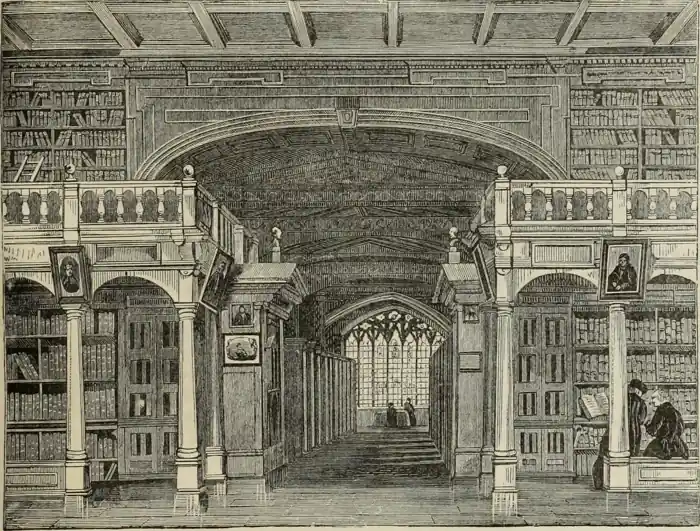
Read and listen together
 FrankensteinRead along