Read here

The Confessions of Jean Jacques Rousseau — Complete

Jean-Jacques Rousseau · Public domain text

273,687 words · about 19 h 10 min to read

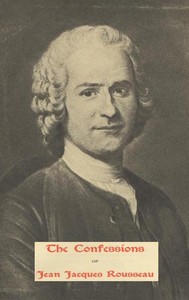
Cover of The Confessions of Jean Jacques Rousseau — Complete

Text only · 13 illustrations omitted. Illustrated source.

About this edition

The text of The Confessions of Jean Jacques Rousseau — Complete comes from Project Gutenberg e-text #3913. It is in English and public domain in the United States. Project Gutenberg’s header and license text are removed, and RedLectern sets the text out for reading on screen; no words of the book are rewritten or summarized. More formats (EPUB, Kindle) · How RedLectern is built

This book also contains the text of The Confessions of Jean Jacques Rousseau — Volume 01, which is also on RedLectern as a separate book.

This text-only edition leaves out 13 illustrations. See the illustrated edition at Project Gutenberg.

This book is long enough to be split into 8 parts, so each one loads quickly on its own.

About this book

Author
Jean-Jacques Rousseau (1712–1778)
Language
English
Subjects
Rousseau, Jean-Jacques, 1712-1778, Authors, French › 18th century › Biography
Length
273,687 words · about 19 h 10 min
Sections
14 reader sections · Table of contents
Contents (14)
  1. Opening under 1 min
  2. I. INTRODUCTION about 9 min
  3. Book I about 1 h 5 min
  4. Book II about 1 h 11 min
  5. Book III about 1 h 9 min
  6. Book IV about 1 h 11 min
  7. Book V about 1 h 26 min
  8. Book VI about 1 h 23 min
  9. Book VII about 2 h 16 min
  10. Book VIII about 1 h 38 min
  11. Book IX about 2 h 38 min
  12. Book X about 1 h 39 min
  13. Book XI about 1 h 19 min
  14. Book XII about 2 h 5 min

The opening of I. INTRODUCTION

|Among the notable books of later times--we may say, without exaggeration, of all time--must be reckoned The Confessions of Jean Jacques Rousseau. It deals with leading personages and transactions of a momentous epoch, when absolutism and feudalism were rallying for their last struggle against the modern spirit, chiefly represented by Voltaire, the Encyclopedists, and Rousseau himself--a struggle to which, after many fierce intestine quarrels and sanguinary wars throughout Europe and America, has succeeded the prevalence of those more tolerant and rational principles by which the statesmen of our own day are actuated.

On these matters, however, it is not our province to enlarge; nor is it necessary to furnish any detailed account of our author's political, religious, and philosophic axioms and systems, his paradoxes and his errors in logic: these have been so long and so exhaustively disputed over by contending factions that little is left for even the most assiduous gleaner in the field. The inquirer will find, in Mr. John Money's excellent work, the opinions of Rousseau reviewed succinctly and impartially.

Read on in Part 1 →