Appendix
I. AN ESSAY ON SHELLEY
Shelley's influence on Browning is so frequently referred to, that it seems best, inasmuch as this Essay is the only distinct piece of prose in Browning's writings, to print it here in the Appendix to his Complete Poetic and Dramatic Writings. The paper was written in 1852 at the request of Mr. Moxon, the publisher, under the circumstances named in the first paragraph of the Essay. Before the book was actually published, it was discovered to be a fabrication and was immediately suppressed. A very few copies only escaped the publisher's hands; apparently, those only which went to the depositories of copyright matter. The present copy is taken from the one issued in 1888 by the Shelley Society, London, under the editorship of W. Tyas Harden.
* * * * *
An opportunity having presented itself for the acquisition of a series of unedited letters by Shelley, all more or less directly supplementary to and illustrative of the collection already published by Mr. Moxon, that gentleman has decided on securing them. They will prove an acceptable addition to a body of correspondence, the value of which, towards a right understanding of its author's purpose and work, may be said to exceed that of any similar contribution exhibiting the worldly relations of a poet whose genius has operated by a different law.
Doubtless we accept gladly the biography of an objective poet, as the phrase now goes; one whose endeavor has been to reproduce things external (whether the phenomena of the scenic universe, or the manifested action of the human heart and brain), with an immediate reference, in every case, to the common eye and apprehension of his fellow-men, assumed capable of receiving and profiting by this reproduction. It has been obtained through the poet's double faculty of seeing external objects more clearly, widely, and deeply than is possible to the average mind, at the same time that he is so acquainted and in sympathy with its narrower comprehension as to be careful to supply it with no other materials than it can combine into an intelligible whole. The auditory of such a poet will include, not only the intelligences which, save for such assistance, would have missed the deeper meaning and enjoyment of the original objects, but also the spirits of a like endowment with his own, who, by means of his abstract, can forthwith pass to the reality it was made from, and either corroborate their impressions of things known already, or supply themselves with new from whatever shows in the inexhaustible variety of existence may have hitherto escaped their knowledge. Such a poet is properly the ποιητής, the fashioner; and the thing fashioned, his poetry, will of necessity be substantive, projected from himself and distinct. We are ignorant what the inventor of Othello conceived of that fact as he beheld it in completeness, how he accounted for it, under what known law he registered its nature, or to what unknown law he traced its coincidence. We learn only what he intended we should learn by that particular exercise of his power,--the fact itself,--which, with its infinite significances, each of us receives for the first time as a creation, and is hereafter left to deal with, as, in proportion to his own intelligence, he best may. We are ignorant, and would fain be otherwise.
Doubtless, with respect to such a poet, we covet his biography. We desire to look back upon the process of gathering together in a lifetime the materials of the work we behold entire; of elaborating, perhaps under difficulty and with hindrance, all that is familiar to our admiration in the apparent facility of success. And the inner impulse of this effort and operation, what induced it? Did a soul's delight in its own extended sphere of vision set it, for the gratification of an insuppressible power, on labor, as other men are set on rest? Or did a sense of duty or of love lead it to communicate its own sensations to mankind? Did an irresistible sympathy with men compel it to bring down and suit its own provision of knowledge and beauty to their narrow scope? Did the personality of such an one stand like an open watch-tower in the midst of the territory it is erected to gaze on, and were the storms and calms, the stars and meteors, its watchman was wont to report of, the habitual variegation of his every-day life, as they glanced across its open door or lay reflected on its four-square parapet? Or did some sunken and darkened chamber of imagery witness, in the artificial illumination of every storied compartment we are permitted to contemplate, how rare and precious were the outlooks through here and there an embrasure upon a world beyond, and how blankly would have pressed on the artificer the boundary of his daily life, except for the amorous diligence with which he had rendered permanent by art whatever came to diversify the gloom? Still, fraught with instruction and interest as such details undoubtedly are, we can, if needs be, dispense with them. The man passes, the work remains. The work speaks for itself, as we say; and the biography of the worker is no more necessary to an understanding or enjoyment of it than is a model or anatomy of some tropical tree to the right tasting of the fruit we are familiar with on the market-stall,--or a geologist's map and stratification to the prompt recognition of the hill-top, our landmark of every day.
"We turn with stronger needs to the genius of an opposite tendency,--the subjective poet of modern classification. He, gifted like the objective poet with the fuller perception of nature and man, is impelled to embody the thing he perceives, not so much with reference to the many below as to the one above him, the supreme Intelligence which apprehends all things in their absolute truth,--an ultimate view ever aspired to, if but partially attained, by the poet's own soul. Not what man sees, but what God sees,--the Ideas of Plato, seeds of creation lying burningly on the Divine Hand,--it is toward these that he struggles. Not with the combination of humanity in action, but with the primal elements of humanity, he has to do; and he digs where he stands,--preferring to seek them in his own soul as the nearest reflex of that absolute Mind, according to the intuitions of which he desires to perceive and speak. Such a poet does not deal habitually with the picturesque groupings and tempestuous tossings of the forest tress, but with their roots and fibres naked to the chalk and stone. He does not paint pictures and hang them on the walls, but rather carries them on the retina of his own eyes: we must look deep into his human eyes to see those pictures on them. He is rather a seer, accordingly, than a fashioner, and what he produces will be less a work than an effluence. That effluence cannot be easily considered in abstraction from his personality,--being indeed the very radiance and aroma of his personality, projected from it but not separated. Therefore, in our approach to the poetry, we necessarily approach the personality of the poet; in apprehending it we apprehend him, and certainly we cannot love it without loving him. Both for love's and for understanding's sake we desire to know him, and, as readers of his poetry, must be readers of his biography also.
I shall observe, in passing, that it seems not so much from any essential distinction in the faculty of the two poets, or in the nature of the objects contemplated by either, as in the more immediate adaptability of these objects to the distinct purpose of each, that the objective poet, in his appeal to the aggregate human mind, chooses to deal with the doings of men (the result of which dealing, in its pure form, when even description, as suggesting a describer, is dispensed with, is what we call dramatic poetry); while the subjective poet, whose study has been himself, appealing through himself to the absolute Divine mind, prefers to dwell upon those external scenic appearances which strike out most abundantly and uninterruptedly his inner light and power, selects that silence of the earth and sea in which he can best hear the beating of his individual heart, and leaves the noisy, complex, yet imperfect exhibitions of nature in the manifold experience of man around him, which serve only to distract and suppress the working of his brain. These opposite tendencies of genius will be more readily descried in their artistic effect than in their moral spring and cause. Pushed to an extreme and manifested as a deformity, they will be seen plainest of all in the fault of either artist when, subsidiarily to the human interest of his work, his occasional illustrations from scenic nature are introduced as in the earlier works of the originative painters,--men and women filling the foreground with consummate mastery, while mountain, grove, and rivulet show like an anticipatory revenge on that succeeding race of landscape-painters, whose "figures" disturb the perfection of their earth and sky. It would be idle to inquire, of these two kinds of poetic faculty in operation, which is the higher or even rarer endowment. If the subjective might seem to be the ultimate requirement of every age, the objective, in the strictest state, must still retain its original value. For it is with this world, as starting point and basis alike, that we shall always have to concern ourselves: the world is not to be learned and thrown aside, but reverted to and relearned. The spiritual comprehension may be infinitely subtilized, but the raw material it operates upon must remain. There may be no end of the poets who communicate to us what they see in an object with reference to their own individuality: what it was before they saw it, in reference to the aggregate human mind, will be as desirable to know as ever. Nor is there any reason why these two modes of poetic faculty may not issue hereafter from the same poet in successive perfect works, examples of which, according to what are now considered the exigencies of art, we have hitherto possessed in distinct individuals only. A mere running in of the one faculty upon the other is, of course, the ordinary circumstance. Far more rarely it happens that either is found so decidedly prominent and superior as to be pronounced comparatively pure; while of the perfect shield, with the gold and the silver side set up for all comers to challenge, there has yet been no instance. Either faculty in its eminent state is doubtless conceded by Providence as a best gift to men, according to their especial want. There is a time when the general eye has, so to speak, absorbed its fill of the phenomena around it, whether spiritual or material, and desires rather to learn the exacter significance of what it possesses than to receive any augmentation of what is possessed. Then is the opportunity for the poet of loftier vision to lift his fellows, with their half-apprehensions, up to his own sphere, by intensifying the import of details and rounding the universal meaning. The influence of such an achievement will not soon die out. A tribe of successors (Homerides), working more or less in the same spirit, dwell on his discoveries and reinforce his doctrine; till, at unawares, the world is found to be subsisting wholly on the shadow of a reality, on sentiments diluted from passions, on the tradition of a fact, the convention of a moral, the straw of last year's harvest. Then is the imperative call for the appearance of another sort of poet, who shall at once replace this intellectual rumination of food swallowed long ago, by a supply of the fresh and living swathe; getting at new substance by breaking up the assumed wholes into parts of independent and unclassed value, careless of the unknown laws for recombining them (it will be the business of yet another poet to suggest those hereafter), prodigal of objects for men's outer and not inner sight; shaping for their uses a new and different creation from the last, which it displaces by the right of life over death,--to endure until, in the inevitable process, its very sufficiency to itself shall require at length an exposition of its affinity to something higher, when the positive yet conflicting facts shall again precipitate themselves under a harmonizing law, and one more degree will be apparent for a poet to climb in that mighty ladder, of which, however cloud-involved and undefined may glimmer the topmost step, the world dares no longer doubt that its gradations ascend.
Such being the two kinds of artists, it is naturally, as I have shown, with the biography of the subjective poet that we have the deeper concern. Apart from his recorded life altogether, we might fail to determine with satisfactory precision to what class his productions belong, and what amount of praise is assignable to the producer. Certainly, in the fact of any conspicuous achievement of genius, philosophy no less than sympathetic instinct warrants our belief in a great moral purpose having mainly inspired even where it does not visibly look out of the same. Greatness in a work suggests an adequate instrumentality; and none of the lower incitements, however they may avail to initiate or even effect many considerable displays of power, simulating the nobler inspiration to which they are mistakenly referred, have been found able, under the ordinary conditions of humanity, to task themselves to the end of so exacting a performance as a poet's complete work. As soon will the galvanism, that provokes to violent action the muscles of a corpse, induce it to cross the chamber steadily: sooner. The love of displaying power for the display's sake; the love of riches, of distinction, of notoriety; the desire of a triumph over rivals, and the vanity in the applause of friends,--each and all of such whetted appetites grow intenser by exercise, and increasingly sagacious as to the best and readiest means of self-appeasement: while for any of their ends, whether the money or the pointed finger of the crowd, or the flattery and hate to heart's content, there are cheaper prices to pay, they will all find soon enough, than the bestowment of a life upon a labor hard, slow, and not sure. Also, assuming the proper moral aim to have produced a work, there are many and various states of an aim: it may be more intense than clear-sighted, or too easily satisfied with a lower field of activity than a steadier aspiration would reach. All the bad poetry in the world (accounted poetry, that is, by its affinities) will be found to result from some one of the infinite degrees of discrepancy between the attributes of the poet's soul, occasioning a want of correspondency between his work and the verities of nature,--issuing in poetry, false under whatever form, which shows a thing, not as it is to mankind generally, nor as it is to the particular describer, but as it is supposed to be for some unreal neutral mood, midway between both and of value to neither, and living its brief minute simply through the indolence of whoever accepts it or his incapacity to denounce a cheat. Although of such depths of failure there can be no question here, we must in every case betake ourselves to the review of a poet's life ere we determine some of the nicer questions concerning his poetry,--more especially if the performance we seek to estimate aright has been obstructed and cut short of completion by circumstances,--a disastrous youth or a premature death. We may learn from the biography whether his spirit invariably saw and spoke from the last height to which it had attained. An absolute vision is not for this world, but we are permitted a continual approximation to it, every degree of which in the individual, provided it exceed the attainment of the masses, must procure him a clear advantage. Did the poet ever attain to a higher platform than where he rested and exhibited a result? Did he know more than he spoke of?
I concede, however, in respect to this subject of our study as well as some few other illustrious examples, that the unmistakable quality of the verse would be evidence enough, under usual circumstances, not only of the kind and degree of the intellectual but of the moral constitution of Shelley; the whole personality of the poet shining forward from the poems, without much need of going further to seek it. The "Remains"--produced within a period of ten years, and at a season of life when other men of at all comparable genius have hardly done more than prepare the eye for future sight and the tongue for speech--present us with the complete enginery of a poet, as signal in the excellence of its several aptitudes as transcendent in the combination of effects,--examples, in fact, of the whole poet's function of beholding with an understanding keenness the universe, nature and man, in their actual state of perfection in imperfection; of the whole poet's virtue of being untempted, by the manifold partial developments of beauty and good on every side, into leaving them the ultimates he found them,--induced by the facility of the gratification of his own sense of those qualities, or by the pleasure of acquiescence in the shortcomings of his predecessors in art, and the pain of disturbing their conventionalisms,--the whole poet's virtue, I repeat, of looking higher than any manifestation yet made of both beauty and good, in order to suggest from the utmost realization of the one a corresponding capability in the other, and out of the calm, purity, and energy of nature to reconstitute and store up, for the forthcoming stage of man's being, a gift in repayment of that former gift in which man's own thought and passion had been lavished by the poet on the else-incompleted magnificence of the sunrise, the else-uninterpreted mystery of the lake,--so drawing out, lifting up, and assimilating this ideal of a future man, thus descried as possible, to the present reality of the poet's soul already arrived at the higher state of development, and still aspirant to elevate and extend itself in conformity with its still-improving perceptions of, no longer the eventual Human, but the actual Divine. In conjunction with which noble and rare powers came the subordinate power of delivering these attained results to the world in an embodiment of verse more closely answering to and indicative of the process of the informing spirit, (failing, as it occasionally does, in art, only to succeed in highest art),--with a diction more adequate to the task in its natural and acquired richness, its material color and spiritual transparency,--the whole being moved by and suffused with a music at once of the soul and the sense, expressive both of an external might of sincere passion and an internal fitness and consonancy,--than can be attributed to any other writer whose record is among us. Such was the spheric poetical faculty of Shelley, as its own self-sacrificing central light, radiating equally through immaturity and accomplishment, through many fragments and occasional completion, reveals it to a competent judgment.
But the acceptance of this truth by the public has been retarded by certain objections which cast us back on the evidence of biography, even with Shelley's poetry in our hands. Except for the particular character of these objections, indeed, the non-appreciation of his contemporaries would simply class, now that it is over, with a series of experiences which have necessarily happened, and needlessly been wondered at, ever since the world began, and concerning which any present anger may well be moderated, no less in justice to our forerunners than in policy to ourselves. For the misapprehensiveness of his age is exactly what a poet is sent to remedy; and the interval between his operation and the generally perceptible effect of it is no greater, less indeed, than in many other departments of great human effort. The "E pur si muove" of the astronomer was as bitter a word as any uttered before or since by a poet over his rejected living work, in that depth of conviction which is so like despair.
But in this respect was the experience of Shelley peculiarly unfortunate,--that the disbelief in him as a man even preceded the disbelief in him as a writer; the misconstruction of his moral nature preparing the way for the misappreciation of his intellectual labors. There existed from the beginning--simultaneous with, indeed anterior to, his earliest noticeable works, and not brought forward to counteract any impression they had succeeded in making--certain charges against his private character and life, which, if substantiated to their whole breadth, would materially disturb, I do not attempt to deny, our reception and enjoyment of his works, however wonderful the artistic qualities of these. For we are not sufficiently supplied with instances of genius of his order to be able to pronounce certainly how many of its constituent parts have been tasked and strained to the production of a given lie, and how high and pure a mood of the creative mind may be dramatically simulated as the poet's habitual and exclusive one. The doubts, therefore, arising from such a question, required to be set at rest, as they were effectually, by those early authentic notices of Shelley's career and the corroborative accompaniment of his letters, in which not only the main tenor and principal result of his life, but the purity and beauty of many of the processes which had conduced to them, were made apparent enough for the general reader's purpose,--whoever lightly condemned Shelley first, on the evidence of reviews and gossip, as lightly acquitting him now, on that of memoirs and correspondence. Still, it is advisable to lose no opportunity of strengthening and completing the chain of biographical testimony; much more, of course, for the sake of the poet's original lovers, whose volunteered sacrifice of particular principle in favor of absorbing sympathy we might desire to dispense with, than for the sake of his foolish haters, who have long since diverted upon other objects their obtuseness or malignancy. A full life of Shelley should be written at once, while the materials for it continue in reach; not to minister to the curiosity of the public, but to obliterate the last stain of that false life which was forced on the public's attention before it had any curiosity on the matter,--a biography composed in harmony with the present general disposition to have faith in him, yet not shrinking from a candid statement of all ambiguous passages, through a reasonable confidence that the most doubtful of them will be found consistent with a belief in the eventual perfection of his character, according to the poor limits of our humanity. Nor will men persist in confounding, any more than God confounds, with genuine infidelity and atheism of the heart those passionate, impatient struggles of a boy towards distant truth and love, made in the dark, and ended by one sweep of the natural seas before the full moral sunrise could shine out on him. Crude convictions of boyhood, conveyed in imperfect and inapt forms of speech,--for such things all boys have been pardoned. There are growing-pains, accompanied by temporary distortion, of the soul also. And it would be hard indeed upon this young Titan of genius, murmuring in divine music his human ignorances through his very thirst for knowledge, and his rebellion in mere aspiration to law, if the melody itself substantiated the error, and the tragic cutting short of life perpetuated into sins such faults as, under happier circumstances, would have been left behind by the consent of the most arrogant moralist, forgotten on the lowest steps of youth.
The responsibility of presenting to the public a biography of Shelley does not, however, lie with me: I have only to make it a little easier by arranging these few supplementary letters, with a recognition of the value of the whole collection. This value I take to consist in a most truthful conformity of the Correspondence, in its limited degree, with the moral and intellectual character of the writer as displayed in the highest manifestations of his genius. Letters and poems are obviously an act of the same mind, produced by the same law, only differing in the application to the individual or collective understanding. Letters and poems may be used indifferently as the basement of our opinion upon the writer's character; the finished expression of a sentiment in the poems giving light and significance to the rudiments of the same in the letters, and these again, in their incipiency and unripeness, authenticating the exalted mood and reattaching it to the personality of the writer. The musician speaks on the note he sings with; there is no change in the scale as he diminishes the volume into familiar intercourse. There is nothing of that jarring between the man and the author, which has been found so amusing or so melancholy; no dropping of the tragic mask as the crowd melts away; no mean discovery of the real motives of a life's achievement, often in other lives laid bare as pitifully as when, at the close of a holiday, we catch sight of the internal lead-pipes and wood-valves to which, and not to the ostensible conch and dominant Triton of the fountain, we have owed our admired water-work. No breaking out, in household privacy, of hatred, anger, and scorn, incongruous with the higher mood, and suppressed artistically in the book; no brutal return to self-delighting, when the audience of philanthropic schemes is out of hearing; no indecent stripping off the grander feeling and rule of life as too costly and cumbrous for every-day wear. Whatever Shelley was, he was with an admirable sincerity. It was not always truth that he thought and spoke; but in the purity of truth he spoke and thought always. Everywhere is apparent his belief in the existence of Good, to which Evil is an accident; his faithful holding by what he assumed to be the former going everywhere in company with the tenderest pity for those acting or suffering on the opposite hypothesis. For he was tender, though tenderness is not always the characteristic of very sincere natures; he was eminently both tender and sincere. And not only do the same affection and yearning after the well-being of his kind appear in the letters as in the poems, but they express themselves by the same theories and plans, however crude and unsound. There is no reservation of a subtler, less costly, more serviceable remedy for his own ill than he has proposed for the general one; nor does he ever contemplate an object on his own account from a less elevation than he uses in exhibiting it to the world. How shall we help believing Shelley to have been, in his ultimate attainment, the splendid spirit of his own best poetry, when we find even his carnal speech to agree faithfully, at faintest as at strongest, with the tone and rhythm of his most oracular utterances?
For the rest, these new letters are not offered as presenting any new feature of the poet's character. Regarded in themselves, and as the substantive productions of a man, their importance would be slight. But they possess interest beyond their limits, in confirming the evidence just dwelt on, of the poetical mood of Shelley being only the intensification of his habitual mood; the same tongue only speaking, for want of the special excitement to sing. The very first letter, as one instance for all, strikes the key-note of the predominating sentiment of Shelley throughout his whole life--his sympathy with the oppressed. And when we see him at so early an age, casting out, under the influence of such a sympathy, letters and pamphlets on every side, we accept it as the simple exemplification of the sincerity, with which, at the close of his life, he spoke of himself, as--
"One whose heart a stranger's tear might wear As water-drops the sandy fountain stone; Who loved and pitied all things, and could moan For woes which others hear not, and could see The absent with the glass of phantasy, And near the poor and trampled sit and weep, Following the captive to his dungeon deep-- One who was as a nerve o'er which do creep The else-unfelt oppressions of this earth."
Such sympathy with his kind was evidently developed in him to an extraordinary and even morbid degree, at a period when the general intellectual powers it was impatient to put in motion were immature or deficient.
I conjecture, from a review of the various publications of Shelley's youth, that one of the causes of his failure at the outset was the peculiar practicalness of his mind, which was not without a determinate effect on his progress in theorizing. An ordinary youth, who turns his attention to similar subjects, discovers falsities, incongruities, and various points for amendment, and, in the natural advance of the purely critical spirit unchecked by considerations of remedy, keeps up before his young eyes so many instances of the same error and wrong, that he finds himself unawares arrived at the startling conclusion, that all must be changed--or nothing: in the face of which plainly impossible achievement, he is apt (looking perhaps a little more serious by the time he touches at the decisive issue) to feel, either carelessly or considerately, that his own attempting a single piece of service would be worse than useless even, and to refer the whole task to another age and person--safe in proportion to his incapacity. Wanting words to speak, he has never made a fool of himself by speaking. But, in Shelley's case, the early fervor and power to see was accompanied by as precocious a fertility to contrive: he endeavored to realize as he went on idealizing; every wrong had simultaneously its remedy, and, out of the strength of his hatred for the former, he took the strength of his confidence in the latter--till suddenly he stood pledged to the defence of a set of miserable little expedients, just as if they represented great principles, and to an attack upon various great principles, really so, without leaving himself time to examine whether because they were antagonistical to the remedy he had suggested, they must therefore be identical or even essentially connected with the wrong he sought to cure,--playing with blind passion into the hands of his enemies, and dashing at whatever red cloak was held forth to him, as the cause of the fireball he had last been stung with--mistaking Churchdom for Christianity, and for marriage, "the sale of love" and the law of sexual oppression.
Gradually, however, he was leaving behind him this low practical dexterity, unable to keep up with his widening intellectual perception; and, in exact proportion as he did so, his true power strengthened and proved itself. Gradually he was raised above the contemplation of spots and the attempt at effacing them, to the great Abstract Light, and through the discrepancy of the creation, to the sufficiency of the First Cause. Gradually he was learning that the best way of removing abuses is to stand fast by truth. Truth is one, as they are manifold; and innumerable negative effects are produced by the upholding of one positive principle. I shall say what I think,--had Shelley lived he would have finally ranged himself with the Christians; his very instinct for helping the weaker side (if numbers make strength), his very "hate of hate," which at first mistranslated itself into delirious Queen Mab notes and the like, would have got clear-sighted by exercise. The preliminary step to following Christ, is the leaving the dead to bury their dead--not clamoring on his doctrine for an especial solution of difficulties which are referable to the general problem of the universe. Already he had attained to a profession of "a worship to the Spirit of good within, which requires (before it sends that inspiration forth, which impresses its likeness upon all it creates) devoted and disinterested homage," as Coleridge says,--and Paul likewise. And we find in one of his last exquisite fragments, avowedly a record of one of his own mornings and its experience, as it dawned on him at his soul and body's best in his boat on the Serchio--that as surely as
"The stars burnt out in the pale blue air, And the thin white moon lay withering there-- Day had kindled the dewy woods, And the rocks above, and the stream below, And the vapors in their multitudes, And the Apennine's shroud of summer snow-- Day had awakened all things that be;"
just so surely, he tells us (stepping forward from this delicious dance-music, choragus-like, into the grander measure befitting the final enunciation),--
"All rose to do the task He set to each, Who shaped us to His ends and not our own; The million rose to learn, and One to teach What none yet ever knew or can be known."
No more difference than this, from David's pregnant conclusion so long ago!
Meantime, as I call Shelley a moral man, because he was true, simple-hearted, and brave, and because what he acted corresponded to what he knew, so I call him a man of religious mind, because every audacious negative cast up by him against the Divine was interpenetrated with a mood of reverence and adoration,--and because I find him everywhere taking for granted some of the capital dogmas of Christianity, while most vehemently denying their historical basement. There is such a thing as an efficacious knowledge of and belief in the politics of Junius, or the poetry of Rowley, though a man should at the same time dispute the title of Chatterton to the one, and consider the author of the other, as Byron wittily did, "really, truly, nobody at all."[11]
There is even such a thing, we come to learn wonderingly in these very letters, as a profound sensibility and adaptitude for art, while the science of the percipient is so little advanced as to admit of his stronger admiration for Guido (and Carlo Dolce!) than for Michael Angelo. A Divine Being has Himself said, that "a word against the Son of man shall be forgiven to a man," while "a word against the Spirit of God" (implying a general deliberate preference of perceived evil to perceived good) "shall not be forgiven to a man." Also, in religion, one earnest and unextorted assertion of belief should outweigh, as a matter of testimony, many assertions of unbelief. The fact that there is a gold-region is established by finding one lump, though you miss the vein never so often.
He died before his youth ended. In taking the measure of him as a man, he must be considered on the whole and at his ultimate spiritual stature, and not to be judged of at the immaturity and by the mistakes of ten years before: that, indeed, would be to judge of the author of "Julian and Maddalo by Zastrozzi." Let the whole truth be told of his worst mistake. I believe, for my own part, that if anything could now shame or grieve Shelley, it would be an attempt to vindicate him at the expense of another.
In forming a judgment, I would, however, press on the reader the simple justice of considering tenderly his constitution of body as well as mind, and how unfavorable it was to the steady symmetries of conventional life; the body, in the torture of incurable disease, refusing to give repose to the bewildered soul, tossing in its hot fever of the fancy,--and the laudanum-bottle making but a perilous and pitiful truce between these two. He was constantly subject to "that state of mind" (I quote his own note to Hellas) "in which ideas may be supposed to assume the force of sensation, through the confusion of thought, with the objects of thought, and excess of passion animating the creations of the imagination:" in other words, he was liable to remarkable delusions and hallucinations. The nocturnal attack in Wales, for instance, was assuredly a delusion; and I venture to express my own conviction, derived from a little attention to the circumstances of either story, that the idea of the enamored lady following him to Naples, and of the "man in the cloak" who struck him at the Pisan post-office, were equally illusory, --the mere projection, in fact, from himself, of the image of his own love and hate.
"To thirst and find no fill--to wail and wander With short unsteady step--to pause and ponder-- To feel the blood run through the veins and tingle When busy thought and blind sensation mingle,-- To nurse the image of unfelt caresses Till dim imagination just possesses The half-created shadow"--
of unfelt caresses,--and of unfelt blows as well: to such conditions was his genius subject. It was not at Rome only (where he heard a mystic voice exclaiming, "Cenci, Cenci," in reference to the tragic theme which occupied him at the time),--it was not at Rome only that he mistook the cry of "old rags." The habit of somnambulism is said to have extended to the very last days of his life.
Let me conclude with a thought of Shelley as a poet. In the hierarchy of creative minds, it is the presence of the highest faculty that gives first rank, in virtue of its kind, not degree; no pretension of a lower nature, whatever the completeness of development of, variety of effect, impeding the precedency of the rarer endowment though only in the germ. The contrary is sometimes maintained; it is attempted to make the lower gifts (which are potentially included in the higher faculty) of independent value, and equal to some exercise of the special function. For instance, should not a poet possess common sense? Then the possession of abundant common sense implies a step towards becoming a poet. Yes; such a step as the lapidary's, when, strong in the fact of carbon entering largely into the composition of the diamond, he heaps up a sack of charcoal in order to compete with the Koh-i-noor. I pass at once, therefore, from Shelley's minor excellences to his noblest and predominating characteristic.
This I call his simultaneous perception of Power and Love in the absolute, and of Beauty and Good in the concrete, while he throws, from his poet's station between both, swifter, subtler, and more numerous films for the connection of each with each, than have been thrown by any modern artificer of whom I have knowledge; proving how, as he says,
"The spirit of the worm within the sod In love and worship blends itself with God."
I would rather consider Shelley's poetry as a sublime fragmentary essay towards a presentment of the correspondency of the universe to Deity, of the natural to the spiritual, and of the actual to the ideal, than I would isolate and separately appraise the worth of many detachable portions which might be acknowledged as utterly perfect in a lower moral point of view, under the mere conditions of art. It would be easy to take my stand on successful instances of objectivity in Shelley: there is the unrivalled Cenci; there is the Julian and Maddalo too; there is the magnificent Ode to Naples: why not regard, it may be said, the less organized matter as the radiant elemental foam and solution, out of which would have been evolved, eventually, creations as perfect even as those? But I prefer to look for the highest attainment, not simply the high,--and, seeing it, I hold by it. There is surely enough of the work "Shelley" to be known enduringly among men, and, I believe, to be accepted of God, as human work may; and around the imperfect proportions of such, the most elaborated productions of ordinary art must arrange themselves as inferior illustrations.
It is because I have long held these opinions in assurance and gratitude, that I catch at the opportunity offered to me of expressing them here; knowing that the alacrity to fulfil an humble office conveys more love than the acceptance of the honor of a higher one, and that better, therefore, than the signal service it was the dream of my boyhood to render to his fame and memory, may be the saying of a few inadequate words upon these scarcely more important supplementary letters of Shelley.
II. NOTES AND ILLUSTRATIONS
Page 2. PAULINE. A translation of the passage from Cornelius Agrippa may be found in Cooke, p. 285.
V. A. XX. i. e., Vixi annos viginti. I was twenty years old.
Page 3.
Had not the glow I felt at his award
. . . . . . . . .
Sun-treader, life and light be thine forever.
The whole passage refers to Shelley. Many annotations to the poem are given in Poet-Lore, January and February, 1889.
Page 9. O God, where does this tend--these struggling aims?
Browning appends the following note, a translation of which may be found in Cooke, p. 332.
"Je crains bien que mon pauvre ami ne soit pas toujours parfaitement compris dans ce qui reste à lire de cet étrange fragment, mais il est moins propre que tout autre à éclaircir ce qui de sa nature ne peut jamais être que songe et confusion. D'ailleurs je ne sais trop si en cherchant à mieux co-ordonner certaines parties l'on ne courrait pas le risque de nuire au seul mérite auquel une production si singulière peut prètendre, celui de donner une idée assez précise du genre qu'elle n'a fait qu' ébaucher. Ce début sans prétention, ce remuement des passions qui va d'abord en accroissant et puis s'appaise par degrés, ces élans de l'âme, ce retour soudain sur soimême, et par-dessus tout, la tournure d'esprit tout particulière de mon ami, rendent les changemens presque impossibles. Les raisons qu'il fait valoir ailleurs, et d'autres encore plus puissantes, ont fait trouver grâce à mes yeux pour cet écrit qu'autrement je lui eusse conseillé de jeter au feu. Je n'en crois pas moins au grand principe de toute composition--à ce principe de Shakespeare, de Rafaelle, de Beethoven, d'où il suit que la concentration des idées est dûe bien plus à leur conception qu'à leur mise en exécution: j'ai tout lieu de craindre que la première de ces qualités ne soit encore étrangere à mon ami, et je doute fort qu'un redoublement de travail lui fasse acquerir la seconde. Le mieux serait de brûler ceci; mais que faire?
"Je crois que dans ce qui suit il fait allusion à un certain examen qu'il fit autrefois de l'âme ou plutôt de son âme, pour decouvrir la suite des objets auxquels il lui serait possible d'attendre, et dont chacun une fois obtenu devait former une espèce de plateau d'où l'on pouvait aperçevoir d'autres buts, d'autres projets, d'autres jouissances qui, à leur tour, devaient être surmontes. Il en resultait que l'oubli et le sommeil devaient tout terminer. Cette idée, que je ne saisis pas parfaitement, lui est peutêtre aussi inintelligible qu'à moi."
PAULINE.
Page 12. PARACELSUS. The following historical note and comment was provided by Browning to accompany the poem. The notes indicated by the superior numbers in the text will be found at the end of the article.
The liberties I have taken with my subject are very trifling; and the reader may slip the foregoing scenes between the leaves of any memoir of Paracelsus he pleases, by way of commentary. To prove this, I subjoin a popular account, translated from the Biographie Universelle, Paris, 1822, which I select, not as the best, certainly, but as being at hand, and sufficiently concise for my purpose. I also append a few notes, in order to correct those parts which do not bear out my own view of the character of Paracelsus; and have incorporated with them a notice or two, illustrative of the poem itself.
"PARACELSUS (Philippus Aureolus Theophrastus Bombastus ab Hohenheim) was born in 1493 at Einsiedeln,[12] a little town in the canton of Schwyz, some leagues distant from Zurich. His father, who exercised the profession of medicine at Villach in Carinthia, was nearly related to George Bombast de Hohenheim, who became afterward Grand Prior of the Order of Malta: consequently Paracelsus could not spring from the dregs of the people, as Thomas Erastus, his sworn enemy, pretends.[A] It appears that his elementary education was much neglected, and that he spent part of his youth in pursuing the life common to the travelling literati of the age; that is to say, in wandering from country to country, predicting the future by astrology and cheiromancy, evoking apparitions, and practising the different operations of magic and alchemy, in which he had been initiated whether by his father or by various ecclesiastics, among the number of whom he particularizes the Abbot Tritheim,[13] and many German bishops.
"As Paracelsus displays everywhere an ignorance of the rudiments of the most ordinary knowledge, it is not probable that he ever studied seriously in the schools: he contented himself with visiting the universities of Germany, France, and Italy; and in spite of his boasting himself to have been the ornament of those institutions, there is no proof of his having legally acquired the title of Doctor, which he assumes. It is only known that he applied himself long, under the direction of the wealthy Sigismond Fugger of Schwatz, to the discovery of the Magnum Opus.
"Paracelsus travelled among the mountains of Bohemia, in the east, and in Sweden, in order to inspect the labors of the miners, to be initiated in the mysteries of the oriental adepts, and to observe the secrets of nature and the famous mountain of loadstone.[14] He professes also to have visited Spain, Portugal, Prussia, Poland, and Transylvania; everywhere communicating freely, not merely with the physicians, but the old women, charlatans, and conjurers of these several lands. It is even believed that he extended his journeyings as far as Egypt and Tartary, and that he accompanied the son of the Khan of the Tartars to Constantinople, for the purpose of obtaining the secret of the tincture of Trismegistus from a Greek who inhabited that capital.
"The period of his return to Germany is unknown: it is only certain that, at about the age of thirty-three, many astonishing cures which he wrought on eminent personages procured him such a celebrity, that he was called in 1526, on the recommendation of Œcolampadius,[16] to fill a chair of physic and surgery at the University of Basle. There Paracelsus began by burning publicly in the amphitheatre the works of Avicenna and Galen, assuring his auditors that the latchets of his shoes were more instructed than those two physicians; that all universities, all writers put together, were less gifted than the hairs of his beard and of the crown of his head; and that, in a word, he was to be regarded as the legitimate monarch of medicine, 'You shall follow me,' cried he, 'you, Avicenna, Galen, Rhasis, Montagnana, Mesues, you, gentlemen of Paris, Montpellier, Germany, Cologne, Vienna,[B] and whomsoever the Rhine and Danube nourish; you who inhabit the isles of the sea; you, likewise, Dalmatians, Athenians: thou, Arab; thou, Greek; thou, Jew: all shall follow me, and the monarchy shall be mine.'[C]
"But at Basle it was speedily perceived that the new Professor was no better than an egregious quack. Scarcely a year elapsed before his lectures had fairly driven away an audience incapable of comprehending their emphatic jargon. That which above all contributed to sully his reputation was the debauched life he led. According to the testimony of Oporinus, who lived two years in his intimacy, Paracelsus scarcely ever ascended the lecture-desk unless half drunk, and only dictated to his secretaries when in a state of intoxication: if summoned to attend the sick, he rarely proceeded thither without previously drenching himself with wine. He was accustomed to retire to bed without changing his clothes; sometimes he spent the night in pot-houses with peasants, and in the morning knew no longer what he was about; and, nevertheless, up to the age of twenty-five his only drink had been water.[17]
"At length, fearful of being punished for a serious outrage on a magistrate,[15] he fled from Basle towards the end of the year 1527, and took refuge in Alsatia, whither he caused Oporinus to follow with his chemical apparatus.
"He then entered once more upon the career of ambulatory theosophist.[D] Accordingly we find him at Colmar in 1528; at Nuremberg in 1529; at St. Gall in 1531; at Pfeffers in 1535; and at Augsburg in 1536: he next made some stay in Moravia, where he still further compromised his reputation by the loss of many distinguished patients, which compelled him to betake himself to Vienna; from thence he passed into Hungary; and in 1538 was at Villach, where he dedicated his Chronicle to the States of Carinthia, in gratitude for the many kindnesses with which they had honored his father. Finally, from Mindelheim, which he visited in 1540, Paracelsus proceeded to Salzburg, where he died in the hospital of St. Stephen (Sebastian is meant), Sept. 24, 1541."--(Here follows a criticism on his writings, which I omit.)
Page 52. Act I. sc. 2. LADY CARLISLE and WENTWORTH.
Lady Carlisle, whose part was taken by Helen Faucit, afterward Lady Martin, was in history daughter to the ninth Earl of Northumberland. In 1639 she had been for three years a widow.
Page 71.
... Consign To the low ground once more the ignoble Term, And raise the Genius on his orb again.
The term was a statue representing the Roman term, the god who presides over boundaries. The genius was the image that represented the guardian spirit. Mr. Browning commenting on this passage has said: "Suppose the enemies of a man to have thrown down the image and replaced it by a mere Term, and you have what I put into Stratford's head." "Putting the Genius on the pedestal usurped by the Term means--or tries to mean--substituting eventually the true notion of Strafford's endeavor and performance in the world for what he conceives to be the ignoble and distorted conception of these by his contemporary judge."
Page 90. BOCAFOLI and PLARA.
"Purely supposititious poets. Browning chooses to invent them as types of two opposite poetic defects; Bocafoli as the writer of stark-naked or totally jejune and inartistic psalms: Plara as the writer of petted and over-finikin sonnets." [W. M. ROSSETTI.]
Page 101. Patron-friend. Walter Savage Landor.
Page 101. Eyebright.
"Stands for 'Euphrasia,' its Greek equivalent, and refers to one of Mr. Browning's oldest friends," Miss Euphrasia Fanny Haworth. [MRS. ORR.]
Page 129. Asolo.
It is interesting to note the choice of scene for Pippa Passes in view of the dedicatory letter of Browning's latest volume Asolando. In a letter written on his first journey to Italy he speaks of "delicious Asolo."
Page 137.
Kate? The Cornaro doubtless, who renounced The crown of Cyprus to be lady here At Asolo.
Caterina Cornaro, the daughter of a wealthy and noble citizen of Venice, was born in 1454. In 1471 she married the king of Cyprus. He died the next year and for seven years Caterina was nominal queen, but Venice compelled her at the end of that time to resign, and gave her for residence Castle Asolo.
Page 138. BLUPHOCKS.
The curious Biblical scholia on this character is Browning's own. It is said that the name was simply another way of spelling Blue Fox, a slang-phrase for the Edinburgh Review.
Page 168. THE LABORATORY.
Which is the poison to poison her, prithee?
D. G. Rossetti's first water-color was an illustration of this poem, and bore beneath it this line.
Page 169. CRISTINA.
The Cristina of this poem is fashioned after Cristina Maria, daughter of Francis I., King of the Two Sicilies. She was born in 1806; was married in 1829 to Ferdinand VII. King of Spain; became Regent in 1833, on the death of the king; and in 1843 her daughter ascended the throne as Isabel II. Her life was given to intrigue, and to the use of tyrannical power. She was hated by those she ruled, and despised by them because of her personal character.
Page 175. A TOCCATA OF GALUPPI'S.
Baldassere Galuppi was born near Venice in 1706, and died in Venice in 1785. He was in London for three or four years, and was a most prolific composer.
Page 176. You're wroth--can you slay your snake like Apollo?
In a volume of selections from his poem, revised by Browning himself, occurs the following note on this line, by the poet.
"A word on the line about Apollo the snake-slayer, which my friend Professor Colvin condemns, believing that the god of the Belvedere grasps no bow, but the ægis, as described in the 15th Iliad. Surely the text represents that portentous object (θοῦριν, δεινήν, ἀμφιδάσειαν, ἀριπρεπέ'--μαρμαρέην) as 'shaken violently' or 'held immovably' by both hands, not a single one, and that the left hand:--
ἀλλὰ σύ γ' ἐν χείρεσσι λάβ' αἰγίδα θυσανόεσσαν τὴν μάλ' ἐπίσσείων φοβέειν ἤρωας Ἀχαιούς.
and so on, τὴν ἄρ' ὃ γ' ἐν χείρεσσιν ἔχων--χερσὶν ἔχ' ἀτρέμα, κ.τ.λ. Moreover, while he shook it he 'shouted enormously,' σεῖσ', ἐπὶ δ' αὐτὸς αὔσε μαλά μέγα, which the statue does not. Presently when Teukros, on the other side, plies the bow, it is τόξον ἔχων ἐν χειρὶ παλίντονον. Besides, by the act of discharging an arrow, the right arm and hand are thrown back as we see,--a quite gratuitous and theatrical display in the case supposed. The conjecture of Flaxman that the statue was suggested by the bronze Apollo Alexikakos of Kalamis, mentioned by Pausanias, remains probable; though the 'hardness' which Cicero considers to distinguish the artist's workmanship from that of Muron is not by any means apparent in our marble copy, if it be one.--Feb. 16, 1880."
Page 181.
The last four lines of the ninth section of Saul which ended the first part in Bells and Pomegranates, were as follows, 1845:--
"On one head the joy and the pride, even rage like the throe That opes the rock, helps its glad labor, and lets the gold go-- And ambition that sees a man lead it--oh, all of these--all Combine to unite in one creature--Saul!"
Page 191. RESPECTABILITY.
"These two unconventional Bohemian lovers," says Professor Corson, "strolling together at night, at their own sweet will, see down the court along which they are strolling, three lampions flare, which indicate some big place or other where the respectables do congregate; and the woman says to the companion, with a humorous sarcasm, Put forward your best foot! that is, we must be very correct passing along here in this brilliant light. By the lovers are evidently meant George Sand (the speaker) and Jules Sandeau, with whom she lived in Paris, after she left her husband, M. Dudevant. They took just such unconventional night-strolls together, in the streets of Paris."
Page 194. THE GUARDIAN ANGEL.
The picture which Browning describes, called L' Angelo Custode, is in the church of St. Augustine at Fano; and it "represents an angel standing with outstretched wings by a little child. The child is half-kneeling on a kind of pedestal, while the angel joins its hands in prayer; its gaze is directed upwards towards the sky, from which cherubs are looking down." It is not regarded as one of his chief pictures, but it interested Browning because of the subject, and its simple pathos.
Page 194. Alfred, dear friend.
Alfred Domett, the hero of Waring, an early friend of Browning, and at the time living in New Zealand. Mrs. Orr writes: "When he read the apostrophe to 'Alfred, dear friend,' he had reached the last line before it occurred to him that the person invoked could be he."
Page 254. INSTANS TYRANNUS.
The title of this poem was suggested by Horace's ode, III. iii. 1. beginning
Justum et tenacem propositi virum, Non civium ardor prava jubentium Non vultus instantis tyranni.
Page 264. WARING.
Alfred Domett, son of Nathaniel Domett, was born at Camberwell Grove, Surrey, May 20, 1811. His father was a seaman under Nelson, and a gallant sailor. Alfred entered St. John's College, Cambridge, in 1829; but after a residence of three years he left without graduation. His attention was early turned to literature, and in 1832 he published a volume of poems. He also contributed to Blackwood's Magazine various lyrics which attracted attention to him as a rising poet. One of these was A Christmas Hymn, which is the best known of all his poems, and has been highly praised. It may be found in several poetical collections, and among them Festival Poems. In 1839, in the same magazine, he published a poem on Venice.
Domett was called to the bar in 1841, and lived in the Middle Temple with Joseph Arnold, who became Chief Justice of Bombay. He was handsome and attractive, well received in society, and a favorite with his literary friends. Before this, however, he had spent two years in travelling in America, including a winter in the backwoods of Canada; and then two years more in Switzerland, Italy, and other Continental countries. In 1842 he was persuaded to go to New Zealand by his cousin, William Young, whose father was a large land owner there, in connection with the New Zealand Company. In May, 1842, he went out to that colony among the earliest settlers. It was immediately after his departure that Browning wrote his Waring, which describes his friend very accurately, and the circumstances of his sudden absence from London. On arriving in New Zealand, Domett found that his cousin had just been drowned. He settled in the county of Wairoa, on the North Island. In The Guardian Angel Browning addressed him:--
"Where are you, dear old friend? How rolls the Wairoa at your world's far end?"
Soon after his arrival Domett was made a magistrate with a salary of £700 a year. Before leaving England Domett was permanently lamed by an accident to one of his legs, which saved his life soon after he reached the colony, for it prevented his accepting the invitation of some treacherous native chiefs to a banquet at which all the English guests were killed. In his Narrative of the Wairou Massacre, 1843, he described this event.
In 1848 he was made the Colonial Secretary for the southern part of the North Island; and in 1851 he was also appointed the Civil Secretary for the whole of New Zealand, holding both offices until the introduction of the new constitution, in 1853. Having resigned these offices, he accepted one of more work and less remuneration, as Commissioner of Crown Lands, and Resident Magistrate at Hawke's Bay; and of this district he had virtually the sole official management. In 1859 he represented the town of Nelson in the House of Representatives, and he was reëlected the following year.
In 1862, at a critical moment in the affairs of New Zealand, Domett was called upon to form a new government, which he successfully accomplished, becoming the Prime Minister.
In 1871, Domett returned to London, and took up his residence at Phillimore Terrace, Kensington; and afterwards at St. Charles's Square, North Kensington. He had married a handsome English lady while yet a resident in New Zealand. He saw much of Browning; he became an interested member of the Browning Society, and one of its vice-presidents. "His grand white head," says Mr. F. J. Furnivall, "was to be seen at all the Society's performances and at several of its meetings. He naturally preferred Mr. Browning's early works to the later ones. He could not be persuaded to write any account of his early London days. Mr. Domett produced with pride his sea-stained copy of Browning's Bells and Pomegranates. A sterling, manly, independent nature was Alfred Domett's. He impressed every one with whom he came in contact, and is deeply regretted by his remaining friends."
In 1872 Domett published in London his Ranolf and Amohia, a South-Sea Day Dream, a poem descriptive of New Zealand, its scenery, and the legends and habits of the Maori inhabitants. This poem was afterwards revised, enlarged, and published in two volumes. In 1877 appeared a volume of his short poems, including those published before he went to New Zealand, under the title of Flotsam and Jetsam, Rhymes Old and New. [G. W. COOKE.]
Page 280.
He settled Hoti's business--let it be! Properly based Oun--, Gave us the doctrine of the enclitic De.
--Hoti is the Greek particle ὅτι, that, etc.--Oun is the Greek particle οὖν, then, now then, etc.--The enclitic De is the Greek δε, which Browning refers to in a letter to the London Daily News of Nov. 21, 1874: "To the Editor: Sir,--In a clever article this morning you speak of 'the doctrine of enclitic De'--'which, with all deference to Mr. Browning, in point of fact does not exist.' No, not to Mr. Browning: but pray defer to Herr Buttmann, whose fifth list of 'enclitics' ends with 'the inseparable De'--or to Curtius, whose fifth list ends also with 'De (meaning "towards" and as a demonstrative appendage).' That this is not to be confounded with the accentuated 'De, meaning but' was the 'doctrine' which the Grammarian bequeathed to those capable of receiving it.--I am, sir, yours obediently, R. B."
Page 287. CHILDE ROLAND TO THE DARK TOWER CAME.
In an article describing a visit to the poet, Rev. John W. Chadwick speaks of this tapestry and Mr. Browning's comments on the poem:--
"Upon the lengthwise wall of the room, above the Italian furniture, sombre and richly carved, was a long, wide band of tapestry, on which I thought I recognized the miserable horse of Childe Roland's pilgrimage:--
"'One stiff blind horse, his every bone a-stare, Stood stupefied, however he came there: Thrust out past service from the devil's stud!'
I asked Mr. Browning if the beast of the tapestry was the beast of the poem; and he said yes, and descanted somewhat on his lean monstrosity. But only a Browning could have evolved the stanzas of the poem from the woven image. I further asked him if he had said that he only wrote Childe Roland for its realistic imagery, without any moral purpose,--a notion to which Mrs. Sutherland Orr has given currency; and he protested that he never had. When I asked him if constancy to an ideal--'He that endureth to the end shall be saved'--was not a sufficient understanding of the central purpose of the poem, he said, 'Yes, just about that.'"
Page 337. ARTEMIS PROLOGIZES.
Mrs. Orr prints in her Handbook a note from Browning with reference to the attacks upon him for the form he adopted in the printing of Greek names. It is in reply to an article in the Nineteenth Century, for January, 1886, written by Mr. Frederick Harrison. "I have just noticed," wrote Browning, "in this month's Nineteenth Century that it is inquired by a humorous objector to the practice of spelling (under exceptional conditions) Greek proper names as they are spelled in Greek literature, why the same principle should not be adopted by Ægyptologists, Hebraists, Sanscrittists, Aceadians, Moabites, Hittites, and Cuneiformists? Adopt it by all means whenever the particular language enjoyed by any fortunate possessor of these shall, like Greek, have been for about three hundred years insisted upon in England, as an acquisition of paramount importance at school and college, for every aspirant to distinction in learning, even at the cost of six or seven years' study--a sacrifice considered well worth making for even an imperfect acquaintance with the most perfect language in the world. Further, it will be adopted whenever the letters substituted for those in ordinary English use shall do no more than represent to the unscholarly what the scholar accepts without scruple, when, for the hundredth time, he reads the word which, for once, he has occasion to write in English, and which he concludes must be as euphonic as the rest of a language renowned for euphony. And finally, the practice will be adopted whenever the substituted letters effect no sort of organic change, so as to jostle the word from its pride of place in English verse or prose. 'Themistokles' fits in quietly everywhere, with or without the 'k;' but in a certain poetical translation I remember by a young friend, of the Anabasis, beginning thus felicitously, 'Cyrus the Great and Artaxerxes (Whose temper bloodier than a Turk's is) Were children both of the mild, pious, And happy monarch King Darius; who fails to see that, although a correct 'Kuraush' may pass, yet 'Darayavash' disturbs the metre as well as the rhyme? It seems, however, that 'Themistokles' may be winked at; not so the 'harsh and subversive "Kirke."' But let the objector ask somebody with no knowledge to subvert, how he supposes 'Circe' is spelled in Greek, and the answer will be, 'With a soft c.' Inform him that no such letter exists, and he guesses, 'Then with s, if there be anything like it.' Tell him that to eye and ear equally, his own k answers the purpose, and you have at all events taught him that much, if little enough--and why does he live unless to learn a little!" This note is signed "R. B." Its date is January 4, 1886.
Page 341. JOHANNES AGRICOLA IN MEDITATION.
"'Antinomians, so denominated for rejecting the Law as a thing of no use under the Gospel dispensation: they say, that good works do not further, nor evil works hinder salvation; that the child of God cannot sin, that God never chastiseth him, that murder, drunkenness, etc., are sins in the wicked but not in him, that the child of grace being once assured of salvation, afterwards never doubteth, ... that God doth not love any man for his holiness, that sanctification is no evidence of justification, etc. Pontanus, in his Catalogue of Heresies, says John Agricola was the author of this sect, A. D. 1535.' Dictionary of all Religions, 1704."
"Browning," says Mr. Cooke, "does not correctly represent the teachings of Agricola, though his poem is correct so far as many Antinomians are concerned. Agricola held that the Law and the Gospel are incompatible, that the Law is only for the Jew, and that the spirit of Christ abolishes it for the Christian. The moral obligations, however, he held were for the Christian as much as for any other person. In the New Testament he found all the principles and motives necessary to give true impulse and guidance to the Christian. It was the use made of his teachings by fanatics which cast an odium on the name of Antinomians; and it is this fanatical and sentimental religion which Browning has interpreted correctly in his poem. Many of the Antinomians taught what is attributed to them in the Dictionary of all Religions, from which Browning quoted when his poem was first published."
Page 348. THE BISHOP ORDERS HIS TOMB.
"I know no other piece of modern English, prose or poetry, in which there is so much told, as in these lines, of the Renaissance spirit,--its worldliness, inconsistency, pride, hypocrisy, ignorance of itself, love of art, of luxury, and of good Latin. It is nearly all that I said of the central Renaissance in thirty pages of the Stones of Venice, put into as many lines, Browning's being also the antecedent work. The worst of it is that this kind of concentrated writing needs so much solution before the reader can fairly get the good of it, that people's patience fails them, and they give the thing up as insoluble; though, truly, it ought to be to the current of common thought like Saladin's talisman, dipped in clear water, not soluble altogether, but making the element medicinal." [JOHN RUSKIN.]
Page 387. Is not his love at issue still with sin.
In the first edition there followed this line: Closed with and cast and conquered, crucified.
Page 602. BALAUSTION'S ADVENTURE.
Mr. Richard G. Moulton, in the Transactions of the Browning Society, 1890-1891, offers a detailed criticism of Browning's poem as a reproduction of the thought of Euripides, especially in regard to the character of Admetus. The chief points will be found in Berdoe's The Browning Cyclopaedia.
Page 699. PRINCE HOHENSTIEL-SCHWANGAU.
Of the description of the succession of Roman high priests, Mrs. Orr says: "Mr. Browning desires me to say that he has been wrong in associating this custom with the little temple by the river Clitumnus, which he describes from personal knowledge. That to which the tradition refers stood by the lake of Nemi."
Page 736. RED COTTON NIGHT-CAP COUNTRY.
The equivalents in point of fact of names are as follows.
The Firm Miranda = Mellerio Brothers.
St. Rambert = St. Aubin. Joyeux, Joyous-Gard = Lion, Lionesse.
Vire = Caen.
St. Rambertese = St. Aubinese.
Londres = Douvres.
London = Dover. La Roche = Courcelle. Moulieu = Bernières. Villeneuve = Langrune. Pons = Luc. La Ravissante = La Délivrande.
Raimbaux = Bayeux. Morillon = Hugonin. Mirecourt = Bonnechose.
New York = Madrid.
Clairvaux = Tailleville. Gonthier = Bény. Rousseau = Voltaire. Léonce = Antoine.
Of "Firm Miranda, London and New York" = "Mellerio Brothers;" Meller, people say.
Rare Vissante = Dell Yvrande. Aldabert = Regnobert. Eldobert = Ragnobert. Mailleville = Beaudoin. Chaumont = Quelen. Vertgalant = Talleyrand.
Ravissantish = Délivrandish.
Clara de Millefleurs = Anna de Beaupré. Coliseum Street = Miromesnil Street.
Steiner = Mayer. Commerey = Larocy. Sierck = Metz.
Muhlhausen = Debacker. Carlino Centofanti = Miranda di Mongino.
Portugal = Italy.
Vaillant = Mériel.
Thirty-three = Twenty-five.
Beaumont = Pasquier.
Sceaux = Garges.
The "guide" recommended to Miranda was M. Joseph Milsand, who was always at St. Aubin during the bathing season, and who was an old friend of Browning's.
Lac de la Maison Rouge = Jean de la Becquetière. Claise = Vire. Maude = Anne.
Dionysius = Eliezer. Scholastica = Elizabeth.
Twentieth = Thirteenth.
Fricquot = Picot.
Page 802. My Kirkup.
Baron Kirkup, a connoisseur in literature and art, who was numbered among Browning's Florentine friends. He was ennobled by the King of Italy, because of his literary and patriotic services to his country. He discovered a portrait of Dante in the Bargello at Florence.
Page 827. EPILOGUE.
The poet referred to is Mrs. Browning in Wine of Cyprus.
Page 880. IVÀN IVÀNOVITCH.
Mr. Nathan Haskell Dole, the author of a History of Russia, and the translator of Tolstoi and other Russian authors, furnishes for Mr. Cooke's Browning Guide Book the following notes:--
"A verst is about .66 of a mile (3500 feet).--I take it the highway broad and straight from the Neva's mouth to Moscow's gates of gold must refer to the legend that when the first railroad was built from one city to the other, the Emperor Nicholas ordered that it should run absolutely straight, himself marking it with a ruler on the map. I do not think the old highway ran straight.--Ivàn Ivànovitch is equivalent to John Johnson, or more correctly Jack Jackson, Ivàn being the familiar of Ioànn, John. The ending vitch, however, is not exactly an equivalent to son; it really means father.--Droug, more correctly spelt druk (pronounced drook), means friend.--Browning's motherkin corresponds to the Russian màtushka, and is an endearing diminutive of mat, mother; it is always applied to any old peasant woman; it is a familiar form of address, often applied to any woman or even girl.--Vàssili (accented by Browning incorrectly on the first syllable) should be spelt Vasìli: it is our Basil.--Lukeria is a colloquial form of Glikeria, Glycera; the proper diminutive is Lusha and also Lushka.--Browning makes one odd mistake in the poem; it would be impossible for the breath to go up straight when the people were riding fast in a Russian sledge.--He speaks of twin pigeons; the most familiar term of endearment in Russian is golùbchik, which is the diminutive of the word for pigeon.--Stòpka is the proper diminutive of Stepàn, Stephen; the io merely represents the sound of the e (as in yelk) with which it is written in Russian.--Pope should not be with a capital; it simply means priest.--Marpha should be spelt Marfa; it is our Martha, but the Russians cannot pronounce th; they represent it by f.--Pomeschìk should be pomyèschik; it means merely a landed proprietor.--Stàrosta is correctly accented; it is the bailiff of a village, also overseer, inspector; it merely means old man (from stàrost, old age, star, old.)-- Kremlin is better kreml; it is any fortress, but especially the fortress of Moscow.--Kàtia is the diminutive of Yekaterìna, Katherine.--Kòlokol is pronounced as though it were two syllables, accent on the first.--I am not certain about the correctness of Teriòscha. It should have no c: nor should Stèscha."
Page 899. PIETRO OF ABANO.
"Studiando le mie cifre col compasso, Rilevo che sarò presto sotterra, Perchè del mio saper si fa gran chiasso, E gl' ignoranti m' hanno mosso guerra."
Said to have been found in a well at Abano in the last century. They were extemporaneously Englished thus: not as Father Prout chose to prefer them:--
Studying my ciphers with the compass, I reckon--I soon shall be below-ground; Because, of my lore folk make great rumpus, And war on myself makes each dull rogue round.
R. B.
Page 914. CRISTINA AND MONALDESCHI.
The subjects of this poem are Queen Christina of Sweden, daughter of Gustavus Adolphus, and her master of horse.
Page 955. WITH DANIEL BARTOLI.
A learned and ingenious writer. "Fu Gesuita e Storico della Compagnia; onde scrisse lunghissime storie, le quali sarebbero lette se non fossero ripiene traboccanti di tutte le superstizioni.... Egli vi ha ficcati dentro tanti miracoloni, che diviene una noia insopportabile a chiunque voglia leggere quelle storie: e anche a me, non mi bastò l'amimo di proseguire molto avanti."--ANGELO CERUTTI.
III. A LIST OF MR. BROWNING'S POEMS AND DRAMAS
ARRANGED IN THE ORDER OF FIRST PUBLICATION IN BOOK FORM
The following list is drawn from the careful Bibliography, prepared by Mr. Thomas J. Wise and published in The Athenaeum for August 11, 25, September 29, October 27, 1894.
1833. Pauline: A Fragment of a Confession.
1835. Paracelsus.
1837. Strafford: An Historical Tragedy.
1840. Sordello.
1841. Bells and Pomegranates. No. I. Pippa Passes.
1842. Bells and Pomegranates. No. II. King Victor and King Charles.
1843. Bells and Pomegranates. No. III. Dramatic Lyrics.
Contents
Cavalier Tunes: (1) Marching Along. (2) Give a Rouse. (3) My Wife Gertrude. Italy and France. Camp and Cloister. In a Gondola. Artemis Prologizes. Waring. Queen-Worship. (1) Rudel and the Lady of Tripoli. (2) Cristina. Madhouse Cells. Through the Metidja to Abd-el-Kadr. 1842. The Pied Piper of Hamelin.
1843. Bells and Pomegranates. No. IV. The Return of the Druses. A Tragedy in five Acts.
1843. Bells and Pomegranates. No. V. A Blot in the 'Scutcheon. A Tragedy in three Acts.
1844. Bells and Pomegranates. No. VI. Colombe's Birthday. A Play in five Acts.
1845. Bells and Pomegranates. No. VII. Dramatic Romances and Lyrics.
Contents
"How they brought the Good News from Ghent to Aix." Pictor Ignotus. Italy in England. England in Italy. The Lost Leader. The Lost Mistress. Home Thoughts from Abroad. The Tomb at St. Praxed's. Garden Fancies: (1) The Flower's Name. (2) Sibrandus Schafnaburgensis. France and Spain: (1) The Laboratory. (2) The Confessional. The Flight of the Duchess. Earth's Immortalities. Song: "Nay "but you, who do not love her." The Boy and the Angel. Night and Morning. Claret and Tokay. Saul. Time's Revenges. The Glove.
1846. Bells and Pomegranates. No. VIII. and last. Luria; and A Soul's Tragedy.
1850. Christmas-Eve and Easter-Day.
1855. Cleon.
1855. The Statue and the Bust.
1855. Men and Women. In two volumes.
Contents. I.
Love among the Ruins. A Lovers' Quarrel. Evelyn Hope. Up at a Villa--down in the City. (As Distinguished by an Italian Person of Quality.) A Woman's Last Word. Fra Lippo Lippi. A Toccata of Galuppi's. By the Fireside. Any Wife to Any Husband. An Epistle containing the Strange Medical Experience of Karshish, the Arab Physician. Mesmerism. A Serenade at the Villa. My Star. Instans Tyrannus. A Pretty Woman. "Childe Roland to the Dark Tower came." Respectability. A Light Woman. The Statue and the Bust. Love in a Life. Life in a Love. How it strikes a Contemporary. The Last Ride Together. The Patriot--An Old Story. Master Hugues of Saxe-Gotha. Bishop Blougram's Apology. Memorabilia.
Contents. II.
Andrea del Sarto. (Called "The Faultless Painter.") Before. After. In Three Days. In a Year. Old Pictures in Florence. In a Balcony.--First Part. In a Balcony.--Second Part. In a Balcony.--Third Part. Saul. "De Gustibus--" Women and Roses. Protus. Holy-Cross Day. (On which the Jews were forced to attend an Annual Christian Sermon in Rome.) The Guardian-Angel: A Picture at Fano. Cleon. The Twins. Popularity. The Heretic's Tragedy. A Middle-Age Interlude. Two in the Campagna. A Grammarian's Funeral. One Way of Love. Another Way of Love. "Transcendentalism:" A Poem in Twelve Books. Misconceptions. One Word More. To E. B. B.
1864. Gold Hair: A Legend of Pornic. Dramatis Personæ.
Contents
James Lee. Gold Hair: A Legend of Pornic. The Worst of it. Bis Aliter Visum; or, Le Byron de Nos Jours. Too Late. Abt Vogler. Rabbi Ben Ezra. A Death in the Desert. Caliban upon Setebos; or Natural Theology in the Island. Confessions. May and Death. Prospice. Youth and Art. A Face. A Likeness. Mr. Sludge, "The Medium." Apparent Failure. Epilogue.
1868. The Ring and the Book.
1871. Balaustion's Adventure: Including a Transcript from Euripides.
1871. Prince Hohenstiel-Schwangau, Saviour of Society.
1872. Fifine at the Fair.
1873. Red Cotton Night-cap Country, or Turf and Towers.
1875. Aristophanes' Apology: Including a Transcript from Euripides, Being the Last Adventure of Balaustion.
1875. The Inn Album.
1876. Pacchiarotto, and How he Worked in Distemper: with other Poems.
Contents
Prologue. Of Pacchiarotto, and How he Worked in Distemper. At the "Mermaid." House. Shop. Pisgah-Sights. (1). Pisgah-Sights. (2). Fears and Scruples. Natural Magic. Magical Nature. Bifurcation. Numpholeptos. Appearances. St. Martin's Summer. Hervé Riel. A Forgiveness. Cenciaja. Filippo Baldinucci on the Privilege of Burial. Epilogue.
1877. The Agamemnon of Æschylus.
1878. La Saisiaz. The Two Poets of Croisic.
1879. Dramatic Idyls.
Contents
Martin Relph. Pheidippides. Halbert and Hob. Ivàn Ivànovitch. Tray. Ned Bratts.
1880. Dramatic Idyls; Second Series.
Contents
Echetlos. Clive. Muléykeh. Pietro of Abano. Doctor ----. Pan and Luna.
1883. Jocoseria.
Contents
Wanting is--What? Donald. Solomon and Balkis. Cristina and Monaldeschi. Mary Wollstonecraft and Fuseli. Adam, Lilith, and Eve. Ixion. Jochanan Hakkadosh. Never the Time and the Place. Pambo.
1884. Ferishtah's Fancies.
Contents
Prologue. The Eagle. The Melon-Seller. Shah Abbas. The Family. The Sun. Mihrab Shah. A Camel-Driver. Two Camels. Cherries. Plot Culture. A Pillar at Sebzevar. A Bean-Stripe: also Apple-Eating. Epilogue.
1887. Parleyings with certain People of importance in their day: To wit: Bernard de Mandeville, Daniel Bartoli, Christopher Smart, George Bubb Dodington, Francis Furini, Gerard de Lairesse, and Charles Avison. Introduced by A Dialogue between Apollo and the Fates; concluded by another between John Fust and his Friends.
1890. Asolando: Fancies and Facts.
Contents
Prologue. Rosny. Dubiety. Now. Humility. Poetics. Summum Bonum. A Pearl, A. Girl. Speculative. White Witchcraft. Bad Dreams: I. " " II. " " III. " " IV. Inapprehensiveness. Which? The Cardinal and the Dog. The Pope and the Net. The Bean-Feast. Muckle-mouth Meg. Arcades Ambo. The Lady and the Painter. Ponte dell' Angelo, Venice. Beatrice Signorini. Flute-Music, with an Accompaniment. "Imperante Augusto natus est--" Development. Rephan. Reverie. Epilogue.
INDEX OF FIRST LINES OF POEMS
About that strangest, saddest, sweetest song, 602.
A certain neighbor lying sick to death, 932.
Ah, but--because you were struck blind, could bless, 970.
Ah, but how each loved each, Marquis! 914.
Ah, did you once see Shelley plain, 195.
Ah, George Bubb Dodington Lord Melcombe,--no, 961.
Ah, Love, but a day, 373.
Ah, the bird-like fluting, 999.
A king lived long ago, 140.
All I believed is true, 255.
All I can say is--I saw it! 811.
All June I bound the rose in sheaves, 190.
All service ranks the same with God, 145.
All's over then: does truth sound bitter, 170.
All that I know, 185.
All the breath and the bloom of the year in the bag of one bee, 988.
Among these latter busts we count by scores, 283.
And so, here happily we meet, fair friend, 736.
And so you found that poor room dull, 814.
"And what might that bold man's announcement be," 933.
Anyhow, once full Dervish, youngsters came, 930.
A Rabbi told me: On the day allowed, 906.
A simple ring with a single stone, 988.
As I ride, as I ride, 165.
Ask not one least word of praise! 941.
"As like as a Hand to another Hand!" 375.
At the midnight in the silence of the sleep-time, 1007.
"Ay, but, Ferishtah,"--a disciple smirked, 939.
Ay, this same midnight, by this chair of mine, 952.
Beautiful Evelyn Hope is dead! 171.
Boot, saddle, to horse, and away! 163.
But do not let us quarrel any more, 346.
But give them me, the mouth, the eyes, the brow! 395.
Christ God, who savest man, save most, 252.
Cleon the poet, from the sprinkled isles, 358.
Come close to me, dear friends; still closer: thus! 12.
Crescenzio, the Pope's Legate at the High Council, Trent, 991.
Dared and done: at last I stand upon the summit, Dear and True! 849.
Dear and great Angel, would'st thou only leave, 194.
Dear, had the world in its caprice, 191.
Dervish--though yet un-dervished, call him so, 929.
Don, the divinest women that have walked, 955.
"Enter my palace," if a prince should say, 947.
Escape me? 191.
Eyes, calm beside thee (Lady, couldst thou know!) 11.
"Fame!" Yes, I said it and you read it. First, 859.
Fear death?--to feel the fog in my throat, 395.
Fee, faw, fum! bubble and squeak! 281.
Fire is in the flint: true, once a spark escapes, 934.
First I salute this soil of the blessed, river and rock, 877.
Flame at my footfall, Parnassus! Apollo, 948.
Flower--I never fancied, jewel--I profess you! 812.
Flower o' the broom, 342.
Fortù, Fortù, my beloved one, 260.
Frowned the Laird on the Lord: So, red-handed I catch thee? 993.
Give her but a least excuse to love me, 137.
Going his rounds one day in Ispahan, 920.
Goldoni--good, gay, sunniest of souls, 910.
Good, to forgive, 849.
Grand rough old Martin Luther, 266.
Grow old along with me! 383.
Gr-r-r--there go, my heart's abhorrence! 167.
Had I but plenty of money, money enough and to spare, 174.
Hamelin Town's in Brunswick, 268.
Heap cassia, sandal-buds and stripes, 36.
"Heigho," yawned one day King Francis, 256.
Here is a story, shall stir you! Stand up, Greeks dead and gone, 892.
Here is a thing that happened. Like wild beasts whelped, for den, 879.
Here's my case. Of old I used to love him, 811.
Here's the garden she walked across, 166.
Here's to Nelson's memory! 166.
Here was I with my arm and heart, 380.
He was the man--Pope Sixtus, that Fifth, that swineherd's son, 992.
High in the dome, suspended, of Hell, sad triumph, behold us, 916.
Hist, but a word, fair and soft! 195.
How I lived, ere my human life began, 1004.
How of his fate, the Pilgrims' soldier-guide, 936.
How strange!--but, first of all, the little fact, 974.
How very hard it is to be, 327.
How well I know what I mean to do, 185.
I am a goddess of the ambrosial courts, 337.
I am a painter who cannot paint, 137.
I am indeed the personage you know, 817.
I am poor brother Lippo, by your leave! 342.
I and Clive were friends--and why not? 893.
I could have painted pictures like that youth's, 341.
I dream of a red-rose tree, 193.
If a stranger passed the tent of Hóseyn, he cried "A churl's!" 897.
If one could have that little head of hers, 396.
If you and I could change to beasts, what beast should either be? 989.
I hear a voice, perchance I heard, 22.
I know a Mount, the gracious Sun perceives, 361.
I know there shall dawn a day, 1005.
I leaned on the turf, 374.
I--"Next Poet?" No, my hearties, 807.
I only knew one poet in my life, 336.
I said--Then, dearest, since 'tis so, 267.
Is all our fire of shipwreck wood, 373.
I send my heart up to thee, all my heart, 262.
I sprang to the stirrup, and Joris, and he, 164.
It happened thus: my slab, though new, 990.
It is a lie--their Priests, their Pope, 169.
It once might have been, once only, 396.
It seems as if ... or did the actual chance, 959.
It was roses, roses, all the way, 251.
I've a Friend, over the sea, 258.
I will be happy if but for once, 987.
I will be quiet and talk with you, 374.
I wish that when you died last May, 395.
I wonder do you feel to-day, 189.
John, Master of the Temple of God, 280.
June was not over, 190.
Just for a handful of silver he left us, 164.
Karshish, the picker-up of learning's crumbs, 338.
Kentish Sir Byng stood for his King, 163.
King Charles, and who'll do him right now? 163.
"Knowledge deposed, then!"--groaned whom that most grieved, 940.
Last night I saw you in my sleep, 989.
Let's contend no more, Love, 171.
Let them fight it out, friend! things have gone too far, 193.
Let the watching lids wink! 130.
Let us begin and carry up this corpse, 279.
"Look, I strew beans," 942.
Man I am and man would be, Love--merest man and nothing more, 933.
May I print, Shelley, how it came to pass, 821.
Morning, evening, noon and night, 253.
Moses the Meek was thirty cubits high, 927.
My father was a scholar and knew Greek, 1002.
My first thought was, he lied in every word, 287.
My grandfather says he remembers he saw, when a youngster long ago, 875,
My heart sank with our Claret-flask, 166.
My love, this is the bitterest, that thou, 187.
Nay but you, who do not love her, 170.
Nay, that, Furini, never I at least, 964.
Never any more, 192.
Never the time and the place, 928.
Nobly, nobly Cape Saint Vincent to the Northwest died away, 179.
"No, boy, we must not"--so began, 823.
No, for I'll save it! Seven years since, 412.
No more wine? then we'll push back chairs, and talk, 349.
No protesting, dearest! 814.
Not with my Soul, Love!--bid no soul like mine, 940.
Now, don't, sir! Don't expose me! Just this once! 397.
Now that I, tying thy glass mask tightly, 168.
O bell' andare, 70.
Of the million or two, more or less, 254.
Oh, but is it not hard, Dear? 916.
Oh Galuppi, Baldassare, this is very sad to find! 175.
Oh, good gigantic smile o' the brown old earth, 375.
Oh Love! Love, thou that from the eyes diffusest, 874.
Oh, Love--no, Love! All the noise below, Love, 946.
Oh, the beautiful girl, too white, 577.
Oh, to be in England, 179.
Oh, what a dawn of day! 172.
Oh worthy of belief I hold it was, 909.
Once I saw a chemist take a pinch of powder, 938.
One day, it thundered and lightened, 916.
Only the prism's obstruction shows aright, 395.
On the first of the Feast of Feasts, 413.
On the sea and at the Hogue, sixteen hundred ninety-two, 815.
O the old wall here! How I could pass, 802.
Others may need new life in Heaven, 988.
O trip and skip, Elvire! Link arm in arm with me! 702.
Out of the little chapel I burst, 318.
Out of your whole life give but a moment! 988.
Overhead the treetops meet, 144.
Over the ball of it, 810.
Over the sea our galleys went, 38.
Past we glide, and past, and past! 262.
Pauline, mine own, bend o'er me--thy soft breast, 2.
Petrus Aponensis--there was a magician! 899.
Plague take all your pedants, say I! 167.
Pray, Reader, have you eaten ortolans, 929.
Query: was ever a quainter, 802.
Quoth an inquirer, Praise the Merciful! 934.
Quoth one: Sir, solve a scruple! No true sage, 937.
Room after room, 191.
Round the cape of a sudden came the sea, 170.
Round us the wild creatures, overhead the trees, 930.
Said Abner, "At last thou art come! Ere I tell, ere thou speak, 179.
Savage I was sitting in my house, late, lone, 735.
See, as the prettiest graves will do in time, 170.
Shakespeare!--to such name's sounding, what succeeds, 947.
Shall I sonnet-sing you about myself? 808.
She should never have looked at me, 169.
Sighed Rawdon Brown: Yes, I'm departing, Toni! 947.
Sing me a hero! Quench my thirst, 887.
So far as our story approaches the end, 267.
So, friend, your shop was all your house! 809.
So, I shall see her in three days, 192.
Solomon King of the Jews and the Queen of Sheba, Balkis, 913.
Some people hang portraits up, 396.
"So say the foolish!" Say the foolish so, Love? 988.
So, the head aches and the limbs are faint! 936.
So, the three Court-ladies began, 991.
So, the year's done with! 170.
Stand still, true poet that you are! 195.
Still ailing, Wind? Wilt be appeased or no? 374.
Still you stand, still you listen, still you smile! 812.
Stop, let me have the truth of that! 379.
Stop playing, poet! May a brother speak? 335.
Stop rowing! This one of our bye-canals, 994.
Such a starved bank of moss, 859.
Supposed of Pamphylax the Antiochene, 385.
Suppose that we part (work done, comes play), 928.
Take the cloak from his face, and at first, 194.
That fawn-skin-dappled hair of hers, 190.
That oblong book's the Album; hand it here! 773.
That second time they hunted me, 258.
That's my last Duchess painted on the wall, 252.
That was I, you heard last night, 189.
The bee with his comb, 144.
The blind man to the maiden said, 910.
The fancy I had to-day, 701.
The gods I ask deliverance from these labors, 831.
The gray sea and the long black land, 170.
The Lord, we look to once for all, 280.
The morn when first it thunders in March, 176.
The moth's kiss, first! 262.
The Poet's age is sad: for why? 987.
"The poets pour us wine--" 827.
The rain set early in to-night, 286.
There is nothing to remember in me, 376.
There's a palace in Florence, the world knows well, 283.
There's a woman like a dew-drop, she's so purer than the purest, 220.
There's heaven above, and night by night, 341.
There they are, my fifty men and women, 361.
The swallow has set her six young on the rail, 373.
The year's at the spring, 133.
"They tell me, your carpenters," quoth I to my friend the Russ, 880.
This is a spray the Bird clung to, 189.
This now, this other story makes amends, 918.
This strange thing happened to a painter once, 996.
This was my dream; I saw a Forest, 990.
Thou, whom these eyes saw never! Say friends true, 948.
Thus I wrote in London, musing on my betters, 910.
Touch him ne'er so lightly, into song he broke, 910.
'T was Bedford Special Assize, one daft Midsummer's Day, 887.
Up jumped Tokay on our table, 166.
Up, up, up--next step of the staircase, 979.
Vanity, saith the preacher, vanity! 348.
Verse-making was least of my virtues: I viewed with despair, 939.
Wanting is--what? 911.
We two stood simply friend-like side by side, 991.
We were two lovers; let me lie by her, 812.
What are we two? 263.
What girl but, having gathered flowers, 988.
What, he on whom our voices unanimously ran, 992.
What, I disturb thee at thy morning meal, 938.
What is he buzzing in my ears? 394.
What it was struck the terror into me? 1001.
What's become of Waring, 264.
When I vexed, you and you chid me, 937.
Where the quiet-colored end of evening smiles, 171.
Who hears of Helen's Tower, may dream perchance, 601.
Who will, may hear Sordello's story told, 75.
"Why?" Because all I haply can and do, 948.
Why from the world, Ferishtah smiled, should thanks, 946.
Will sprawl, now that the heat of day is best, 392.
Will you hear my story also, 911.
Wind, wave, and bark, bear Euthukles and me, 628.
Wish no word unspoken, want no look away, 930.
Woe, he went galloping into the war, 987.
Would a man 'scape the rod? 372.
Would it were I had been false, not you! 378.
Would that the structure Wave, the manifold music I build, 382.
Yet womanhood you reverence, 993.
"You are sick, that's sure,"--they say, 892.
You blame me that I ran away? 993.
You groped your way across my room i' the drear dark dead of night, 932.
You have seen better days, dear? So have I, 682.
You in the flesh and here, 989.
You know, we French stormed Ratisbon, 251.
You'll love me yet!--and I can tarry, 142.
You're my friend, 271.
Your ghost will walk, you lover of trees, 178.
GENERAL INDEX OF TITLES
[The titles of major works and general divisions are set in SMALL CAPITALS.]
Abt Vogler, (after he has been Extemporizing upon the Musical Instrument of his Invention), 382.
Adam, Lilith, and Eve, 916.
After, 194.
AGAMEMNON OF ÆSCHYLUS, THE, 830.
Andrea del Sarto, 346.
Another Way of Love, 190.
Any Wife to Any Husband, 187.
Apollo and the Fates, 948.
Apparent Failure, 412.
Appearances, 814.
Arcades Ambo, 993.
ARISTOPHANES' APOLOGY, 628.
Artemis Prologizes, 337.
ASOLANDO, 986.
At the "Mermaid," 807.
Bad Dreams, 989.
BALAUSTION'S ADVENTURE, 602.
Bean-Feast, The, 992.
Bean-Stripe, A: also Apple-Eating, 942.
Beatrice Signorini, 996.
Before, 193.
Ben Karshook's Wisdom, 372.
Bernard de Mandeville, Parleyings with, 952.
Bifurcation, 812.
Bishop Blougram's Apology, 349.
Bishop, The, orders his Tomb at Saint Praxed's Church, 348.
Blind Man to the Maiden, The, 910.
BLOT IN THE 'SCUTCHEON, A, 216.
Boot and Saddle, 163.
Boy and the Angel, The, 253.
By the Fireside, 185.
Caliban upon Setebos, 392.
Camel-Driver, A, 936.
Cardinal and the Dog, The, 991.
Cavalier Tunes, 163.
Cenciaja, 820.
Charles Avison, Parleyings with, 974.
Cherries, 938.
"Childe Roland to the Dark Tower came," 287.
CHRISTMAS-EVE AND EASTER-DAY, 316.
Christopher Smart, Parleyings with, 959.
Cleon, 358.
Clive, 893.
COLOMBE'S BIRTHDAY, 230.
Confessional, The, 169.
Confessions, 394.
Count Gismond, 252.
Cristina, 169.
Cristina and Monaldeschi, 914.
Daniel Bartoli, Parleyings with, 955.
Deaf and Dumb, 395.
Death in the Desert, A, 385.
"De Gustibus," 178.
Development, 1002.
Dîs Aliter Visum, 379.
Doctor----, 906.
Donald, 911.
DRAMATIC IDYLS, 875.
DRAMATIC LYRICS, 163.
DRAMATIC ROMANCES, 251.
DRAMATIS PERSONÆ, 373.
Dubiety, 987.
Eagle, The, 929.
Earth's Immortalities, 170.
Easter-Day, 327.
Echetlos, 892.
Englishman in Italy, The, 260.
Epilogue (to Asolando), 1007.
Epilogue (to Dramatis Personæ), 413.
Epilogue (to Ferishtah's Fancies), 946.
Epilogue (to Fifine at the Fair), 735.
Epilogue (to Pacchiarotto), 827.
Epistle, An, containing the Strange Medical Experience of Karshish, the Arab Physician, 338.
Epitaph on Levi Lincoln Thaxter, 947.
Eurydice to Orpheus, 395.
Evelyn Hope, 171.
Face, A, 396.
Fame, 170.
Family, The, 922.
Fears and Scruples, 811.
FERISHTAH'S FANCIES, 929.
FIFINE AT THE FAIR, 701.
Filippo Baldinucci on the Privilege of Burial, 823.
Flight of the Duchess, The, 271.
Flower's Name, The, 166.
Flute-Music, with an Accompaniment, 999.
Forgiveness, A, 817.
Founder of the Feast, The, 947.
Fra Lippo Lippi, 342.
Francis Furini, Parleyings with, 964.
Fust and his Friends, 979.
Garden Fancies, 166.
George Bubb Dodington, Parleyings with, 961.
Gerard de Lairesse, Parleyings with, 970.
Give a Rouse, 163.
Glove, The, 256.
Gold Hair, 376.
Goldoni, 910.
Grammarian's Funeral, A, 279.
Guardian Angel, The, 194.
Halbert and Hob, 879.
Helen's Tower, 601.
Herakles, 660.
Heretic's Tragedy, The, 280.
Hervé Riel, 815.
Holy-Cross Day, 281.
Home-Thoughts, from Abroad, 179.
Home-Thoughts, from the Sea, 179.
House, 808.
How it strikes a Contemporary, 336.
"How they brought the Good News from Ghent to Aix," 164.
Humility, 938.
"Imperante Augusto Natus Est--" 1001.
IN A BALCONY, 364.
In a Gondola, 262.
Inapprehensiveness, 991.
In a Year, 192.
Incident of the French Camp, 251.
INN ALBUM, THE, 773.
Instans Tyrannus, 254.
In Three Days, 192.
Italian in England, The, 258.
Ivàn Ivànovitch, 880.
Ixion, 916.
James Lee's Wife, 373.
Jochanan Hakkadosh, 918.
JOCOSERIA, 911.
Johannes Agricola in Meditation, 341.
KING VICTOR AND KING CHARLES, 145.
Laboratory, The, 168.
Lady and the Painter, The, 993.
LA SAISIAZ, 849.
Last Ride Together, The, 267.
Life in a Love, 191.
Light Woman, A, 267.
Likeness, A, 396.
Lost Leader, The, 164.
Lost Mistress, The, 170.
Love, 170.
Love among the Ruins, 171.
Love in a Life, 191.
Lovers' Quarrel, A, 172.
LURIA, 299.
Magical Nature, 812.
Marching Along, 163.
Martin Relph, 875.
Mary Wollstonecraft and Fuseli, 916.
Master Hugues of Saxe-Gotha, 195.
May and Death, 395.
Meeting at Night, 170.
Melon-Seller, The, 930.
Memorabilia, 195.
MEN AND WOMEN, 335.
Mesmerism, 255.
Misconceptions, 189.
Mihrab Shah, 934.
Mr. Sludge, "the Medium," 397.
Muckle-Mouth Meg, 993.
Muléykeh, 897.
My Last Duchess, 252.
My Star, 184.
Names, The, 947.
Nationality in Drinks, 166.
Natural Magic, 811.
Ned Bratts, 887.
Never the Time and the Place, 928.
Now, 988.
Numpholeptos, 812.
Oh Love! Love, 874.
Old Pictures in Florence, 176.
One Way of Love, 190.
One Word More, 361.
PACCHIAROTTO, OF, AND HOW HE WORKED IN DISTEMPER, 802.
Pambo, 928.
Pan and Luna, 909.
PARACELSUS, 12.
PARLEYINGS WITH CERTAIN PEOPLE OF IMPORTANCE IN THEIR DAY, 948.
Parting at Morning, 170.
Patriot, The, 251.
PAULINE, 1.
Pearl, a Girl, A, 988.
Pheidippides, 877.
Pictor Ignotus, 341.
Pied Piper of Hamelin, The, 268.
Pietro of Abano, 899.
Pillar at Sebzevar, A, 940.
PIPPA PASSES, 128.
Pisgah-Sights, 810.
Plot-Culture, 739.
Poetics, 988.
Ponte Dell' Angelo, Venice, 994.
Pope and the Net, The, 992.
Popularity, 195.
Porphyria's Lover, 286.
Pretty Woman, A, 190.
PRINCE HOHENSTIEL-SCHWANGAU, SAVIOUR OF SOCIETY, 681.
Prologue (to Asolando), 987.
Prologue (to Ferishtah's Fancies), 929.
Prologue (to Fifine at the Fair), 701.
Prologue (to Pacchiarotto), 802.
Prospice, 395.
Protus, 283.
Rabbi Ben Ezra, 383.
Rawdon Brown, 947.
RED COTTON NIGHT-CAP COUNTRY; OR TURF AND TOWERS, 736.
Rephan, 1003.
Respectability, 191.
RETURN OF THE DRUSES, THE, 197.
Reverie, 1005.
RING AND THE BOOK, THE, 414.
Rosny, 987.
Rudel to the Lady of Tripoli, 361.
St. Martin's Summer, 814.
Saul, 179.
Serenade at the Villa, A, 189.
Shah Abbas, 930.
Shop, 809.
Sibrandus Schafnaburgensis, 167.
Soliloquy of the Spanish Cloister, 167.
Solomon and Balkis, 913.
Song: "Nay but you, who do not love her," 170.
Sonnet: "Eyes, calm beside thee (Lady, couldst thou know!)," 11.
SORDELLO, 74.
SOUL'S TRAGEDY, A, 289.
Speculative, 988.
Statue and the Bust, The, 283.
STRAFFORD, 49.
Summum Bonum, 988.
Sun, The, 933.
Thaxter, Levi Lincoln, Epitaph on, 947.
Through the Metidja to Abd-el-Kadr, 165.
Time's Revenges, 258.
Toccata of Galuppi's, A, 175.
Too Late, 380.
"Touch him ne'er so lightly," 910.
"Transcendentalism: A Poem in Twelve Books," 335.
Tray, 887.
Twins, The, 266.
Two Camels, 937.
Two in the Campagna, 189.
TWO POETS OF CROISIC, THE, 859.
Up at a Villa--Down in the City, 174.
Wanting is--What? 911.
Waring, 264.
Which? 991.
White Witchcraft, 989.
Why I am a Liberal, 948.
Woman's Last Word, A, 171.
Women and Roses, 193.
Worst of It, The, 378.
Youth and Art, 396.
FOOTNOTES:
[Footnote 1: The materials for this sketch are drawn from Mrs. Sutherland Orr's Life and Letters of Robert Browning, Mr. William Sharp's Life of Robert Browning, and Mr. Edmund Gosse's Robert Browning: Personalia.]
[Footnote 2: Citrinula (flammula) herba Paracelso multum familiaris.--DORN.]
[Footnote 3: "He maketh his sun to rise on the evil and on the good, and sendeth rain on the just and on the unjust."]
[Footnote 4: Pope Gregory XVI. abolished this bad business of the Sermon--R. B.]
[Footnote 5: No, please! For
"Who would be satirical On a thing so very small?"--Printer's Devil.
]
[Footnote 6: "Quis Æschylum possit affirmare Græce nunc scienti magis patere explicabilem quam Evangelia aut Epistolas Apostolicas? Unus ejus Agamemnon obscuritate superat quantum est librorum sacrorum cum suis Hebraismis et Syriasmis et tota Hellenisticæ supellectili vel farragine."--SALMASIUS de Hellenstica, Epist. Dedic.]
[Footnote 7: Poems by MATTHEW ARNOLD, Preface.]
[Footnote 8: Lettres à un jeune Prince, traduites du Suédois.]
[Footnote 9:
They did not eat His flesh, nor suck those oils which thence outstreat.
DONNE'S Progress of the Soul, line 344.
]
[Footnote 10: See note at end of volume.]
[Footnote 11: Or, to take our illustrations from the writings of Shelley himself, there is such a thing as admirably appreciating a work by Andrea Verochio,--and fancifully characterizing the Pisan Torre Guelfa by the Ponte a Mare, black against the sunsets,--and consummately painting the islet of San Clemente with its penitentiary for rebellious priests, to the west between Venice and the Lido--while you believe the first to be a fragment of an antique sarcophagus,--the second, Ugolino's Tower of Famine (the vestiges of which should be sought for in the Piazza de' Cavalieri)--and the third (as I convinced myself last summer at Venice), San Servolo with its mad-house--which, far from being "windowless," is as full of windows as a barrack.]
[Footnote 12: Paracelsus would seem to be a fantastic version of Von Hohenheim; Einsiedeln is the Latinized Eremus, whence Paracelsus is sometimes called, as in the correspondence of Erasmus, Eremita. Bombast, his proper name, probably acquired, from the characteristic phraseology of his lectures, that unlucky signification which it has ever since retained.]
[Footnote A: I shall disguise M. Renauldin's next sentence a little. "Hic (Erastus sc.) Paracelsum trimum a milite quodam, alii a sue exectum ferunt: constat imberbem illum, mulierumque osorem fuisse." A standing High-Dutch joke in those days at the expense of a number of learned men, as may be seen by referring to such rubbish as Melander's Jocoseria, etc. In the prints from his portrait by Tintoretto, painted a year before his death, Paracelsus is barbatulus, at all events. But Erastus was never without a good reason for his faith--e. g., "Helvetium fuisse (Paracelsum) vix credo, vix enim ea regio tale monstrum ediderit." (De Medicina Nova.)]
[Footnote 13: Then Bishop of Spanheim, and residing at Würzburg in Franconia; a town situated in a grassy fertile country, whence its name, Herbipolis. He was much visited there by learned men, as may be seen by his Epistolæ Familiares, Hag. 1536: among others, by his stanch friend Cornelius Agrippa, to whom he dates thence, in 1510, a letter in answer to the dedicatory epistle prefixed to the treatise De Occult. Philosoph. which last contains the following ominous allusion to Agrippa's sojourn: "Quum nuper tecum, R. P. in cœnobia tuo apud Herbipolim aliquamdiu conversatus, multa de chymicis, multa de magicis, multa de cabalisticis, cæterisque quæ adhuc in occulto delitescunt, arcanis scientiis atque artibus una contulissemus," etc.]
[Footnote 14: "Inexplebilis illa aviditas naturæ perscrutandi secreta et reconditarum supellectile scientiarum animum locupletandi, uno eodemque loco diu persistere non patiebatur, sed Mercurii instar, omnes terras, nationes et urbes perlustrandi igniculos supponebat, ut cum viris naturæ scrutatoribus, chymicis præsertim, ore tenus conferret, et quæ diurturnis laboribus nocturnisque vigiliis invenerant unavel altera communicatione obtineret." (BITISKIUS in Præfat.) "Patris auxilio primum, deinde propria industria doctissimos viros in Germania, Italia, Gallia, Hispania, aliisque Europæ regionibus, nactus est præceptores; quorum liberali doctrina, et potissimum propria inquisitione ut qui esset ingenio acutissimo acfere divino, tantum profecit, ut multi testati sint, in universa philosophia, tam ardua, tam arcana et abdita eruisse mortalium neminem." (MELCH. ADAM, in Vit. Germ. Medic.) "Paracelsus qui in intima naturæ viscera sic penitus introierit, metallorum stirpiumque vires et facultates tam incredibili ingenii acumine exploraverit ac perviderit, ad morbos omnes vel desperatos et opinione hominum insanabiles percurandum; ut cum Theophrasto nata primum medicina perfectaque videtur." (PETRI RAMI, Orat. de Basilea.) His passion for wandering is best described in his own words: "Ecce amatorem adolescentem difficillimi itineris haud piget, ut venustam saltem puellam vel fœminam aspiciat: quanto minus nobilissimarum artium araore laboris ac cujuslibet tædii pigebit?" etc. (Defensiones Septem adversus æmulos suos. 1573. Def. 4ta "De peregrinationibus et exilio.")]
[Footnote B: Erastus, who relates this, here oddly remarks, "mirum quod non et Garamantos, Indos et Anglos adjunxit." Not so wonderful neither, if we believe what another adversary "had heard somewhere,"--that all Paracelsus' system came of his pillaging "Anglum quendam, Rogerium Bacchonem."]
[Footnote C: See his works, passim. I must give one specimen:--Somebody had been styling him "Luther alter." "And why not?" (he asks, as he well might.) "Luther is abundantly learned, therefore you hate him and me; but we are at least a match for you.--Nam et contra vos et vestros universos principes Avicennam, Galenum, Aristotelem, etc. me satis superque munitum esse novi. Et vertex iste meus calvus ac depilis multo plura et sublimiora novit quam vester vel Avicenna vel universæ academiæ. Prodite, et signum date, qui viri sitis, quid roboris habeatis? quid autem sitis? Doctores et magistri, pediculos pectentes et fricantes podicem." (Frag. Med.)]
[Footnote 15: A disgraceful affair. One Liechtenfels, a canon, having been rescued in extremis by the "laudanum" of Paracelsus, refused the stipulated fee, and was supported in his meanness by the authorities, whose interference Paracelsus would not brook. His own liberality was allowed by his bitterest foes, who found a ready solution of his indifference to profit in the aforesaid sword-handle and its guest. His freedom from the besetting sin of a profession he abhorred--(as he curiously says somewhere, "Quis quæso deinceps honorem deferat professione tali, quæ a tam facinorosis nebulonibus obitur et administratur?")--is recorded in his epitaph, which affirms--"Bona sua in pauperes distribuenda collocandaque erogavit," honoravit, or ordinavit--for accounts differ.]
[Footnote D: "So migratory a life could afford Paracelsus but little leisure for application to books, and accordingly he informs us that for the space of ten years he never opened a single volume, and that his whole medical library was not composed of six sheets: in effect, the inventory drawn up after his death states that the only books which he left were the Bible, the New Testament, the Commentaries of St. Jerome on the Gospels, a printed volume on Medicine, and seven manuscripts."]
[Footnote 16: The reader may remember that it was in conjunction with Œcolampadius, then Divinity Professor at Basle, that Zuinglius published in 1528 an answer to Luther's Confession of Faith; and that both proceeded in company to the subsequent conference with Luther and Melancthon at Marburg. Their letters fill a large volume.--D. D. Johannis Œcolampadii et Huldrichi Zuinglii Epistolarum lib. quatuor. Bas. 1536. It must be also observed that Zuinglius began to preach in 1516, and at Zurich in 1519, and that in 1525 the Mass was abolished in the cantons. The tenets of Œcolampadius were supposed to be more evangelical than those up to that period maintained by the glorious German, and our brave Bishop Fisher attacked them as the fouler heresy:--"About this time arose out of Luther's school one Œcolampadius, like a mighty and fierce giant; who, as his master had gone beyond the Church, went beyond his master (or else it had been impossible he could have been reputed the better scholar), who denied the real presence; him, this worthy champion (the Bishop) sets upon, and with five books (like so many smooth stones taken out of the river that doth always run with living water) slays the Philistine; which five books were written in the year of our Lord 1526, at which time he had governed the See of Rochester twenty years." (Life of Bishop Fisher, 1655.) Now, there is no doubt of the Protestantism of Paracelsus, Erasmus, Agrippa, etc., but the nonconformity of Paracelsus was always scandalous. L. Crasso (Elogj. d'Huomini Letterati. Ven. 1666) informs us that his books were excommunicated by the Church. Quenstedt (de Patr. Doct.) affirms "nec tantum novæ medicinæ, verum etiam novæ theologiæ autor est." Delrio, in his Disquisit Magicar., classes him among those "partim atheos, partim hæreticos" (lib. I. cap. 3). "Omnino tamen multa theologica in ejusdem scriptis plane atheismum olent, ac duriuscule sonant in auribus vere Christiani." (D. GABRIELIS CLAUDERI SCHEDIASMA, de Tinct. Univ. Norimb. 1736.) I shall only add one more authority:--"Oporinus dicit se (Paracelsum) aliquando Lutherum et Papam, non minus quam nune Galenum et Hippocratem redacturum in ordinem minabatur, neque enim eorum qui hactenus in scripturam sacram scripsissent, sive veteres, sive recentiores, quenquam seripturæ nucleum recte eruisse, sed circa corticem et quasi membranam tantum hærere." (TH. ERASTUS, Disputant. de Med. Nova.) These and similar notions had their due effect on Oporinus, who, says Zuingerus, in his Theatrum, "longum vale dixit ei (Paracelso), ne ob præceptoris, alioqui amicissimi, horrendas blasphemias, ipse quoque aliquando pœnas Deo Opt. Max. lueret."]
[Footnote 17: His defenders allow the drunkenness. Take a sample of their excuses: "Gentis hoc, non viri vitiolum est, a Taciti seculo ad nostrum usque non interrupto filo devolutum, sinceritati forte Germanæ coævum, et nescio an aliquo eonsanguinitatas vinculojunctum." (BITISKIUS.) The other charges were chiefly trumped up by Oporinus: "Domi, quod Oporinus amanuensis ejus sæpe narravit, nunquam nisi potus ad explicanda sua accessit, atque in medio conclavi ad columnam τετυφωμένος adsistens, apprehenso manibus capulo ensis, cujus κοίλωμα hospitium præbuit, ut aiunt, spiritui familiari, imaginationes aut concepta sua protulit:--alii illud quod in capulo habuit, ab ipso Azoth appellatum, medicinam fuisse præstantissimam aut lapidem Philosophieum putant." (MELCH. ADAM.) This famous sword was no laughing-matter in those days, and it is now a material feature in the popular idea of Paracelsus. I recollect a couple of allusions to it in our own literature, at the moment.
Ne had been known the Danish Gonswart, Or Paracelsus with his long sword.
Volpone, Act ii. Sc. 2.
Bumbastus kept a devil's bird Shut in the pummel of his sword, That taught him all the cunning pranks Of past and future mountebanks.
Hudibras, Part ii. Cant. 3.
This Azoth was simply "laudanum suum." But in his time he was commonly believed to possess the double tincture--the power of curing diseases and transmuting metals. Oporinus often witnessed, as he declares, both these effects, as did also Franciscus, the servant of Paracelsus, who describes, in a letter to Neander, a successful projection at which he was present, and the results of which, good golden ingots, were confided to his keeping. For the other quality, let the following notice vouch among many others:--"Degebat Theophrastus Norimbergæ procitus a medentibus illius urbis, et vaniloquus deceptorque proclamatus, qui, ut laboranti famæ subveniat, viros quosdam authoritatis summæ in Republica illa adit, et infamiæ amoliendæ, artique suæ asserendæ, specimen ejus pollicetur editurum, nullo stipendio vel accepto pretio, horum faciles præbentium aures jussu elephantiacos aliquot, a communione hominum cæterorum segregatos, et in valetudinarium detrusos, alieno arbitrio eliguntur, quos virtute singulari remediorum suorum Theophrastus a fœda Græcorum lepra mundat, pristinæque sanitati restituit; conservat illustre harum curationum urbs in archivis suis testimonium." (BITISKIUS.)[E] It is to be remarked that Oporinus afterwards repented of his treachery: "Sed resipuit tandem, et quem vivum convitiis insectatus fuerat defunctum veneratione prosequutus, infames famæ præceptoris morsus in remorsus conscientiæ conversi pœnitentia, heu nimis tarda, vulnera clausere exanimi quæ spiranti inflixerant." For these "bites" of Oporinus, see Disputat. Erasti, and Andreæ Jocisci Oratio de Vit. ob Opor^i; for the "remorse," Mic. Toxita in pref. Testamenti, and Conringius (otherwise an enemy of Paracelsus), who says it was contained in a letter from Oporinus to Doctor Vegerus.[F]
Whatever the moderns may think of these marvellous attributes, the title of Paracelsus to be considered the father of modern chemistry is indisputable. Gerardus Vossius, De Philos^a et Philos^{um} sectis, thus prefaces the ninth section of cap. 9, De Chymia--"Nobilem hanc medicinæ partem, diu sepultam avorum ætate, quasi ab orco revocavit Th. Paracelsus." I suppose many hints lie scattered in his neglected books, which clever appropriators have since developed with applause. Thus, it appears from his treatise De Phlebotomia, and elsewhere, that he had discovered the circulation of the blood and the sanguinification of the heart; as did after him Realdo Colombo, and still more perfectly Andrea Cesalpino of Arezzo, as Bayle and Bartoli observe. Even Lavater quotes a passage from his work De Natura Rerum, on practical Physiognomy, in which the definitions and axioms are precise enough: he adds, "though an astrological enthusiast, a man of prodigious genius." See Holcroft's Translation, vol. iii. p. 179-- "The Eyes." While on the subject of the writings of Paracelsus, I may explain a passage in the third part of the Poem. He was, as I have said, unwilling to publish his works, but in effect did publish a vast number. Valentius (in Præfat in Paramyr.) declares "quod ad librorum Paracelsi copiam attinet, audio, a Germanis prope trecentos recenseri." "O fœcunditas ingenii!" adds he, appositely. Many of these were, however, spurious; and Fred. Bitiskius gives his good edition (3 vols. fol. Gen. 1658) "rejectis suppositis solo ipsius nomine superbientibus quorum ingens circumfertur numerus." The rest were "charissimum et pretiosissimum authoris pignus, extorsum potius ab illo quam obtentum." "Jam minime eo volente atque jubente hæc ipsius scripta in lucem prodisse videntur; quippe quæ muro inclusa ipso absente, servi cujusdam indicio, furto surrepta atque sublata sunt," says Valentius. These have been the study of a host of commentators, amongst whose labors are most notable, Petri Severini, Idea Medicinæ Philosophiæ, Bas. 1571; Mic. Toxetis, Onomastica, Arg. 1574; Dornei, Dict. Parac. Franc. 1584; and P^i Philos^æ Compendium cum scholiis auctore Leone Suavio. Paris. (This last, a good book.)]
[Footnote E: The premature death of Paracelsus casts no manner of doubt on the fact of his having possessed the Elixir Vitæ: the alchemists have abundant reasons to adduce, from which I select the following, as explanatory of a property of the Tincture not calculated on by its votaries:--"Objectionem illam, quod Paracelsus non fuerit longævus, non nulli quoque solvunt per rationes physicas: vitæ nimiarum abbreviationem fortasse talibus accidere posse, ab Tincturam frequentiore ac largiore dosi sumtam, dum a summe efficaci et penetrabili hujus virtute calor innatus quasi suffocatur." (GABRIELIS CLAUDERI SCHEDIASMA.)]
[Footnote F: For a good defence of Paracelsus I refer the reader to Olaus Borrichius' treatise--Hermetis etc. Sapientia vindicata, 1674. Or, if he is no more learned than myself in such matters, I mention simply that Paracelsus introduced the use of Mercury and Laudanum.]
* * * * * +------------------------------------------------------------------+ | | | TRANSCRIBER NOTES: | | | | The caret symbol (^) represents single superscript characters; | | multiple superscript characters have been grouped using a pair | | of curly brackets (^{text}). | | | | Small caps have been converted to UPPERCASE; underscores | | have been used for italic text. | | | | | | P. 71. 'swimingly' changed to 'swimmingly' | | P. 145. 'suprising' changed to 'surprising'. | | P. 1015. 'qu' ébaucher' changed to 'qu'ébaucher', | | (blank space removed). | | Fixed various punctuation . | | | +------------------------------------------------------------------+
The end
You’ve reached the end of The Complete Poetic and Dramatic Works of Robert Browning Cambridge Edition.
More by Robert Browning
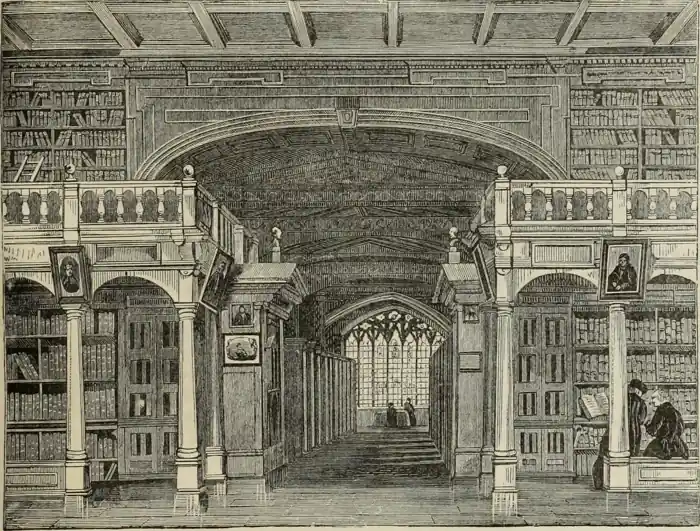
Read and listen together
 FrankensteinRead along