Read here

Science in the Kitchen

E. E. Kellogg · Public domain text

211,797 words · about 14 h 50 min to read

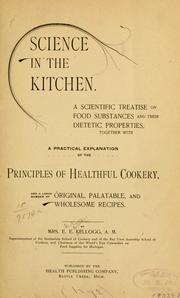
Cover of Science in the Kitchen

Text only · 36 illustrations omitted. Illustrated source.

About this edition

The text of Science in the Kitchen comes from Project Gutenberg e-text #12238. It is in English and public domain in the United States. Project Gutenberg’s header and license text are removed, and RedLectern sets the text out for reading on screen; no words of the book are rewritten or summarized. More formats (EPUB, Kindle) · How RedLectern is built

This text-only edition leaves out 36 illustrations. See the illustrated edition at Project Gutenberg.

This book is long enough to be split into 4 parts, so each one loads quickly on its own.

About this book

Cover of Science in the Kitchen
Author
E. E. Kellogg (1853–1920)
Language
English
Subjects
Cooking, American, Diet, Vegetarianism
Length
211,797 words · about 14 h 50 min
Sections
5 reader sections · Table of contents
Contents (5)
  1. Opening under 1 min
  2. Preface about 26 min
  3. Introduction about 6 h 53 min
  4. Science in the Kitchen (part 3 of 4) about 6 h 27 min
  5. Science in the Kitchen (part 4 of 4) about 1 h 3 min

The opening of Preface

The interest in scientific cookery, particularly in cookery as related to health, has manifestly increased in this country within the last decade as is evidenced by the success which has attended every intelligent effort for the establishment of schools for instruction in cookery in various parts of the United States. While those in charge of these schools have presented to their pupils excellent opportunities for the acquirement of dexterity in the preparation of toothsome and tempting viands, but little attention has been paid to the science of dietetics, or what might be termed the hygiene of cookery.

A little less than ten years ago the Sanitarium at Battle Creek Mich., established an experimental kitchen and a school of cookery under the supervision of Mrs. Dr. Kellogg, since which time, researches in the various lines of cookery and dietetics have been in constant progress in the experimental kitchen, and regular sessions of the school of cookery have been held. The school has gradually gained in popularity, and the demand for instruction has become so great that classes are in session during almost the entire year.

Read on in Part 1 →