Chapter III
"I think I saw the letters arrive," said Mrs. Boyce to her daughter. "And Donna Margherita seems to be signalling to us."
"Let me go for them, mamma."
"No, thank you, I must go in."
And Mrs. Boyce rose from her seat, and went slowly towards the hotel. Marcella watched her widow's cap and black dress as they passed along the pergola of the hotel garden, between bright masses of geraniums and roses on either side.
They had been sitting in the famous garden of the Cappucini Hotel at Amalfi. To Marcella's left, far below the high terrace of the hotel, the green and azure of the Salernian gulf shone and danced in the sun, to her right a wood of oak and arbutus stretched up into a purple cliff--a wood starred above with gold and scarlet berries, and below with cyclamen and narcissus. From the earth under the leafy oaks--for the oaks at Amalfi lose and regain their foliage in winter and spring by imperceptible gradations--came a moist English smell. The air was damp and warm. A convent bell tolled from invisible heights above the garden; while the olives and vines close at hand were full of the chattering voices of gardeners and children, and broken here and there by clouds of pink almond-blossom. March had just begun, and the afternoons were fast lengthening. It was little more than a fortnight since Mr. Boyce's death. In the November of the preceding year Mrs. Boyce and Marcella had brought him to Naples by sea, and there, at a little villa on Posilippo, he had drawn sadly to his end. It had been a dreary time, from which Marcella could hardly hope that her mother would ever fully recover. She herself had found in the long months of nursing--nursing of which, with quiet tenacity, she had gradually claimed and obtained her full share--a deep moral consolation. They had paid certain debts to conscience, and they had for ever enshrined her father's memory in the silence of an unmeasured and loving pity.
But the wife? Marcella sorely recognised that to her mother these last days had brought none of the soothing, reconciling influences they had involved for herself. Between the husband and wife there had been dumb friction and misery--surely also a passionate affection!--to the end. The invalid's dependence on her had been abject, her devotion wonderful. Yet, in her close contact with them, the daughter had never been able to ignore the existence between them of a wretched though tacit debate--reproach on his side, self-defence or spasmodic effort on hers--which seemed to have its origin deep in the past, yet to be stimulated afresh by a hundred passing incidents of the present. Under the blight of it, as under the physical strain of nursing, Mrs. Boyce had worn and dwindled to a white-haired shadow; while he had both clung to life and feared death more than would normally have been the case. At the end he had died in her arms, his head on her breast; she had closed his eyes and performed every last office without a tear; nor had Marcella ever seen her weep from then till now. The letters she had received, mostly, Marcella believed, from her own family, remained unopened in her travelling-bag. She spoke very little, and was constantly restless, nor could Marcella as yet form any idea of the future.
After the funeral at Naples Mrs. Boyce had written immediately to her husband's solicitor for a copy of his will and a statement of affairs. She had then allowed herself to be carried off to Amalfi, and had there, while entirely declining to admit that she was ill, been clearly doing her best to recover health and nerve sufficient to come to some decision, to grapple with some crisis which Marcella also felt to be impending--though as to why it should be impending, or what the nature of it might be, she could only dread and guess.
There was much bitter yearning in the girl's heart as she sat, breathed on by the soft Italian wind blowing from this enchanted sea. The inner cry was that her mother did not love her, had never loved her, and might even now--weird, incredible thought!--be planning to desert her. Hallin was dead--who else was there that cared for her or thought of her? Betty Macdonald wrote often, wild, "schwärmerisch" letters. Marcella looked for them with eagerness, and answered them affectionately. But Betty must soon marry, and then all that would be at an end. Meanwhile Marcella knew well it was Betty's news that made Betty's adoration doubly welcome. Aldous Raeburn--she never did or could think of him under his new name--was apparently in London, much occupied in politics, and constantly, as it seemed, in Betty's society. What likelihood was there that her life and his would ever touch again? She thought often of her confession to Hallin, but in great perplexity of feeling. She had, of course, said no word of secrecy to him at the time. Such a demand in a man's last hour would have been impossible. She had simply followed a certain mystical love and obedience in telling him what he asked to know, and in the strong spontaneous impulse had thought of nothing beyond. Afterwards her pride had suffered fresh martyrdom. Could he, with his loving instinct, have failed to give his friend some sign? If so, it had been unwelcome, for since the day of Hallin's funeral she and Aldous had been more complete strangers than before. Lady Winterbourne, Betty, Frank Leven, had written since her father's death; but from him, nothing.
By the way, Frank Leven had succeeded at Christmas, by old Sir Charles Leven's unexpected death, to the baronetcy and estates. How would that affect his chances with Betty?--if indeed there were any such chances left.
As to her own immediate future, Marcella knew from many indications that Mellor would be hers at once. But in her general tiredness of mind and body she was far more conscious of the burden of her inheritance than of its opportunities. All that vivid castle-building gift which was specially hers, and would revive, was at present in abeyance. She had pined once for power and freedom, that she might make a Kingdom of Heaven of her own, quickly. Now power and freedom, up to a certain point, were about to be put into her hands; and instead of plans for acting largely and bountifully on a plastic outer world, she was saying to herself, hungrily, that unless she had something close to her to love and live for, she could do nothing. If her mother would end these unnatural doubts, if she would begin to make friends with her own daughter, and only yield herself to be loved and comforted, why then it might be possible to think of the village and the straw-plaiting! Otherwise--the girl's attitude as she sat dreaming in the sun showed her despondency.
She was roused by her mother's voice calling her from the other end of the pergola.
"Yes, mamma."
"Will you come in? There are some letters."
"It is the will," thought Marcella, as Mrs. Boyce turned back to the hotel, and she followed.
Mrs. Boyce shut the door of their sitting-room, and then went up to her daughter with a manner which suddenly struck and startled Marcella. There was natural agitation and trouble in it.
"There is something in the will, Marcella, which will, I fear, annoy and distress you. Your father inserted it without consulting me. I want to know what you think ought to be done. You will find that Lord Maxwell and I have been appointed joint executors."
Marcella turned pale.
"Lord Maxwell!" she said, bewildered. "Lord Maxwell--Aldous! What do you mean, mamma?"
Mrs. Boyce put the will into her hands, and, pointing the way among the technicalities she had been perusing while Marcella was still lingering in the garden, showed her the paragraph in question. The words of the will were merely formal: "I hereby appoint," &c., and no more; but in a communication from the family solicitor, Mr. French, which Mrs. Boyce silently handed to her daughter after she had read the legal disposition, the ladies were informed that Mr. Boyce had, before quitting England, written a letter to Lord Maxwell, duly sealed and addressed, with instructions that it should be forwarded to its destination immediately after the writer's burial. "Those instructions," said Mr. French, "I have carried out. I understand that Lord Maxwell was not consulted as to his appointment as executor prior to the drawing up of the will. But you will no doubt hear from him at once, and as soon as we know that he consents to act, we can proceed immediately to probate."
"Mamma, how could he?" said Marcella, in a low, suffocated voice, letting will and letter fall upon her knee.
"Did he give you no warning in that talk you had with him at Mellor?" said Mrs. Boyce, after a minute's silence.
"Not the least," said Marcella, rising restlessly and beginning to walk up and down. "He spoke to me about wishing to bring it on again--asked me to let him write. I told him it was all done with--for ever! As to my own feelings, I felt it was no use to speak of them; but I thought--I believed, I had proved to him that Lord Maxwell had absolutely given up all idea of such a thing; and that it was already probable he would marry some one else. I told him I would rather disappear from every one I knew than consent to it--he could only humiliate us all by saying a word. And now, after that!--"
She stopped in her restless walk, pressing her hands miserably together.
"What does he want with us and our affairs?" she broke out. "He wishes, of course, to have no more to do with me. And now we force him--force him into these intimate relations. What can papa have said in that letter to him? What can he have said? Oh! it is unbearable! Can't we write at once?"
She pressed her hands over her eyes in a passion of humiliation and disgust. Mrs. Boyce watched her closely.
"We must wait, anyway, for his letter," she said. "It ought to be here by to-morrow morning."
Marcella sank on a chair by an open glass door, her eyes wandering, through the straggling roses growing against the wall of the stone balcony outside, to the laughing purples and greens of the sea.
"Of course," she said unhappily, "it is most probable he will consent. It would not be like him to refuse. But, mamma, you must write. I must write and beg him not to do it. It is quite simple. We can manage everything for ourselves. Oh! how could papa?" she broke out again in a low wail, "how could he?"
Mrs. Boyce's lips tightened sharply. It seemed to her a foolish question. She, at least, had had the experience of twenty years out of which to answer it. Death had made no difference. She saw her husband's character and her own seared and broken life with the same tragical clearness; she felt the same gnawing of an affection not to be plucked out while the heart still beat. This act of indelicacy and injustice was like many that had gone before it; and there was in it the same evasion and concealment towards herself. No matter. She had made her account with it all twenty years before. What astonished her was, that the force of her strong coercing will had been able to keep him for so long within the limits of the smaller and meaner immoralities of this world.
"Have you read the rest of the will?" she asked, after a long pause.
Marcella lifted it again, and began listlessly to go through it.
"Mamma!" she said presently, looking up, the colour flushing back into her face, "I find no mention of you in it throughout. There seems to be no provision for you."
"There is none," said Mrs. Boyce, quietly. "There was no need. I have my own income. We lived upon it for years before your father succeeded to Mellor. It is therefore amply sufficient for me now."
"You cannot imagine," cried Marcella, trembling in every limb, "that I am going to take the whole of my father's estate, and leave nothing--nothing for his wife. It would be impossible--unseemly. It would be to do me an injustice, mamma, as well as yourself," she added proudly.
"No, I think not," said Mrs. Boyce, with her usual cold absence of emotion. "You do not yet understand the situation. Your father's misfortunes nearly ruined the estate for a time. Your grandfather went through great trouble, and raised large sums to--" she paused for the right phrase--"to free us from the consequences of your father's actions. I benefited, of course, as much as he did. Those sums crippled all your grandfather's old age. He was a man to whom I was attached--whom I respected. Mellor, I believe, had never been embarrassed before. Well, your uncle did a little towards recovery--but on the whole he was a fool. Your father has done much more, and you, no doubt, will complete it. As for me, I have no claim to anything more from Mellor. The place itself is"--again she stopped for a word of which the energy, when it came, seemed to escape her--"hateful to me. I shall feel freer if I have no tie to it. And at last I persuaded your father to let me have my way."
Marcella rose from her seat impetuously, walked quickly across the room, and threw herself on her knees beside her mother.
"Mamma, are you still determined--now that we two are alone in the world--to act towards me, to treat me as though I were not your daughter--not your child at all, but a stranger?"
It was a cry of anguish. A sudden slight tremor swept over Mrs. Boyce's thin and withered face. She braced herself to the inevitable.
"Don't let us make a tragedy of it, my dear," she said, with a light touch on Marcella's hands. "Let us discuss it reasonably. Won't you sit down? I am not proposing anything very dreadful. But, like you, I have some interests of my own, and I should be glad to follow them--now--a little. I wish to spend some of the year in London; to make that, perhaps, my headquarters, so as to see something of some old friends whom I have had no intercourse with for years--perhaps also of my relations." She spoke of them with a particular dryness. "And I should be glad--after this long time--to be somewhat taken out of oneself, to read, to hear what is going on, to feed one's mind a little."
Marcella, looking at her, saw a kind of feverish light, a sparkling intensity in the pale blue eyes, that filled her with amazement. What, after all, did she know of this strange individuality from which her own being had taken its rise? The same flesh and blood--what an irony of nature!
"Of course," continued Mrs. Boyce, "I should go to you, and you would come to me. It would only be for part of the year. Probably we should get more from each other's lives so. As you know, I long to see things as they are, not conventionally. Anyway, whether I were there or no, you would probably want some companion to help you in your work and plans. I am not fit for them. And it would be easy to find some one who could act as chaperon in my absence."
The hot tears sprang to Marcella's eyes. "Why did you send me away from you, mamma, all my childhood," she cried. "It was wrong--cruel. I have no brother or sister. And you put me out of your life when I had no choice, when I was too young to understand."
Mrs. Boyce winced, but made no reply. She sat with her delicate hand across her brow. She was the white shadow of her former self; but her fragility had always seemed to Marcella more indomitable than anybody else's strength.
Sobs began to rise in Marcella's throat.
"And now," she said, in half-coherent despair, "do you know what you are doing? You are cutting yourself off from me--refusing to have any real bond to me just when I want it most. I suppose you think that I shall be satisfied with the property and the power, and the chance of doing what I like. But"--she tried her best to gulp back her pain, her outraged feeling, to speak quietly--"I am not like that really any more. I can take it all up, with courage and heart, if you will stay with me, and let me--let me--love you and care for you. But, by myself, I feel as if I could not face it! I am not likely to be happy--for a long time--except in doing what work I can. It is very improbable that I shall marry. I dare say you don't believe me, but it is true. We are both sad and lonely. We have no one but each other. And then you talk in this ghastly way of separating from me--casting me off."
Her voice trembled and broke, she looked at her mother with a frowning passion.
Mrs. Boyce still sat silent, studying her daughter with a strange, brooding eye. Under her unnatural composure there was in reality a half-mad impatience, the result of physical and moral reaction. This beauty, this youth, talk of sadness, of finality! What folly! Still, she was stirred, undermined in spite of herself.
"There!" she said, with a restless gesture, "let us, please, talk of it no more. I will come back with you--I will do my best. We will let the matter of my future settlement alone for some months, at any rate, if that will satisfy you or be any help to you."
She made a movement as though to rise from her low chair. But the great waters swelled in Marcella--swelled and broke. She fell on her knees again by her mother, and before Mrs. Boyce could stop her she had thrown her young arms close round the thin, shrunken form.
"Mother!" she said. "Mother, be good to me--love me--you are all I have!"
And she kissed the pale brow and cheek with a hungry, almost a violent tenderness that would not be gainsaid, murmuring wild incoherent things.
Mrs. Boyce first tried to put her away, then submitted, being physically unable to resist, and at last escaped from her with a sudden sob that went to the girl's heart. She rose, went to the window, struggled hard for composure, and finally left the room.
But that evening, for the first time, she let Marcella put her on the sofa, tend her, and read to her. More wonderful still, she went to sleep while Marcella was reading. In the lamplight her face looked piteously old and worn. The girl sat for long with her hands clasped round her knees, gazing down upon it, in a trance of pain and longing.
* * * * *
Marcella was awake early next morning, listening to the full voice of the sea as it broke three hundred feet below, against the beach and rocky walls of the little town. She was lying in a tiny white room, one of the cells of the old monastery, and the sun as it rose above the Salernian mountains--the mountains that hold Paestum in their blue and purple shadows--danced in gold on the white wall. The bell of the cathedral far below tolled the hour. She supposed it must be six o'clock. Two hours more or so, and Lord Maxwell's letter might be looked for.
She lay and thought of it--longed for it, and for the time of answering it, with the same soreness that had marked all the dreams of a restless night. If she could only see her father's letter! It was inconceivable that he should have mentioned her name in his plea. He might have appealed to the old friendship between the families. That was possible, and would have, at any rate, an appearance of decency. But who could answer for it--or for him? She clasped her hands rigidly behind her head, her brows frowning, bending her mind with an intensity of will to the best means of assuring Aldous Raeburn that she and her mother would not encroach upon him. She had a perpetual morbid vision of herself as the pursuer, attacking him now through his friend, now through her father. Oh! when would that letter come, and let her write her own!
She tried to read, but in reality listened for every sound of awakening life in the hotel. When at last her mother's maid came in to call her, she sprang up with a start.
"Deacon, are the letters come?"
"There are two for your mother, miss; none for you."
Marcella threw on her dressing-gown, watched her opportunity, and slipped in to her mother, who occupied a similar cell next door.
Mrs. Boyce was sitting up in bed, with a letter before her, her pale blue eyes fixed absently on the far stretch of sea.
She looked round with a start as Marcella entered. "The letter is to me, of course," she said.
Marcella read it breathlessly.
"Dear Mrs. Boyce,--I have this morning received from your solicitor, Mr. French, a letter written by Mr. Boyce to myself in November of last year. In it he asks me to undertake the office of executor, to which, I hear from Mr. French, he has named me in his will. Mr. French also enquires whether I shall be willing to act, and asks me to communicate with you.
"May I, then, venture to intrude upon you with these few words? Mr. Boyce refers in his touching letter to the old friendship between our families, and to the fact that similar offices have often been performed by his relations for mine, or vice versa. But no reminder of the kind was in the least needed. If I can be of any service to yourself and to Miss Boyce, neither your poor husband nor you could do me any greater kindness than to command me.
"I feel naturally some diffidence in the matter. I gather from Mr. French that Miss Boyce is her father's heiress, and comes at once into the possession of Mellor. She may not, of course, wish me to act, in which case I should withdraw immediately; but I sincerely trust that she will not forbid me the very small service I could so easily and gladly render.
"I cannot close my letter without venturing to express the deep sympathy I have felt for you and yours during the past six months. I have been far from forgetful of all that you have been going through, though I may have seemed so. I trust that you and your daughter will not hurry home for any business cause, if it is still best for your health to stay in Italy. With your instructions Mr. French and I could arrange everything.
"Believe me,
"Yours most sincerely,
"MAXWELL."
"You will find it difficult, my dear, to write a snub in answer to that letter," said Mrs. Boyce, drily, as Marcella laid it down.
Marcella's face was, indeed, crimson with perplexity and feeling.
"Well, we can think it over," she said as she went away.
Mrs. Boyce pondered the matter a good deal when she was left alone. The signs of reaction and change in Marcella were plain enough. What they precisely meant, and how much, was another matter. As to him, Marcella's idea of another attachment might be true, or might be merely the creation of her own irritable pride. Anyway, he was in the mood to write a charming letter. Mrs. Boyce's blanched lip had all its natural irony as she thought it over. To her mind Aldous Raeburn's manners had always been a trifle too good, whether for his own interests or for this wicked world. And if he had any idea now of trying again, let him, for Heaven's sake, not be too yielding or too eager! "It was always the way," thought Mrs. Boyce, remembering a child in white frock and baby shoes--"if you wished to make her want anything, you had to take it away from her."
Meanwhile the mere thought that matters might even yet so settle themselves drew from the mother a long breath of relief. She had spent an all but sleepless night, tormented by Marcella's claim upon her. After twenty years of self-suppression this woman of forty-five, naturally able, original, and independent, had seen a glimpse of liberty. In her first youth she had been betrayed as a wife, degraded as a member of society. A passion she could not kill, combined with some stoical sense of inalienable obligation, had combined to make her both the slave and guardian of her husband up to middle life; and her family and personal pride, so strong in her as a girl, had found its only outlet in this singular estrangement she had achieved between herself and every other living being, including her own daughter. Now her husband was dead, and all sorts of crushed powers and desires, mostly of the intellectual sort, had been strangely reviving within her. Just emerged, as she was, from the long gloom of nursing, she already wished to throw it all behind her--to travel, to read, to make acquaintances--she who had lived as a recluse for twenty years! There was in it a last clutch at youth, at life. And she had no desire to enter upon this new existence--in comradeship with Marcella. They were independent and very different human beings. That they were mother and daughter was a mere physical accident.
Moreover, though she was amply conscious of the fine development in Marcella during the past two years, it is probable that she felt her daughter even less congenial to her now than of old. For the rich, emotional nature had, as we have seen, "suffered conviction," had turned in the broad sense to "religion," was more and more sensitive, especially since Hallin's death, to the spiritual things and symbols in the world. At Naples she had haunted churches; had read, as her mother knew, many religious books.
Now Mrs. Boyce in these matters had a curious history. She had begun life as an ardent Christian, under evangelical influences. Her husband, on the other hand, at the time she married him was a man of purely sceptical opinions, a superficial disciple of Mill and Comte, and fond of an easy profanity which seemed to place him indisputably with the superior persons of this world. To the amazement and scandal of her friends, Evelyn Merritt had not been three months his wife before she had adopted his opinions en bloc, and was carrying them out to their logical ends with a sincerity and devotion quite unknown to her teacher. Thenceforward her conception of things--of which, however, she seldom spoke--had been actively and even vehemently rationalist; and it had been one of the chief sorenesses and shames of her life at Mellor that, in order to suit his position as country squire, Richard Boyce had sunk to what, in her eyes, were a hundred mean compliances with things orthodox and established.
Then, in his last illness, he had finally broken away from her, and his own past. "Evelyn, I should like to see a clergyman," he had said to her in his piteous voice, "and I shall ask him to give me the Sacrament." She had made every arrangement accordingly; but her bitter soul could see nothing in the step but fear and hypocrisy; and he knew it. And as he lay talking alone with the man whom they had summoned, two or three nights before the end, she, sitting in the next room, had been conscious of a deep and smarting jealousy. Had not the hard devotion of twenty years made him at least her own? And here was this black-coated reciter of incredible things stepping into her place. Only in death she recovered him wholly. No priest interfered while he drew his last breath upon her bosom.
And now Marcella! Yet the girl's voice and plea tugged at her withered heart. She felt a dread of unknown softnesses--of being invaded and weakened by things in her akin to her daughter, and so captured afresh. Her mind fell upon the bare idea of a revival of the Maxwell engagement, and caressed it.
Meanwhile Marcella stood dressing by the open window in the sunlight, which filled the room with wavy reflections caught from the sea. Fishing-boats were putting off from the beach, three hundred feet below her; she could hear the grating of the keels, the songs of the boatmen. On the little breakwater to the right an artist's white umbrella shone in the sun; and a half-naked boy, poised on the bows of a boat moored beside the painter, stood bent in the eager attitude of one about to drop the bait into the blue wave below. His brown back burnt against the water. Cliff, houses, sea, glowed in warmth and light; the air was full of roses and orange-blossom; and to an English sense had already the magic of summer.
And Marcella's hands, as she coiled and plaited her black hair, moved with a new lightness; for the first time since her father's death her look had its normal fire, crossed every now and then by something that made her all softness and all woman. No! as her mother said, one could not snub that letter or its writer. But how to answer it! In imagination she had already penned twenty different replies. How not to be grasping or effusive, and yet to show that you could feel and repay kindness--there was the problem!
Meanwhile, from that letter, or rather in subtle connection with it, her thoughts at last went wandering off with a natural zest to her new realm of Mellor, and to all that she would and could do for the dwellers therein.
Chapter IV
It was a bleak east-wind day towards the end of March. Aldous was at work in the library at the Court, writing at his grandfather's table, where in general he got through his estate and county affairs, keeping his old sitting-room upstairs for the pursuits that were more particularly his own.
All the morning he had been occupied with a tedious piece of local business, wading through endless documents concerning a dispute between the head-master of a neighbouring grammar-school and his governing body, of which Aldous was one. The affair was difficult, personal, odious. To have wasted nearly three hours upon it was, to a man of Aldous's type, to have lost a day. Besides he had not his grandfather's knack in such things, and was abundantly conscious of it.
However, there it was, a duty which none but he apparently could or would do, and he had been wrestling with it. With more philosophy than usual, too, since every tick of the clock behind him bore him nearer to an appointment which, whatever it might be, would not be tedious.
At last he got up and went to the window to look at the weather. A cutting wind, clearly, but no rain. Then he walked into the drawing-room, calling for his aunt. No one was to be seen, either there or in the conservatory, and he came back to the library and rang.
"Roberts, has Miss Raeburn gone out?"
"Yes, my lord," said the old butler addressed. "She and Miss Macdonald have gone out driving, and I was to tell your lordship that Miss Raeburn would drop Miss Macdonald at Mellor on her way home."
"Is Sir Frank anywhere about?"
"He was in the smoking-room a little while ago, my lord."
"Will you please try and find him?"
"Yes, my lord."
Aldous's mouth twitched with impatience as the old servant shut the door.
"How many times did Roberts manage to be-lord me in a minute?" he asked himself; "yet if I were to remonstrate, I suppose I should only make him unhappy."
And walking again to the window, he thrust his hands into his pockets and stood looking out with a far from cheerful countenance.
One of the things that most tormented him indeed in this recent existence was a perpetual pricking sense of the contrast between this small world of his ancestral possessions and traditions, with all its ceremonial and feudal usage, and the great rushing world outside it of action and of thought. Do what he would, he could not un-king himself within the limits of the Maxwell estate. To the people living upon it he was the man of most importance within their ken, was inevitably their potentate and earthly providence. He confessed that there was a real need of him, if he did his duty. But on this need the class-practice of generations had built up a deference, a sharpness of class-distinction, which any modern must find more and more irksome in proportion to his modernness. What was in Aldous's mind, as he stood with drawn brows looking out over the view which showed him most of his domain, was a sort of hot impatience of being made day by day, in a hundred foolish ways, to play at greatness.
Yet, as we know, he was no democrat by conviction, had no comforting faith in what seemed to him the rule of a multitudinous ignorance. Still every sane man of to-day knows, at any rate, that the world has taken the road of democracy, and that the key to the future, for good or ill, lies not in the revolts and speculations of the cultivated few, but in the men and movements that can seize the many. Aldous's temper was despondently critical towards the majority of these, perhaps; he had, constitutionally, little of that poet's sympathy with the crowd, as such, which had given Hallin his power. But, at any rate, they filled the human stage--these men and movements--and his mind as a beholder. Beside the great world-spectacle perpetually in his eye and thought, the small old-world pomps and feudalisms of his own existence had a way of looking ridiculous to him. He constantly felt himself absurd. It was ludicrously clear to him, for instance, that in this kingdom he had inherited it would be thought a huge condescension on his part if he were to ask the secretary of a trades union to dine with him at the Court. Whereas, in his own honest opinion, the secretary had a far more important and interesting post in the universe than he.
So that, in spite of a strong love of family, rigidly kept to himself, he had very few of the illusions which make rank and wealth delightful. On the other hand, he had a tyrannous sense of obligation, which kept him tied to his place and his work--to such work as he had been spending the morning on. This sense of obligation had for the present withdrawn him from any very active share in politics. He had come to the conclusion early in the year, just about the time when, owing to some rearrangements in the personnel of the Government, the Premier had made him some extremely flattering overtures, that he must for the present devote himself to the Court. There were extensive changes and reforms going on in different parts of the estate: some of the schools which he owned and mainly supported were being rebuilt and enlarged; and he had a somewhat original scheme for the extension of adult education throughout the property very much on his mind--a scheme which must be organised and carried through by himself apparently, if it was to thrive at all.
Much of this business was very dreary to him, some of it altogether distasteful. Since the day of his parting with Marcella Boyce his only real pleasures had lain in politics or books. Politics, just as they were growing absorbing to him, must, for a while at any rate, be put aside; and even books had not fared as well as they might have been expected to do in the country quiet. Day after day he walked or rode about the muddy lanes of the estate, doing the work that seemed to him to be his, as best he could, yet never very certain of its value; rather, spending his thoughts more and more, with regard to his own place and function in the world, on a sort of mental apologetic which was far from stimulating; sorely conscious the while of the unmatched charm and effectiveness with which his grandfather had gone about the same business; and as lonely at heart as a man can well be--the wound of love unhealed, the wound of friendship still deep and unconsoled. To bring social peace and progress, as he understood them, to this bit of Midland England a man of first-rate capacities was perhaps sacrificing what ambition would have called his opportunities. Yet neither was he a hero to himself nor to the Buckinghamshire farmers and yokels who depended on him. They had liked the grandfather better, and had become stolidly accustomed to the grandson's virtues.
The only gleam in the grey of his life since he had determined about Christmas-time to settle down at the Court had come from Mr. French's letter. That letter, together with Mr. Boyce's posthumous note, which contained nothing, indeed, but a skilful appeal to neighbourliness and old family friendship, written in the best style of the ex-Balkan Commissioner, had naturally astonished him greatly. He saw at once what she would perceive in it, and turned impatiently from speculation as to what Mr. Boyce might actually have meant, to the infinitely more important matter, how she would take her father's act. Never had he written anything with greater anxiety than he devoted to his letter to Mrs. Boyce. There was in him now a craving he could not stay, to be brought near to her again, to know how her life was going. It had first raised its head in him since he knew that her existence and Wharton's were finally parted, and had but gathered strength from the self-critical loneliness and tedium of these later months.
Mrs. Boyce's reply couched in terms at once stately and grateful, which accepted his offer of service on her own and her daughter's behalf, had given him extraordinary pleasure. He turned it over again and again, wondering what part or lot Marcella might have had in it, attributing to her this cordiality or that reticence; picturing the two women together in their black dresses--the hotel, the pergola, the cliff--all of which he himself knew well. Finally, he went up to town, saw Mr. French, and acquainted himself with the position and prospects of the Mellor estate, feeling himself a sort of intruder, yet curiously happy in the business. It was wonderful what that poor sickly fellow had been able to do in the last two years; yet his thoughts fell rather into amused surmise as to what she would find it in her restless mind to do in the next two years.
Nevertheless, all the time, the resolution of which he had spoken to Hallin seemed to himself unshaken. He recognised and adored the womanly growth and deepening which had taken place in her; he saw that she wished to show him kindness. But he thought he could trust himself now and henceforward not to force upon her a renewed suit for which there was in his eyes no real or abiding promise of happiness.
Marcella and her mother had now been at home some three or four days, and he was just about to walk over to Mellor for his first interview with them. A great deal of the merely formal business consequent on Mr. Boyce's death had been already arranged by himself and Mr. French. Yet he had to consult Marcella as to certain investments, and in a pleasant though quite formal little note he had that morning received from her she had spoken of asking his advice as to some new plans for the estate. It was the first letter she herself had as yet written to him; hitherto all his correspondence had been carried on with Mrs. Boyce. It had struck him, by the way, as remarkable that there was no mention of the wife in the will. He could only suppose that she was otherwise provided for. But there had been some curious expressions in her letters.
Where was Frank? Aldous looked impatiently at the clock, as Roberts did not reappear. He had invited Leven to walk with him to Mellor, and the tiresome boy was apparently not to be found. Aldous vowed he would not wait a minute, and going into the hall, put on coat and hat with most business-like rapidity.
He was just equipped when Roberts, somewhat breathless with long searching, arrived in time to say that Sir Frank was on the front terrace.
And there Aldous caught sight of the straight though somewhat heavily built figure, in its grey suit with the broad band of black across the arm.
"Hullo, Frank! I thought you were to look me up in the library. Roberts has been searching the house for you."
"You said nothing about the library," said the boy, rather sulkily, "and Roberts hadn't far to search. I have been in the smoking-room till this minute."
Aldous did not argue the point, and they set out. It was presently clear to the elder man that his companion was not in the best of tempers. The widowed Lady Leven had sent her firstborn over to the Court for a few days that Aldous might have some discussion as to his immediate future with the young man. She was a silly, frivolous woman; but it was clear, even to her, that Frank was not doing very well for himself in the world; and advice she would not have taken from her son's Oxford tutor seemed cogent to her when it came from a Raeburn. "Do at least, for goodness' sake, get him to give up his absurd plan of going to America!" she wrote to Aldous; "if he can't take his degree at Oxford, I suppose he must get on without it, and certainly his dons seem very unpleasant. But at least he might stay at home and do his duty to me and his sisters till he marries, instead of going off to the 'Rockies' or some other ridiculous place. He really never seems to think of Fanny and Rachel, or what he might do to help me to get them settled now that his poor father is gone."
No; certainly the young man was not much occupied with "Fanny and Rachel!" He spoke with ill-concealed impatience, indeed, of both his sisters and his mother. If his people would get in the way of everything he wanted to do, they needn't wonder if he cut up rough at home. For the present it was settled that he should at any rate go back to Oxford till the end of the summer term--Aldous heartily pitying the unfortunate dons who might have to do with him--but after that he entirely declined to be bound. He swore he would not be tied at home like a girl; he must and would see the world. This in itself, from a lad who had been accustomed to regard his home as the centre of all delights, and had on two occasions stoutly refused to go with his family to Rome, lest he should miss the best month for his father's trout-stream, was sufficiently surprising.
However, of late some tardy light had been dawning upon Aldous! The night after Frank's arrival at the Court Betty Macdonald came down to spend a few weeks with Miss Raeburn, being for the moment that lady's particular pet and protégée. Frank, whose sulkiness during the twenty-four hours before she appeared had been the despair of both his host and hostess, brightened up spasmodically when he heard she was expected, and went fishing with one of the keepers, on the morning before her arrival, with a fair imitation of his usual spirits. But somehow, since that first evening, though Betty had chattered, and danced, and frolicked her best, though her little figure running up and down the big house gave a new zest to life in it, Frank's manners had gone from bad to worse. And at last Aldous, who had not as yet seen the two much together, and was never an observant man in such matters, had begun to have an inkling. Was it possible that the boy was in love, and with Betty? He sounded Miss Raeburn; found that she did not rise to his suggestion at all--was, in fact, annoyed by it--and with the usual stupidity of the clever man failed to draw any reasonable inference from the queerness of his aunt's looks and sighs.
As to the little minx herself, she was inscrutable. She teased them all in turns, Frank, perhaps, less than the others. Aldous, as usual, found her a delightful companion. She would walk all over the estate with him in the most mannish garments and boots conceivable, which only made her childish grace more feminine and more provocative than ever. She took an interest in all his tenants; she dived into all his affairs; she insisted on copying his letters. And meanwhile, on either side were Miss Raeburn, visibly recovering day by day her old cheeriness and bustle, and Frank--Frank, who ate nothing, or nothing commensurate to his bulk, and, if possible, said less.
Aldous had begun to feel that the situation must be probed somehow, and had devised this walk, indeed, with some vague intention of plying remonstrances and enquiries. He had an old affection for the boy, which Lady Leven had reckoned upon.
The first difficulty, of course, was to make him talk at all. Aldous tried various sporting "gambits" with very small success. At last, by good-luck, the boy rose to something like animation in describing an encounter he had had the week before with a piebald weasel in the course of a morning's ferreting.
"All at once we saw the creature's head poke out of the hole--pure white, with a brown patch on it. When it saw us, back it scooted!--and we sent in another ferret after the one that was there already. My goodness! there was a shindy down in the earth--you could hear them rolling and kicking like anything. We had our guns ready,--but all of a sudden everything stopped--not a sound or a sign of anything! We threw down our guns and dug away like blazes. Presently we came on the two ferrets gorging away at a dead rabbit,--nasty little beasts!--that accounted for them; but where on earth was the weasel? I really began to think we had imagined the creature, when, whish! came a flash of white lightning, and out the thing bolted--pure white with a splash of brown--its winter coat, of course. I shot at it, but it was no go. If I'd only put a bag over the hole, and not been an idiot, I should have caught it."
The boy swung along, busily ruminating for a minute or two, and forgetting his trouble.
"I've seen one something like it before," he went on--"ages ago, when I was a little chap, and Harry Wharton and I were out rabbiting. By the way--" he stopped short--"do you see that that fellow's come back?"
"I saw the paragraph in the Times this morning," said Aldous, drily.
"And I've got a letter from Fanny this morning, to say that he and Lady Selina are to be married in July, and that she's going about making a martyr and a saint of him, talking of the 'persecution' he's had to put up with, and the vulgar fellows who couldn't appreciate him, and generally making an ass of herself. Oh! he won't ask any of us to his wedding--trust him. It is a rum business. You know Willie Ffolliot--that queer dark fellow--that used to be in the 10th Hussars--did all those wild things in the Soudan?"
"Yes--slightly."
"I heard all about it from him. He was one of that gambling set at Harry's club there's been all that talk about you know, since Harry came to grief. Well!--he was going along Piccadilly one night last summer, quite late, between eleven and twelve, when Harry caught hold of him from behind. Willie thought he was out of his mind, or drunk. He told me he never saw anybody in such a queer state in his life. 'You come along with me,' said Harry, 'come and talk to me, or I shall shoot myself!' So Willie asked him what was up. 'I'm engaged to be married,' said Harry. Whereupon Willie remarked that, considering his manner and his appearance, he was sorry for the young lady. 'Young!' said Harry as though he would have knocked him down. And then it came out that he had just--that moment!--engaged himself to Lady Selina. And it was the very same day that he got into that precious mess in the House--the very same night! I suppose he went to her to be comforted, and thought he'd pull something off, anyway! Why she took him! But of course she's no chicken, and old Alresford may die any day. And about the bribery business--I suppose he made her think him an injured innocent. Anyway, he talked to Willie, when they got to his rooms, like a raving lunatic, and you know he was always such a cool hand. 'Ffolliot,' he said, 'can you come with me to Siam next week?' 'How much?' said Will. 'I thought you were engaged to Lady Selina.' Then he swore little oaths, and vowed he had told her he must have a year. 'We'll go and explore those temples in Siam,' he said, and then he muttered something about 'Why should I ever come back?' Presently he began to talk of the strike--and the paper--and the bribe, and all the rest of it, making out a long rigmarole story. Oh! of course he'd done everything for the best--trust him!--and everybody else was a cur and a slanderer. And Ffolliot declared he felt quite pulpy--the man was such a wreck; and he said he'd go with him to Siam, or anywhere else, if he'd only cheer up. And they got out the maps, and Harry began to quiet down, and at last Will got him to bed. Fanny says Ffolliot reports he had great difficulty in dragging him home. However, Lady Selina has no luck!--there he is."
"Oh! he will be one of the shining lights of our side before long," said Aldous, with resignation. "Since he gave up his seat here, there has been some talk of finding him one in the Alresfords' neighbourhood, I believe. But I don't suppose anybody's very anxious for him. He is to address a meeting, I see, on the Tory Labour Programme next week. The Clarion, I suppose, will go round with him."
"Beastly rag!" said Frank, fervently. "It's rather a queer thing, isn't it, that such a clever chap as that should have made such a mess of his chances. It almost makes one not mind being a fool."
He laughed, but bitterly, and at the same moment the cloud that for some twenty minutes or so seemed to have completely rolled away descended again on eye and expression.
"Well, there are worse things than being a fool," said Aldous, with insidious emphasis--"sulking, and shutting up with your best friends, for instance."
Frank flushed deeply, and turned upon him with a sort of uncertain fury.
"I don't know what you mean."
Whereupon Aldous slipped his arm inside the boy's, and prepared himself with resignation for the scene that had to be got through somehow, when Frank suddenly exclaimed:
"I say, there's Miss Boyce!"
Never was a man more quickly and completely recalled from altruism to his own affairs. Aldous dropped his companion's arm, straightened himself with a thrill of the whole being, and saw Marcella some distance ahead of them in the Mellor drive, which they had just entered. She was stooping over something on the ground, and was not apparently aware of their approach. A ray of cold sun came out at the moment, touched the bending figure and the grass at her feet--grass starred with primroses, which she was gathering.
"I didn't know you were going to call," said Frank, bewildered. "Isn't it too soon?"
And he looked at his companion in astonishment.
"I came to speak to Miss Boyce and her mother on business," said Aldous, with all his habitual reserve. "I thought you wouldn't mind the walk back by yourself."
"Business?" the boy echoed involuntarily.
Aldous hesitated, then said quietly:
"Mr. Boyce appointed me executor under his will."
Frank lifted his eyebrows, and allowed himself at least an inward "By Jove!"
By this time Marcella had caught sight of them, and was advancing. She was in deep mourning, but her hands were full of primroses, which shone against the black; and the sun, penetrating the thin green of some larches to her left, danced in her eyes and on a face full of sensitive and beautiful expression.
They had not met since they stood together beside Hallin's grave. This fact was in both their minds. Aldous felt it, as it were, in the touch of her hand. What he could not know was, that she was thinking quite as much of his letter to her mother and its phrases.
They stood talking a little in the sunshine. Then, as Frank was taking his leave, Marcella said:
"Won't you wait for--for Lord Maxwell, in the old library? We can get at it from the garden, and I have made it quite habitable. My mother, of course, does not wish to see anybody."
Frank hesitated, then, pushed by a certain boyish curiosity, and by the angry belief that Betty had been carried off by Miss Raeburn, and was out of his reach till luncheon-time, said he would wait. Marcella led the way, opened the garden-door of the lower corridor, close to the spot where she had seen Wharton standing in the moonlight on a never-to-be-forgotten night, and then ushered them into the library. The beautiful old place had been decently repaired, though in no sense modernised. The roof had no holes, and its delicate stucco-work, formerly stained and defaced by damp, had been whitened, so that the brown and golden tones of the books in the latticed cases told against it with delightful effect. The floor was covered with a cheap matting, and there were a few simple chairs and tables. A wood fire burnt on the old hearth. Marcella's books and work lay about, and some shallow earthenware pans filled with home-grown hyacinths scented the air. What with the lovely architecture of the room itself, its size, its books and old portraits, and the signs it bore of simple yet refined use, it would have been difficult to find a gentler, mellower place. Aldous looked round him with delight.
"I hope to make a village drawing-room of it in time," she said casually to Frank as she stooped to put a log on the fire. "I think we shall get them to come, as it has a separate door, and scraper, and mat all to itself."
"Goodness!" said Frank, "they won't come. It's too far from the village."
"Don't you be so sure," said Marcella, laughing. "Mr. Craven has all sorts of ideas."
"Who's Mr. Craven?"
"Didn't you meet him at my rooms?"
"Oh! I remember," ejaculated the boy--"a frightful Socialist!"
"And his wife's worse," said Marcella, merrily. "They've come down to settle here. They're going to help me."
"Then for mercy's sake keep them to yourself," cried Frank, "and don't let them go loose over the county. We don't want them at our place."
"Oh! your turn will come. Lord Maxwell"--her tone changed--became shy and a little grave. "Shall we go into the Stone Parlour? My mother will come down if you wish to see her, but she thought that--that--perhaps we could settle things."
Aldous had been standing by, hat in hand, watching her as she chattered to Frank. As she addressed him he gave a little start.
"Oh! I think we can settle everything," he said.
"Well, this is rum!" said Frank to himself, as the door closed behind them, and instead of betaking himself to the chair and the newspaper with which Marcella had provided him, he began to walk excitedly up and down. "Her father makes him executor--he manages her property for her--and they behave nicely to each other, as though nothing had ever happened at all. What the deuce does it mean? And all the time Betty--why, Betty's devoted to him!--and it's as plain as a pikestaff what that old cat, Miss Raeburn, is thinking of from morning till night! Well, I'm beat!"
And throwing himself down on a stool by the fire, his chin between his hands, he stared dejectedly at the burning logs.
Chapter V
Meanwhile Marcella and her companion were sitting in the Stone Parlour side by side, save for a small table between them, which held the various papers Aldous had brought with him. At first, there had been on her side--as soon as they were alone--a feeling of stifling embarrassment. All the painful, proud sensations with which she had received the news of her father's action returned upon her; she would have liked to escape; she shrank from what once more seemed an encroachment, a situation as strange as it was embarrassing.
But his manner very soon made it impossible, indeed ridiculous, to maintain such an attitude of mind. He ran through his business with his usual clearness and rapidity. It was not complicated; her views proved to be the same as his; and she was empowered to decide for her mother. Aldous took notes of one or two of her wishes, left some papers with her for her mother's signature, and then his work was practically done. Nothing, throughout, could have been more reassuring or more everyday than his demeanour.
Then, indeed, when the end of their business interview approached, and with it the opportunity for conversation of a different kind, both were conscious of a certain tremor. To him this old parlour was torturingly full of memories. In this very place where they sat he had given her his mother's pearls, and taken a kiss in return from the cheek that was once more so near to him. With what free and exquisite curves the hair set about the white brow! How beautiful was the neck--the hand! What ripened, softened charm in every movement! The touching and rebuking thought rose in his mind that from her nursing experience, and its frank contact with the ugliest realities of the physical life--a contact he had often shrunk from realising--there had come to her, not so much added strength, as a new subtlety and sweetness, some delicate, vibrating quality, that had been entirely lacking to her first splendid youth.
Suddenly she said to him, with a certain hesitation:
"There was one more point I wanted to speak to you about. Can you advise me about selling some of those railway shares?"
She pointed to an item in a short list of investments that lay beside them.
"But why?" said Aldous, surprised. "They are excellent property already, and are going up in value."
"Yes, I know. But I want some ready money immediately--more than we have--to spend on cottage-building in the village. I saw a builder yesterday and came to a first understanding with him. We are altering the water-supply too. They have begun upon it already, and it will cost a good deal."
Aldous was still puzzled.
"I see," he said. "But--don't you suppose that the income of the estate, now that your father has done so much to free it, will be enough to meet expenses of that kind, without trenching on investments? A certain amount, of course, should be systematically laid aside every year for rebuilding, and estate improvements generally."
"Yes; but you see I only regard half of the income as mine."
She looked up with a little smile.
He was now standing in front of her, against the fire, his grey eyes, which could be, as she well knew, so cold and inexpressive, bent upon her with eager interest.
"Only half the income?" he repeated. "Ah!"--he smiled kindly--"is that an arrangement between you and your mother?"
Marcella let her hand fall with a little despairing gesture.
"Oh no!" she said--"oh no! Mamma--mamma will take nothing from me or from the estate. She has her own money, and she will live with me part of the year."
The intonation in the words touched Aldous profoundly.
"Part of the year?" he said, astonished, yet not knowing how to question her. "Mrs. Boyce will not make Mellor her home?"
"She would be thankful if she had never seen it," said Marcella, quickly--"and she would never see it again if it weren't for me. It's dreadful what she went through last year, when--when I was in London."
Her voice fell. Glancing up at him involuntarily, her eye looked with dread for some chill, some stiffening in him. Probably he condemned her, had always condemned her for deserting her home and her parents. But instead she saw nothing but sympathy.
"Mrs. Boyce has had a hard life," he said, with grave feeling.
Marcella felt a tear leap, and furtively raised her handkerchief to brush it away. Then, with a natural selfishness, her quick thought took another turn. A wild yearning rose in her mind to tell him much more than she had ever done in old days of the miserable home-circumstances of her early youth; to lay stress on the mean unhappiness which had depressed her own child-nature whenever she was with her parents, and had withered her mother's character. Secretly, passionately, she often made the past an excuse. Excuse for what? For the lack of delicacy and loyalty, of the best sort of breeding, which had marked the days of her engagement?
Never--never to speak of it with him!--to pour out everything--to ask him to judge, to understand, to forgive!--
She pulled herself together by a strong effort, reminding herself in a flash of all that divided them:--of womanly pride--of Betty Macdonald's presence at the Court--of that vain confidence to Hallin, of which her inmost being must have been ashamed, but that something calming and sacred stole upon her whenever she thought of Hallin, lifting everything concerned with him into a category of its own.
No; let her selfish weakness make no fettering claim upon the man before her. Let her be content with the friendship she had, after all, achieved, that was now doing its kindly best for her.
All these images, like a tumultuous procession, ran through the mind in a moment. He thought, as she sat there with her bent head, the hands clasped round the knee in the way he knew so well, that she was full of her mother, and found it difficult to put what she felt into words.
"But tell me about your plan," he said gently, "if you will."
"Oh! it is nothing," she said hurriedly. "I am afraid you will think it impracticable--perhaps wrong. It's only this: you see, as there is no one depending on me--as I am practically alone--it seemed to me I might make an experiment. Four thousand a year is a great deal more than I need ever spend--than I ought, of course, to spend on myself. I don't think altogether what I used to think. I mean to keep up this house--to make it beautiful, to hand it on, perhaps more beautiful than I found it, to those that come after. And I mean to maintain enough service in it both to keep it in order and to make it a social centre for all the people about--for everybody of all classes, so far as I can. I want it to be a place of amusement and delight and talk to us all--especially to the very poor. After all"--her cheek flushed under the quickening of her thought--"everybody on the estate, in their different degree, has contributed to this house, in some sense, for generations. I want it to come into their lives--to make it their possession, their pride,--as well as mine. But then that isn't all. The people here can enjoy nothing, use nothing, till they have a worthier life of their own. Wages here, you know, are terribly low, much lower"--she added timidly--"than with you. They are, as a rule, eleven or twelve shillings a week. Now there seem to be about one hundred and sixty labourers on the estate altogether, in the farmers' employment and in our own. Some, of course, are boys, and some old men earning a half-wage. Mr. Craven and I have worked it out, and we find that an average weekly increase of five shillings per head--which would give the men of full age and in full work about a pound a week--would work out at about two thousand a year."
She paused a moment, trying to put her further statement into its best order.
"Your farmers, you know," he said, smiling, after a pause, "will be your chief difficulty."
"Of course! But I thought of calling a meeting of them. I have discussed it with Mr. French--of course he thinks me mad!--but he gave me some advice. I should propose to them all fresh leases, with certain small advantages that Louis Craven thinks would tempt them, at a reduced rental exactly answering to the rise in wages. Then, in return they must accept a sort of fair-wage clause, binding them to pay henceforward the standard wage of the estate."
She looked up, her face expressing urgent though silent interrogation.
"You must remember," he said quickly, "that though the estate is recovering, and rents have been fairly paid about here during the last eighteen months, you may be called upon at any moment to make the reductions which hampered your uncle. These reductions will, of course, fall upon you as before, seeing that the farmers, in a different way, will be paying as much as before. Have you left margin enough?"
"I think so," she said eagerly. "I shall live here very simply, and accumulate all the reserve fund I can. I have set all my heart upon it. I know there are not many people could do such a thing--other obligations would, must, come first. And it may turn out a mistake. But--whatever happens--whatever any of us, Socialists or not, may hope for in the future--here one is with one's conscience, and one's money, and these people, who like oneself have but the one life? In all labour, it is the modern question, isn't it?--how much of the product of labour the workman can extract from the employer? About here there is no union to act for the labourers--they have practically no power. But in the future, we must surely hope they will combine, that they will be stronger--strong enough to force a decent wage. What ought to prevent my free will anticipating a moment--since I can do it--that we all want to see?"
She spoke with a strong feeling; but his ear detected a new note--something deeper and wistfuller than of old.
"Well--as you say, you are for experiments!" he replied, not finding it easy to produce his own judgment quickly. Then, in another tone--"it was always Hallin's cry."
She glanced up at him, her lips trembling.
"I know. Do you remember how he used to say--'the big changes may come--the big Collectivist changes. But neither you nor I will see them. I pray not to see them. Meanwhile--all still hangs upon, comes back to, the individual, Here are you with your money and power; there are those men and women whom you can share with--in new and honourable ways--to-day.'"
Then she checked herself suddenly.
"But now I want you to tell me--will you tell me?--all the objections you see. You must often have thought such things over."
She was looking nervously straight before her. She did not see the flash of half-bitter, half-tender irony that crossed his face. Her tone of humility, of appeal, was so strange to him, remembering the past.
"Yes, very often," he answered. "Well, I think these are the kind of arguments you will have to meet."
He went through the objections that any economist would be sure to weigh against a proposal of the kind, as clearly as he could, and at some length--but without zest. What affected Marcella all through was not so much the matter of what he said, as the manner of it. It was so characteristic of the two voices in him--the voice of the idealist checked and mocked always by the voice of the observer and the student. A year before, the little harangue would have set her aflame with impatience and wrath. Now, beneath the speaker, she felt and yearned towards the man.
Yet, as to the scheme, when all demurs were made, she was "of the same opinion still"! His arguments were not new to her; the inward eagerness over-rode them.
"In my own case"--he said at last, the tone passing instantly into reserve and shyness, as always happened when he spoke of himself--"my own wages are two or three shillings higher than those paid generally by the farmers on the estate; and we have a pension fund. But so far, I have felt the risks of any wholesale disturbance of labour on the estate, depending, as it must entirely in my case, on the individual life and will, to be too great to let me go further. I sometimes believe that it is the farmers who would really benefit most by experiments of the kind!"
She protested vehemently, being at the moment, of course, not at all in love with mankind in general, but only with those members of mankind who came within the eye of imagination. He was enchanted to see the old self come out again--positive, obstinate, generous; to see the old confident pose of the head, the dramatic ease of gesture.
Meanwhile something that had to be said, that must, indeed, be said, if he were to give her serious and official advice, pressed uncomfortably on his tongue.
"You know," he said, not looking at her, when at last she had for the moment exhausted argument and prophecy, "you have to think of those who will succeed you here; still more you have to think--of marriage--before you pledge yourself to the halving of your income."
Now he must needs look at her intently, out of sheer nervousness. The difficulty he had had in compelling himself to make the speech at all had given a certain hardness and stiffness to his voice. She felt a sudden shock and chill--resented what he had dismally felt to be an imperative duty.
"I do not think I have any need to think of it--in this connection," she said proudly. And getting up, she began to gather her papers together.
The spell was broken, the charm gone. He felt that he was dismissed.
With a new formality and silence, she led the way into the hall, he following. As they neared the library there was a sound of voices.
Marcella opened the door in surprise, and there, on either side of the fire, sat Betty Macdonald and Frank Leven.
"That's a mercy!" cried Betty, running forward to Marcella and kissing her. "I really don't know what would have happened if Mr. Leven and I had been left alone any longer. As for the Kilkenny cats, my dear, don't mention them!"
The child was flushed and agitated, and there was an angry light in her blue eyes. Frank looked simply lumpish and miserable.
"Yes, here I am," said Betty, holding Marcella, and chattering as fast as possible. "I made Miss Raeburn bring me over, that I might just catch a sight of you. She would walk home, and leave the carriage for me. Isn't it like all the topsy-turvy things nowadays? When I'm her age I suppose I shall have gone back to dolls. Please to look at those ponies!--they're pawing your gravel to bits. And as for my watch, just inspect it!"--She thrust it reproachfully under Marcella's eyes. "You've been such a time in there talking, that Sir Frank and I have had time to quarrel for life, and there isn't a minute left for anything rational. Oh! good-bye, my dear, good-bye. I never kept Miss Raeburn waiting for lunch yet, did I, Mr. Aldous? and I mustn't begin now. Come along, Mr. Aldous! You'll have to come home with me. I'm frightened to death of those ponies. You shan't drive, but if they bolt, I'll give them to you to pull in. Dear, dear Marcella, let me come again--soon--directly!"
A few more sallies and kisses, a few more angry looks at Frank and appeals to Aldous, who was much less responsive than usual, and the child was seated, very erect and rosy, on the driving seat of the little pony-carriage, with Aldous beside her.
"Are you coming, Frank?" said Aldous; "there's plenty of room."
His strong brow had a pucker of annoyance. As he spoke he looked, not at Frank, but at Marcella. She was standing a trifle back, among the shadows of the doorway, and her attitude conveyed to him an impression of proud aloofness. A sigh that was half pain, half resignation, passed his lips unconsciously.
"Thank you, I'll walk," said Frank, fiercely.
* * * * *
"Now, will you please explain to me why you look like that, and talk like that?" said Marcella, with cutting composure, when she was once more in the library, and Frank, crimson to the roots of his hair, and saying incoherent things, had followed her there.
"I should think you might guess," said Frank, in reproachful misery, as he hung over the fire.
"Not at all!" said Marcella; "you are rude to Betty, and disagreeable to me, by which I suppose that you are unhappy. But why should you be allowed to show your feelings, when other people don't?"
Frank fairly groaned.
"Well," he said, making efforts at a tragic calm, and looking for his hat, "you will, none of you, be troubled with me long. I shall go home to-morrow, and take my ticket for California the day after."
"You," said Marcella, "go to California! What right have you to go to California?"
"What right?" Frank stared, then he went on impetuously. "If a girl torments a man, as Betty has been tormenting me, there is nothing for it, I should think, but to clear out of the way. I am going to clear out of the way, whatever anybody says."
"And shoot big game, I suppose--amuse yourself somehow?"
Frank hesitated.
"Well, a fellow can't do nothing," he said helplessly. "I suppose I shall shoot."
"And what right have you to do it? Have you any more right than a public official would have to spend public money in neglecting his duties?"
Frank stared at her.
"Well, I don't know what you mean," he said at last, angrily; "give it up."
"It's quite simple what I mean. You have inherited your father's property. Your tenants pay you rent, that comes from their labour. Are you going to make no return for your income, and your house, and your leisure?"
"Ah! that's your Socialism!" cried the young fellow, roused by her tone. "No return? Why, they have the land."
"If I were a thorough-going Socialist," said Marcella, steadily, "I should say to you, Go! The sooner you throw off all ties to your property, the sooner you prove to the world that you and your class are mere useless parasites, the sooner we shall be rid of you. But unfortunately I am not such a good Socialist as that. I waver--I am not sure of what I wish. But one thing I am sure of, that unless people like you are going to treat their lives as a profession, to take their calling seriously, there are no more superfluous drones, no more idle plunderers than you, in all civilised society!"
Was she pelting him in this way that she might so get rid of some of her own inner smart and restlessness? If so, the unlucky Frank could not guess it. He could only feel himself intolerably ill-used. He had meant to pour himself out to her on the subject of Betty and his woes, and here she was rating him as to his duties, of which he had hardly as yet troubled himself to think, being entirely taken up either with his grievances or his enjoyments.
"I'm sure you know you're talking nonsense," he said sulkily, though he shrank from meeting her fiery look. "And if I am idle, there are plenty of people idler than me--people who live on their money, with no land to bother about, and nothing to do for it at all."
"On the contrary, it is they who have an excuse. They have no natural opening, perhaps--no plain call. You have both, and, as I said before, you have no right to take holidays before you have earned them. You have got to learn your business first, and then do it. Give your eight hours' day like other people! Who are you that you should have all the cake of the world, and other people the crusts?"
Frank walked to the window, and stood staring out, with his back turned to her. Her words stung and tingled; and he was too miserable to fight.
"I shouldn't care whether it were cake or crusts," he said at last, in a low voice, turning round to her, "if only Betty would have me."
"Do you think she is any the more likely to have you," said Marcella, unrelenting, "if you behave as a loafer and a runaway? Don't you suppose that Betty has good reasons for hesitating when she sees the difference between you--and--and other people?"
Frank looked at her sombrely--a queer mixture of expressions on the face, in which the maturer man was already to be discerned at war with the powerful young animal.
"I suppose you mean Lord Maxwell?"
There was a pause.
"You may take what I said," she said at last, looking into the fire, "as meaning anybody who pays honestly with work and brains for what society has given him--as far as he can pay, at any rate."
"Now look here," said Frank, coming dolefully to sit down beside her; "don't slate me any more. I'm a bad lot, I know--well, an idle lot--I don't think I am a bad lot--But it's no good your preaching to me while Betty's sticking pins into me like this. Now just let me tell you how she's been behaving."
Marcella succumbed, and heard him. He glanced at her surreptitiously from time to time, but he could make nothing of her. She sat very quiet while he described the constant companionship between Aldous and Betty, and the evident designs of Miss Raeburn. Just as when he made his first confidences to her in London, he was vaguely conscious that he was doing a not very gentlemanly thing. But again, he was too unhappy to restrain himself, and he longed somehow to make an ally of her.
"Well, I have only one thing to say," she said at last, with an odd nervous impatience--"go and ask her, and have done with it! She might have some respect for you then. No, I won't help you; but if you don't succeed, I'll pity you--I promise you that. And now you must go away."
He went, feeling himself hardly treated, yet conscious nevertheless of a certain stirring of the moral waters which had both stimulus and balm in it.
She, left behind, sat quiet in the old library for a few lonely minutes. The boy's plight made her alternately scornful and repentant of her sharpness to him. As to his report, one moment it plunged her in an anguish she dared not fathom; the next she was incredulous--could not simply make herself take the thing as real.
But one thing had been real--that word from Aldous to her of "marriage"! The nostril dilated, the breast heaved, as she lost all thought of Frank in a resentful passion that could neither justify nor calm itself. It seemed still as though he had struck her. Yet she knew well that she had nothing to forgive.
* * * * *
Next morning she went down to the village meaning to satisfy herself on two or three points connected with the new cottages. On the way she knocked at the Rectory garden-door, in the hope of finding Mary Harden and persuading her to come with her.
She had not seen much of Mary since their return. Still, she had had time to be painfully struck once or twice with the white and bloodless look of the Rector's sister, and with a certain patient silence about her which seemed to Marcella new. Was it the monotony of the life? or had both of them been overworking and underfeeding as usual? The Rector had received Marcella with his old gentle but rather distant kindness. Two years before he had felt strongly about many of her proceedings, and had expressed himself frankly enough, at least to Mary. Now he had put his former disapprovals out of his mind, and was only anxious to work smoothly with the owner of Mellor. He had a great respect for "dignities," and she, as far as the village was concerned, was to be his "dignity" henceforward. Moreover, he humbly and truly hoped that she might be able to enlighten him as to a good many modern conceptions and ideas about the poor, for which, absorbed as he was, either in almsgiving of the traditional type, or spiritual ministration, or sacramental theory, he had little time, and, if the truth were known, little affinity.
In answer to her knock Marcella heard a faint "Come in" from the interior of the house. She walked into the dining-room, and found Mary sitting by the little table in tears. There were some letters before her, which she pushed away as Marcella entered, but she did not attempt to disguise her agitation.
"What is it, dear? Tell me," said Marcella, sitting down beside her, and kissing one of the hands she held.
And Mary told her. It was the story of her life--a simple tale of ordinary things, such as wring the quiet hearts and train the unnoticed saints of this world. In her first youth, when Charles Harden was for a time doing some divinity lecturing in his Oxford college, Mary had gone up to spend a year with him in lodgings. Their Sunday teas and other small festivities were frequented by her brother's friends, men of like type with himself, and most of them either clergymen or about to be ordained. Between one of them, a young fellow looking out for his first curacy, and Mary an attachment had sprung up, which Mary could not even now speak of. She hurried over it, with a trembling voice, to the tragedy beyond. Mr. Shelton got his curacy, went off to a parish in the Lincolnshire Fens, and there was talk of their being married in a year or so. But the exposure of a bitter winter's night, risked in the struggle across one of the bleakest flats of the district to carry the Sacrament to a dying parishioner, had brought on a peculiar and agonising form of neuralgia. And from this pain, so nobly earned, had sprung--oh! mystery of human fate!--a morphia-habit, with all that such a habit means for mind and body. It was discovered by the poor fellow's brother, who brought him up to London and tried to cure him. Meanwhile he himself had written to Mary to give her up. "I have no will left, and am no longer a man," he wrote to her. "It would be an outrage on my part, and a sin on yours, if we did not cancel our promise." Charles, who took a hard, ascetic view, held much the same language, and Mary submitted, heart-broken.
Then came a gleam of hope. The brother's care and affection prevailed; there were rumours of great improvement, of a resumption of work. "Just two years ago, when you first came here, I was beginning to believe"--she turned away her head to hide the rise of tears--"that it might still come right." But after some six or eight months of clerical work in London fresh trouble developed, lung mischief showed itself, and the system, undermined by long and deep depression, seemed to capitulate at once.
"He died last December, at Madeira," said Mary, quietly. "I saw him before he left England. We wrote to each other almost to the end. He was quite at peace. This letter here was from the chaplain at Madeira, who was kind to him, to tell me about his grave."
That was all. It was the sort of story that somehow might have been expected to belong to Mary Harden--to her round, plaintive face, to her narrow, refined experience; and she told it in a way eminently characteristic of her modes of thinking, religious or social, with old-fashioned or conventional phrases which, whatever might be the case with other people, had lost none of their bloom or meaning for her.
Marcella's face showed her sympathy. They talked for half an hour, and at the end of it Mary flung her arms round her companion's neck.
"There!" she said, "now we must not talk any more about it. I am glad I told you. It was a comfort. And somehow--I don't mean to be unkind; but I couldn't have told you in the old days--it's wonderful how much better I like you now than I used to do, though perhaps we don't agree much better."
Both laughed, though the eyes of both were full of tears.
* * * * *
Presently they were in the village together. As they neared the Hurds' old cottage, which was now empty and to be pulled down, a sudden look of disgust crossed Marcella's face.
"Did I tell you my news of Minta Hurd?" she said.
No; Mary had heard nothing. So Marcella told the grotesque and ugly news, as it seemed to her, which had reached her at Amalfi. Jim Hurd's widow was to be married again, to the queer lanky "professor of elocution," with the Italian name and shifty eye, who lodged on the floor beneath her in Brown's Buildings, and had been wont to come in of an evening and play comic songs to her and the children. Marcella was vehemently sure that he was a charlatan--that he got his living by a number of small dishonesties, that he had scented Minta's pension. But apart from the question whether he would make Minta a decent husband, or live upon her and beat her, was the fact itself of her re-marriage, in itself hideous to the girl.
"Marry him!" she said. "Marry any one! Isn't it incredible?"
They were in front of the cottage. Marcella paused a moment and looked at it. She saw again in sharp vision the miserable woman fainting on the settle, the dwarf sitting, handcuffed, under the eye of his captors; she felt again the rush of that whirlwind of agony through which she had borne the wife's helpless soul in that awful dawn.
And after that--exit!--with her "professor of elocution." It made the girl sick to think of. And Mary, out of a Puseyite dislike of second marriage, felt and expressed much the same repulsion.
Well--Minta Hurd was far away, and if she had been there to defend herself her powers of expression would have been no match for theirs. Nor does youth understand such pleas as she might have urged.
"Will Lord Maxwell continue the pension?" said Mary.
Marcella stopped again, involuntarily.
"So that was his doing?" she said. "I supposed as much."
"You did not know?" cried Mary, in distress. "Oh! I believe I ought not to have said anything about it."
"I always guessed it," said Marcella, shortly, and they walked on in silence.
Presently they found themselves in front of Mrs. Jellison's very trim and pleasant cottage, which lay farther along the common, to the left of the road to the Court. There was an early pear-tree in blossom over the porch, and a swelling greenery of buds in the little garden.
"Will you come in?" said Mary. "I should like to see Isabella Westall."
Marcella started at the name.
"How is she?" she asked.
"Just the same. She has never been in her right mind since. But she is quite harmless and quiet."
They found Mrs. Jellison on one side of the fire, with her daughter on the other, and the little six-year-old Johnnie playing between them. Mrs. Jellison was straw-plaiting, twisting the straws with amazing rapidity, her fingers stained with red from the dye of them. Isabella was, as usual, doing nothing. She stared when Marcella and Mary came in, but she took no other notice of them. Her powerful and tragic face had the look of something originally full of intention, from which spirit and meaning had long departed, leaving a fine but lifeless outline. Marcella had seen it last on the night of the execution, in ghastly apparition at Minta Hurd's window, when it might have been caught by some sculptor in quest of the secrets of violent expression, fixed in clay or marble, and labelled "Revenge," or "Passion."
Its passionless emptiness now filled her with pity and horror. She sat down beside the widow and took her hand. Mrs. Westall allowed it for a moment, then drew her own away suddenly, and Marcella saw a curious and sinister contraction of the eyes.
"Ah! yo never know how much Isabella unnerstan's, an' how much she don't," Mrs. Jellison was saying to Mary. "I can't allus make her out, but she don't give no trouble. An' as for that boy, he's a chirruper, he is. He gives 'em fine times at school, he do. Miss Barton, she ast him in class, Thursday, 'bout Ananias and Sappira. 'Johnnie,' says she, 'whatever made 'em do sich a wicked thing?' 'Well, I do'n' know,' says he; 'it was jus' their nassty good-for-nothink,' says he; 'but they was great sillies,' says he. Oh! he don't mean no harm!--lor' bless yer, the men is all born contrary, and they can't help themselves. Oh! thank yer, miss, my 'ealth is pretty tidy, though I 'ave been plagued this winter with a something they call the 'flenzy. I wor very bad! 'Yo go to bed, Mrs. Jellison,' says Dr. Sharpe, 'or yo'll know of it.' But I worn't goin' to be talked to by 'im. Why, I knowed 'im when he wor no 'igher nor Johnnie. An' I kep' puddlin' along, an' one mornin' I wor fairly choked, an' I just crawled into that parlour, an' I took a sup o' brandy out o' the bottle"--she looked complacently at Mary, quite conscious that the Rector's sister must be listening to her with disapproving ears--"an', lor' bless yer, it cut the phlegm, it did, that very moment. My! I did cough. I drawed it up by the yard, I did--and I crep' back along the wall, and yo cud ha' knocked me down wi' one o' my own straws. But I've been better iver since, an' beginnin' to eat my vittles, too, though I'm never no great pecker--I ain't--not at no time."
Mary managed to smother her emotions on the subject of the brandy, and the old woman chattered on, throwing out the news of the village in a series of humorous fragments, tinged in general with the lowest opinion of human nature.
When the girls took leave of her, she said slily to Marcella:
"An' 'ow about your plaitin', miss?--though I dessay I'm a bold 'un for astin'."
Marcella coloured.
"Well, I've got it to think about, Mrs. Jellison. We must have a meeting in the village and talk it over one of these days."
The old woman nodded in a shrewd silence, and watched them depart.
"Wull, I reckon Jimmy Gedge ull lasst my time," she said to herself with a chuckle.
* * * * *
If Mrs. Jellison had this small belief in the powers of the new mistress of Mellor over matters which, according to her, had been settled generations ago by "the Lord and natur'," Marcella certainly was in no mood to contradict her. She walked through the village on her return scanning everything about her--the slatternly girls plaiting on the doorsteps, the children in the lane, the loungers round the various "publics," the labourers, old and young, who touched their caps to her--with a moody and passionate eye.
"Mary!" she broke out as they neared the Rectory, "I shall be twenty-four directly. How much harm do you think I shall have done here by the time I am sixty-four?"
Mary laughed at her, and tried to cheer her. But Marcella was in the depths of self-disgust.
"What is wanted, really wanted," she said with intensity, "is not my help, but their growth. How can I make them take for themselves--take, roughly and selfishly even, if they will only take! As for my giving, what relation has it to anything real or lasting?"
Mary was scandalised.
"I declare you are as bad as Mr. Craven," she said. "He told Charles yesterday that the curtseys of the old women in the village to him and Charles--women old enough to be their grandmothers--sickened him of the whole place, and that he should regard it as the chief object of his work here to make such things impossible in the future. Or perhaps you're still of Mr.--Mr. Wharton's opinion--you'll be expecting Charles and me to give up charity. But it's no good, my dear. We're not 'advanced,' and we never shall be."
At the mention of Wharton Marcella threw her proud head back; wave after wave of changing expression passed over the face.
"I often remember the things Mr. Wharton said in this village," she said at last. "There was life and salt and power in many of them. It's not what he said, but what he was, that one wants to forget."
They parted presently, and Marcella went heavily home. The rising of the spring, the breath of the April air, had never yet been sad and oppressive to her as they were to-day.
Chapter VI
"Oh! Miss Boyce, may I come in?"
The voice was Frank Leven's. Marcella was sitting in the old library alone late on the following afternoon. Louis Craven, who was now her paid agent and adviser, had been with her, and she had accounts and estimates before her.
"Come in," she said, startled a little by Frank's tone and manner, and looking at him interrogatively.
Frank shut the heavy old door carefully behind him. Then, as he advanced to her she saw that his flushed face wore an expression unlike anything she had yet seen there--of mingled joy and fear.
She drew back involuntarily.
"Is there anything--anything wrong?"
"No," he said impetuously, "no! But I have something to tell you, and I don't know how. I don't know whether I ought. I have run almost all the way from the Court."
And, indeed, he could hardly get his breath. He took a stool she pushed to him, and tried to collect himself. She heard her heart beat as she waited for him to speak.
"It's about Lord Maxwell," he said at last, huskily, turning his head away from her to the fire. "I've just had a long walk with him. Then he left me; he had no idea I came on here. But something drove me; I felt I must come, I must tell. Will you promise not to be angry with me--to believe that I've thought about it--that I'm doing it for the best?"
He looked at her nervously.
"If you wouldn't keep me waiting so long," she said faintly, while her cheeks and lips grew white.
"Well,--I was mad this morning! Betty hasn't spoken to me since yesterday. She's been always about with him, and Miss Raeburn let me see once or twice last night that she thought I was in the way. I never slept a wink last night, and I kept out of their sight all the morning. Then, after lunch, I went up to him, and I asked him to come for a walk with me. He looked at me rather queerly--I suppose I was pretty savage. Then he said he'd come. And off we went, ever so far across the park. And I let out. I don't know what I said; I suppose I made a beast of myself. But anyway, I asked him to tell me what he meant, and to tell me, if he could, what Betty meant. I said I knew I was a cool hand, and he might turn me out of the house, and refuse to have anything more to do with me if he liked. But I was going to rack and ruin, and should never be any good till I knew where I stood--and Betty would never be serious--and, in short, was he in love with her himself? for any one could see what Miss Raeburn was thinking of."
The boy gulped down something like a sob, and tried to give himself time to be coherent again. Marcella sat like a stone.
"When he heard me say that--'in love with her yourself,' he stopped dead. I saw that I had made him angry. 'What right have you or any one else,' he said, very short, 'to ask me such a question?' Then I just lost my head, and said anything that came handy. I told him everybody talked about it--which, of course, was rubbish--and at last I said, 'Ask anybody; ask the Winterbournes, ask Miss Boyce--they all think it as much as I do.' 'Miss Boyce!' he said--'Miss Boyce thinks I want to marry Betty Macdonald?' Then I didn't know what to say--for, of course, I knew I'd taken your name in vain; and he sat down on the grass beside a little stream there is in the park, and he didn't speak to me for a long time--I could see him throwing little stones into the water. And at last he called me. 'Frank!' he said; and I went up to him. And then--"
The lad seemed to tremble all over. He bent forward and laid his hand on Marcella's knee, touching her cold ones.
"And then he said, 'I can't understand yet, Frank, how you or anybody else can have mistaken my friendship for Betty Macdonald. At any rate, I know there's been no mistake on her part. And if you take my advice, you'll go and speak to her like a man, with all your heart, and see what she says. You don't deserve her yet, that I can tell you. As for me'--I can't describe the look of his face; I only know I wanted to go away--'you and I will be friends for many years, I hope, so perhaps you may just understand this, once for all. For me there never has been, and there never will be, but one woman in the world--to love. And you know,' he said after a bit, 'or you ought to know, very well, who that woman is.' And then he got up and walked away. He did not ask me to come, and I felt I dared not go after him. And then I lay and thought. I remembered being here; I thought of what I had said to you--of what I had fancied now and then about--about you. I felt myself a brute all round; for what right had I to come and tell you what he told me? And yet, there it was--I had to come. And if it was no good my coming, why, we needn't say anything about it ever, need we? But--but--just look here, Miss Boyce; if you--if you could begin over again, and make Aldous happy, then there'd be a good many other people happy too--I can tell you that."
He could hardly speak plainly. Evidently there was on him an overmastering impulse of personal devotion, gratitude, remorse, which for the moment even eclipsed his young passion. It was but vaguely explained by anything he had said; it rested clearly on the whole of his afternoon's experience.
But neither could Marcella speak, and her pallor began to alarm him.
"I say!" he cried; "you're not angry with me?"
She moved away from him, and with her shaking finger began to cut the pages of a book that lay open on the mantelpiece. The little mechanical action seemed gradually to restore her to self-control.
"I don't think I can talk about it," she said at last, with an effort; "not now."
"Oh! I know," said Frank, in penitence, looking at her black dress; "you've been upset, and had such a lot of trouble. But I--"
She laid her hand on his shoulder. He thought he had never seen her so beautiful, pale as she was.
"I'm not the least angry. I'll tell you so--another day. Now, are you going to Betty?"
The young fellow sprang up, all his expression changing, answering to the stimulus of the word.
"They'll be home directly, Miss Raeburn and Betty," he said steadily, buttoning his coat; "they'd gone out calling somewhere. Oh! she'll lead me a wretched life, will Betty, before she's done!"
A charming little ghost of a smile crossed Marcella's white lips.
"Probably Betty knows her business," she said; "if she's quite unmanageable, send her to me."
In his general turmoil of spirits the boy caught her hand and kissed it--would have liked, indeed, to kiss her and all the world. But she laughed, and sent him away, and with a sly, lingering look at her he departed.
She sank into her chair and never moved for long. The April sun was just sinking behind the cedars, and through the open south window of the library came little spring airs and scents of spring flowers. There was an endless twitter of birds, and beside her the soft chatter of the wood fire. An hour before, her mood had been at open war with the spring, and with all those impulses and yearnings in herself which answered to it. Now it seemed to her that a wonderful and buoyant life, akin to all the vast stir, the sweet revivals of Nature, was flooding her whole being.
She gave herself up to it, in a trance interwoven with all the loveliest and deepest things she had ever felt--with her memory of Hallin, with her new gropings after God. Just as the light was going she got up hurriedly and went to her writing-table. She wrote a little note, sat over it a while, with her face hidden in her hands, then sealed, addressed, and stamped it. She went out herself to the hall to put it in the letter-box. For the rest of the evening she went about in a state of dream, overcome sometimes by rushes of joy, which yet had in them exquisite elements of pain; hungering for the passage of the hours, for sleep that might cancel some of them; picturing the road to the Court and Widrington, along which the old postman had by now carried her letter--the bands of moonlight and shade lying across it, the quiet of the budding woods, and the spot on the hillside where he had spoken to her in that glowing October. It must lie all night in a dull office--her letter; she was impatient and sorry for it. And when he got it, it would tell him nothing, though she thought it would rather surprise him. It was the merest formal request that he would, if he could, come and see her again the following morning on business.
During the evening Mrs. Boyce lay on the sofa and read. It always still gave the daughter a certain shock of surprise when she saw the slight form resting in this way. In words Mrs. Boyce would allow nothing, and her calm composure had been unbroken from the moment of their return home, though it was not yet two months since her husband's death. In these days she read enormously, which again was a new trait--especially novels. She read each through rapidly, laid it down without a word of comment, and took up another. Once or twice, but very rarely, Marcella surprised her in absent meditation, her hand covering the page. From the hard, satiric brightness of her look on these occasions it seemed probable that she was speculating on the discrepancies between fiction and real life, and on the falsity of most literary sentiment.
To-night Marcella sat almost silent--she was making a frock for a village child she had carried off from its mother, who was very ill--and Mrs. Boyce read. But as the clock approached ten, the time when they generally went upstairs, Marcella made a few uncertain movements, and finally got up, took a stool, and sat down beside the sofa.
* * * * *
An hour later Marcella entered her own room. As she closed the door behind her she gave an involuntary sob, put down her light, and hurrying up to the bed, fell on her knees beside it and wept long. Yet her mother had not been unkind to her. Far from it. Mrs. Boyce had praised her--in few words, but with evident sincerity--for the courage that could, if necessary, put convention aside; had spoken of her own relief; had said pleasant things of Lord Maxwell; had bantered Marcella a little on her social schemes, and wished her the independence to stick to them. Finally, as they got up to go to bed, she kissed Marcella twice instead of once, and said:
"Well, my dear, I shall not be in your way to-morrow morning; I promise you that."
The speaker's satisfaction was plain; yet nothing could have been less maternal. The girl's heart, when she found herself alone, was very sore, and the depression of a past which had been so much of a failure, so lacking in any satisfied emotion and the sweet preludes of family affection, darkened for a while even the present and the future.
After a time she got up, and leaving her room, went to sit in a passage outside it. It was the piece of wide upper corridor leading to the winding stairs she had descended on the night of the ball. It was one of the loneliest and oddest places in the house, for it communicated only with her room and the little staircase, which was hardly ever used. It was, indeed, a small room in itself, and was furnished with a few huge old chairs with moth-eaten frames and tattered seats. A flowery paper of last-century date sprawled over the walls, the carpet had many holes in it, and the shallow, traceried windows, set almost flush in the outer surface of the wall, were curtainless now, as they had been two years before.
She drew one of the old chairs to a window, and softly opened it. There was a young moon, and many stars, seen uncertainly through the rush of April cloud. Every now and then a splash of rain moved the creepers and swept across the lawn, to be followed by a spell of growing and breathing silence. The scent of hyacinths and tulips mounted through the wet air. She could see a long ghostly line of primroses, from which rose the grey base of the Tudor front, checkered with a dim light and shade. Beyond the garden, with its vague forms of fountain and sun-dial, the cedars stood watching; the little church slept to her left.
So, face to face with Nature, the old house, and the night, she took passionate counsel with herself. After to-night surely, she would be no more lonely! She was going for ever from her own keeping to that of another. For she never, from the moment she wrote her letter, had the smallest doubt as to what his answer to her would be; never the smallest dread that he would, even in the lightest passing impression, connect what she was going to do with any thought of blame or wonder. Her pride and fear were gone out of her; only, she dared not think of how he would look and speak when the moment came, because it made her sick and faint with feeling.
How strange to imagine what, no doubt, would be said and thought about her return to him by the outside world! His great place in society, his wealth, would be the obvious solution of it for many--too obvious even to be debated. Looking back upon her thoughts of this night in after years, she could not remember that the practical certainty of such an interpretation had even given her a moment's pain. It was too remote from all her now familiar ways of thinking--and his. In her early Mellor days the enormous importance that her feverish youth attached to wealth and birth might have been seen in her very attacks upon them. Now all her standards were spiritualised. She had come to know what happiness and affection are possible in three rooms, or two, on twenty-eight shillings a week; and, on the other hand, her knowledge of Aldous--a man of stoical and simple habit, thrust, with a student's tastes, into the position of a great landowner--had shown her, in the case at least of one member of the rich class, how wealth may be a true moral burden and test, the source of half the difficulties and pains--of half the nobleness also--of a man's life. Not in mere wealth and poverty, she thought, but in things of quite another order--things of social sympathy and relation--alterable at every turn, even under existing conditions, by the human will, lie the real barriers that divide us man from man.
Had they ever really formed a part of historical time, those eight months of their engagement? Looking back upon them, she saw herself moving about in them like a creature without eyes, worked, blindfold, by a crude inner mechanism that took no account really of impressions from without. Yet that passionate sympathy with the poor--that hatred of oppression? Even these seemed to her to-night the blind, spasmodic efforts of a mind that all through saw nothing--mistook its own violences and self-wills for eternal right, and was but traitor to what should have been its own first loyalties, in seeking to save and reform.
Was true love now to deliver her from that sympathy, to deaden in her that hatred? Her whole soul cried out in denial. By daily life in natural relations with the poor, by a fruitful contact with fact, by the clash of opinion in London, by the influence of a noble friendship, by the education of awakening passion--what had once been mere tawdry and violent hearsay had passed into a true devotion, a true thirst for social good. She had ceased to take a system cut and dried from the Venturists, or any one else; she had ceased to think of whole classes of civilised society with abhorrence and contempt; and there had dawned in her that temper which is in truth implied in all the more majestic conceptions of the State--the temper that regards the main institutions of every great civilisation, whether it be property, or law, or religious custom, as necessarily, in some degree, divine and sacred. For man has not been their sole artificer! Throughout there has been working with him "the spark that fires our clay."
Yes!--but modification, progress, change, there must be, for us as for our fathers! Would marriage fetter her? It was not the least probable that he and she, with their differing temperaments, would think alike in the future, any more than in the past. She would always be for experiments, for risks, which his critical temper, his larger brain, would of themselves be slow to enter upon. Yet she knew well enough that in her hands they would become bearable and even welcome to him. And for himself, she thought with a craving, remorseful tenderness of that pessimist temper of his towards his own work and function that she knew so well. In old days it had merely seemed to her inadequate, if not hypocritical. She would have liked to drive the dart deeper, to make him still unhappier! Now, would not a wife's chief function be to reconcile him with himself and life, to cheer him forward on the lines of his own nature, to believe, understand, help?
Yet always in the full liberty to make her own sacrifices, to realise her own dreamlands! She thought with mingled smiles and tears of her plans for this bit of earth that fate had brought under her hand; she pledged herself to every man, woman, and child on it so to live her life that each one of theirs should be the richer for it; she set out, so far as in her lay, to "choose equality." And beyond Mellor, in the great changing world of social speculation and endeavour, she prayed always for the open mind, the listening heart.
"There is one conclusion, one cry, I always come back to at last," she remembered hearing Hallin say to a young Conservative with whom he had been having a long economic and social argument. "Never resign yourself!--that seems to be the main note of it. Say, if you will--believe, if you will, that human nature, being what it is, and what, so far as we can see, it always must be, the motives which work the present social and industrial system can never be largely superseded; that property and saving--luck, too!--struggle, success, and failure, must go on. That is one's intellectual conclusion; and one has a right to it--you and I are at one in it. But then--on the heels of it comes the moral imperative! 'Hold what you please about systems and movements, and fight for what you hold; only, as an individual--never say--never think!--that it is in the order of things, in the purpose of God, that one of these little ones--this Board-School child, this man honestly out of work, this woman "sweated" out of her life--should perish!' A contradiction, or a commonplace, you say? Well and good. The only truths that burn themselves into the conscience, that work themselves out through the slow and manifold processes of the personal will into a pattern of social improvement, are the contradictions and the commonplaces!"
So here, in the dark, alone with the haunting, uplifting presences of "admiration, hope, and love," Marcella vowed, within the limits of her personal scope and power, never to give up the struggle for a nobler human fellowship, the lifelong toil to understand, the passionate effort to bring honour and independence and joy to those who had them not. But not alone; only, not alone! She had learnt something of the dark aspects, the crushing complexity of the world. She turned from them to-night, at last, with a natural human terror, to hide herself in her own passion, to make of love her guide and shelter. Her whole rich being was wrought to an intoxication of self-giving. Oh! let the night go faster! faster! and bring his step upon the road, her cry of repentance to his ear.
* * * * *
"I trust I am not late. Your clocks, I think, are ahead of ours. You said eleven?"
Aldous advanced into the room with hand outstretched. He had been ushered into the drawing-room, somewhat to his surprise.
Marcella came forward. She was in black as before, and pale, but there was a knot of pink anemones fastened at her throat, which, in the play they made with her face and hair, gave him a start of pleasure.
"I wanted," she said, "to ask you again about those shares--how to manage the sale of them. Could you--could you give me the name of some one in the City you trust?"
He was conscious of some astonishment.
"Certainly," he said. "If you would rather not entrust it to Mr. French, I can give you the name of the firm my grandfather and I have always employed; or I could manage it for you if you would allow me. You have quite decided?"
"Yes," she said mechanically,--"quite. And--and I think I could do it myself. Would you mind writing the address for me, and will you read what I have written there?"
She pointed to the little writing-table and the writing materials upon it, then turned away to the window. He looked at her an instant with uneasy amazement.
He walked up to the table, put down his hat and gloves beside it, and stooped to read what was written.
"It was in this room you told me I had done you a great wrong. But wrongdoers may be pardoned sometimes, if they ask it. Let me know by a sign, a look, if I may ask it. If not it would be kind to go away without a word."
She heard a cry. But she did not look up. She only knew that he had crossed the room, that his arms were round her, her head upon his breast.
"Marcella!--wife!" was all he said, and that in a voice so low, so choked, that she could hardly hear it.
He held her so for a minute or more, she weeping, his own eyes dim with tears, her cheek laid against the stormy beating of his heart.
At last he raised her face, so that he could see it.
"So this--this was what you had in your mind towards me, while I have been despairing--fighting with myself, walking in darkness. Oh, my darling! explain it. How can it be? Am I real? Is this face--these lips real?"--he kissed both, trembling. "Oh! when a man is raised thus--in a moment--from torture and hunger to full joy, there are no words--"
His head sank on hers, and there was silence again, while he wrestled with himself.
At last she looked up, smiling.
"You are to please come over here," she said, and leading him by the hand, she took him to the other side of the room. "That is the chair you sat in that morning. Sit down!"
He sat down, wondering, and before he could guess what she was going to do she had sunk on her knees beside him.
"I am going to tell you," she said, "a hundred things I never told you before. You are to hear me confess; you are to give me penance; you are to say the hardest things possible to me. If you don't I shall distrust you."
She smiled at him again through her tears. "Marcella," he cried in distress, trying to lift her, to rise himself, "you can't imagine that I should let you kneel to me!"
"You must," she said steadily; "well, if it will make you happier, I will take a stool and sit by you. But you are there above me--I am at your feet--it is the same chair, and you shall not move"--she stooped in a hasty passion, as though atoning for her "shall," and kissed his hand--"till I have said it all--every word!"
So she began it--her long confession, from the earliest days. He winced often--she never wavered. She carried through the sharpest analysis of her whole mind with regard to him; of her relations to him and Wharton in the old days; of the disloyalty and lightness with which she had treated the bond, that yet she had never, till quite the end, thought seriously of breaking; of her selfish indifference to, even contempt for, his life, his interests, his ideals; of her calm forecasts of a married state in which she was always to take the lead and always to be in the right--then of the real misery and struggle of the Hurd trial.
"That was my first true experience," she said; "it made me wild and hard, but it burnt, it purified. I began to live. Then came the day when--when we parted--the time in hospital--the nursing--the evening on the terrace. I had been thinking of you--because remorse made me think of you--solitude--Mr. Hallin--everything. I wanted you to be kind to me, to behave as though you had forgotten everything, because it would have made me comfortable and happy; or I thought it would. And then, that night you wouldn't be kind, you wouldn't forget--instead, you made me pay my penalty."
She stared at him an instant, her dark brows drawn together, struggling to keep her tears back, yet lightening from moment to moment into a divine look of happiness. He tried to take possession of her, to stop her, to silence all this self-condemnation on his breast. But she would not have it; she held him away from her.
"That night, though I walked up and down the terrace with Mr. Wharton afterwards, and tried to fancy myself in love with him--that night, for the first time, I began to love you! It was mean and miserable, wasn't it, not to be able to appreciate the gift, only to feel when it was taken away? It was like being good when one is punished, because one must--"
She laid down her head against his chair with a long sigh. He could bear it no longer. He lifted her in his arms, talking to her passionately of the feelings which had been the counterpart to hers, the longings, jealousies, renunciations--above all, the agony of that moment at the Mastertons' party.
"Hallin was the only person who understood," he said; "he knew all the time that I should love you to my grave. I could talk to him."
She gave a little sob of joy, and pushing herself away from him an instant, she laid a hand on his shoulder.
"I told him," she said--"I told him, that night he was dying."
He looked at her with an emotion too deep even for caresses.
"He never spoke--coherently--after you left him. At the end he motioned to me, but there were no words. If I could possibly love you more, it would be because you gave him that joy."
He held her hand, and there was silence. Hallin stood beside them, living and present again in the life of their hearts.
Then, little by little, delight and youth and love stole again upon their senses.
"Do you suppose," he exclaimed, "that I yet understand in the least how it is that I am here, in this chair, with you beside me? You have told me much ancient history!--but all that truly concerns me this morning lies in the dark. The last time I saw you, you were standing at the garden-door, with a look which made me say to myself that I was the same blunderer I had always been, and had far best keep away. Bridge me the gap, please, between that hell and this heaven!"
She held her head high, and changed her look of softness for a frown.
"You had spoken of 'marriage!'" she said. "Marriage in the abstract, with a big M. You did it in the tone of my guardian giving me away. Could I be expected to stand that?"
He laughed. The joy in the sound almost hurt her.
"So one's few virtues smite one," he said as he captured her hand again. "Will you acknowledge that I played my part well? I thought to myself, in the worst of tempers, as I drove away, that I could hardly have been more official. But all this is evasion. What I desire to know, categorically, is, what made you write that letter to me last night, after--after the day before?"
She sat with her chin on her hand, a smile dancing.
"Whom did you walk with yesterday afternoon?" she said slowly.
He looked bewildered.
"There!" she cried, with a sudden wild gesture; "when I have told you it will undo it all. Oh! if Frank had never said a word to me; if I had had no excuse, no assurance, nothing to go upon, had just called to you in the dark, as it were, there would be some generosity, some atonement in that! Now you will think I waited to be meanly sure, instead of--"
She dropped her dark head upon his hand again with an abandonment which unnerved him, which he had almost to brace himself against.
"So it was Frank," he said--"Frank! Two hours ago, from my window, I saw him and Betty down by the river in the park. They were supposed to be fishing. As far as I could see they were sifting or walking hand in hand, in the face of day and the keepers. I prepared wise things to say to them. None of them will be said now, or listened to. As Frank's mentor I am undone."
He held her, looking at her intently.
"Shall I tell you," he asked, in a lower voice--"shall I show you something--something that I had on my heart as I was walking here?"
He slipped his hand into the breast-pocket of his coat, and drew out a little plain black leather case. When he opened it she saw that it contained a pen-and-ink sketch of herself that had been done one evening by a young artist staying at the Court, and--a bunch of traveller's joy.
She gazed at it with a mixture of happiness and pain. It reminded her of cold and selfish thoughts, and set them in relief against his constancy. But she had given away all rights--even the right to hate herself. Piteously, childishly, with seeking eyes, she held out her hand to him, as though mutely asking him for the answer to her outpouring--the last word of it all. He caught her whisper.
"Forgive?" he said to her, scorning her for the first and only time in their history. "Does a man forgive the hand that sets him free, the voice that recreates him? Choose some better word--my wife!"
The end
You’ve reached the end of Marcella.
More by Ward, Humphry, Mrs.
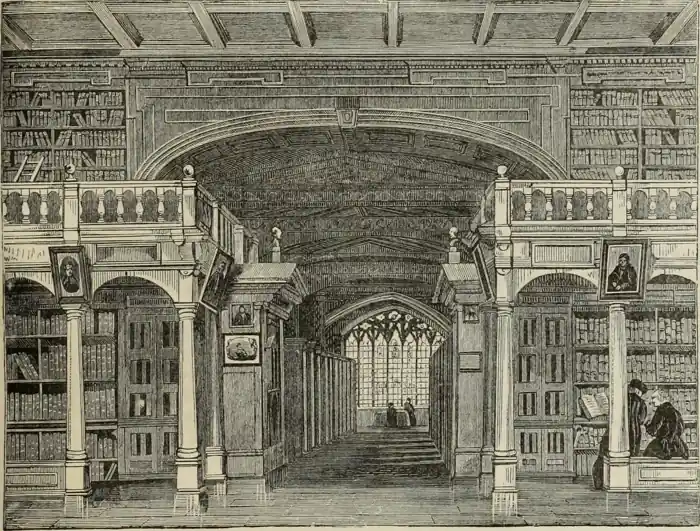
Read and listen together
 FrankensteinRead along